Deployment Gifts for Kids That Actually Get Used
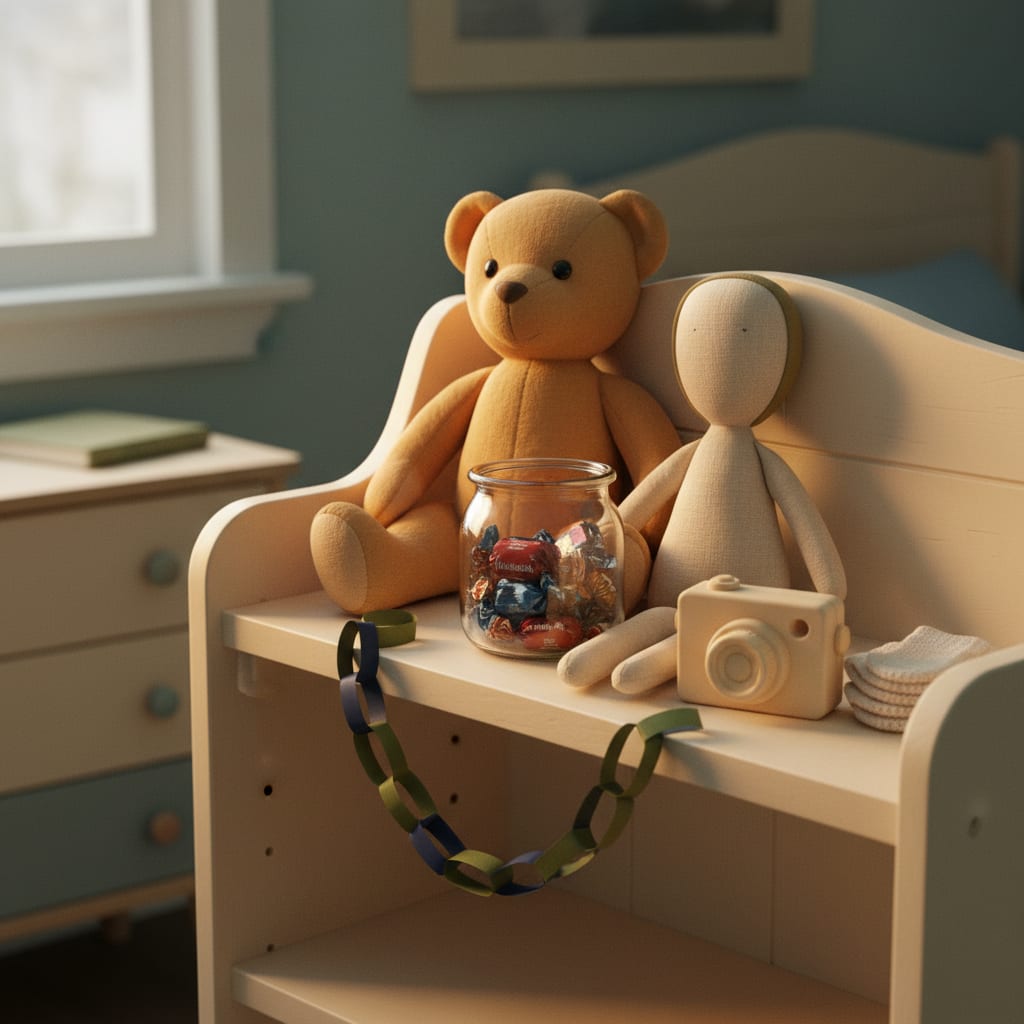
The deployment gifts that survive past week two all do one of three jobs: they make the absent parent physically present, they make time visible, or they give the kid something to do with the missing. Everything else is a novelty with a shelf life of about four days. That means a photo doll, a countdown object, a recordable book, a camera and somewhere to put the pictures, and a map. Buy fewer things and pick from those five categories, and you’ll spend less than the family that buys twelve.
The test a deployment gift has to pass
Ask one question before buying anything: what will the kid do with this on a Tuesday in month five?
Goodbye day is emotional and generous, and it produces a pile of stuff bought in that mood. Most of it is fine. But the object that matters is the one still in rotation halfway through, when the novelty is gone, the initial sadness has settled into something duller, and everybody is just getting on with it. That object is almost always small, boring, and used daily.
A second, less obvious filter: can the child operate it alone? A gift that requires an adult to set up, log into or supervise gets used at the adult’s convenience, which in a solo-parenting stretch means rarely.
Something shaped like the parent
For kids under about seven, this is the highest-value purchase of the whole list. A photo doll — a soft, huggable doll or pillow printed with a full-length picture of the deployed parent — turns an abstract absence into an object a toddler can carry. The full comparison of makers, sizes and lead times is in the daddy doll buyer’s guide, and the headline is: order it a month out, because custom production is slow.
For older kids, the equivalent is something the parent wore. A T-shirt, a ball cap, a scarf. Unwashed, at least at first. Nobody needs to buy that.
Something that makes time visible
Small children have no useful grasp of “seven months”. They do understand a chain getting shorter. The countdown object is doing arithmetic on their behalf, which is why it’s worth having a physical one rather than an app.
Paper chains are the classic and cost nothing — one loop per week for a long absence, per day only for something short enough that a daily loop won’t produce a chain the length of the hallway. A jar of wrapped chocolates, one taken out per day. A jar of marbles moved from one to another. All of these do the same job. The full list of variations, including the ones that survive a schedule change, is in deployment countdown ideas.
One warning worth taking seriously: build the countdown around a range, not a date. Return dates move, sometimes by weeks, and a chain that runs out while the parent is still gone is a genuinely bad afternoon.
A voice they can start themselves
A recordable storybook is the single most-used gift in a lot of houses, because a four-year-old can operate it at 2 a.m. without waking anyone. Hallmark’s Under the Same Moon is written more or less exactly for this situation, and the Record a Story series was built for parents reading from a distance. Which one to buy, how to record it so it doesn’t sound like a hostage tape, and what to do about batteries is covered in the recordable storybooks comparison.
The DIY route is just as good and often better: a 30-second voice recorder module sewn into a stuffed animal gives a kid the parent’s voice on a button, inside a toy they already love.
A camera, and somewhere to put the pictures
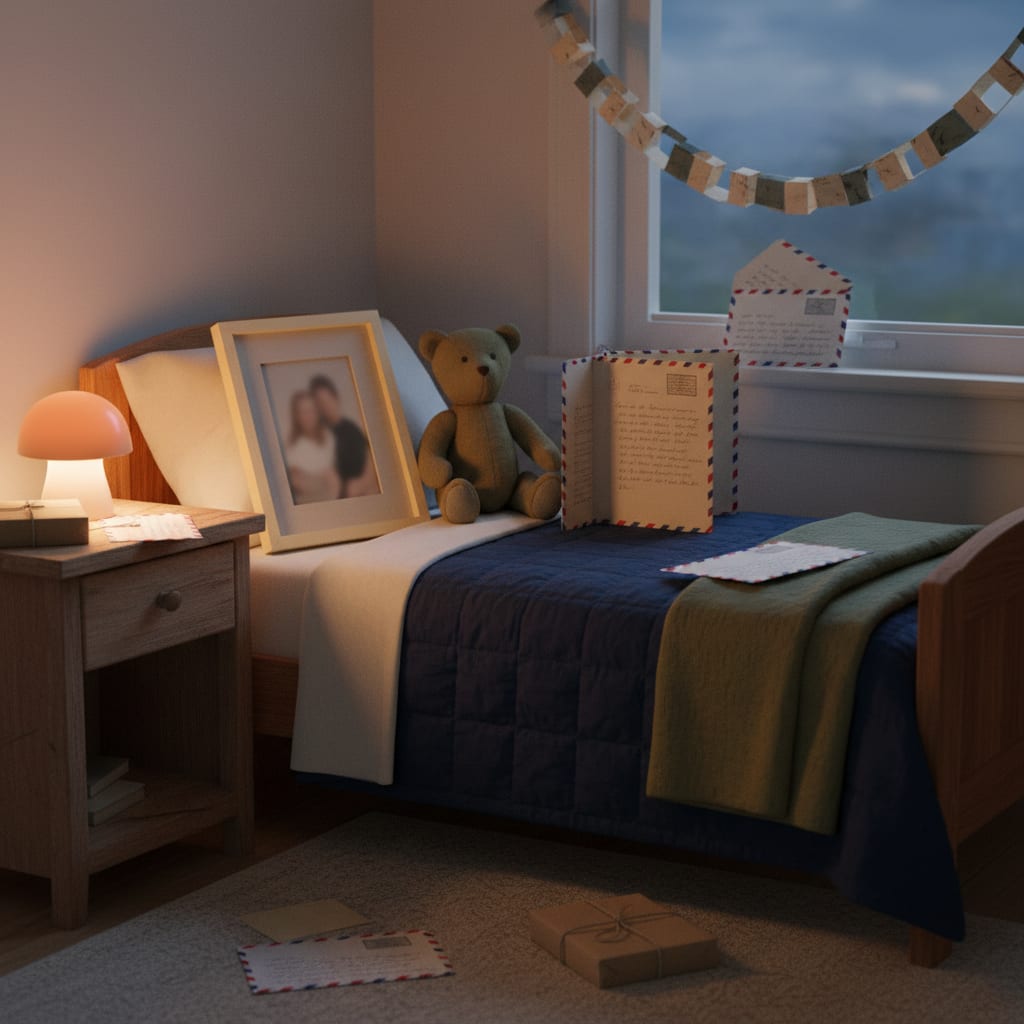
This one surprises people. Give a kid an instant camera and they document the absence themselves — the dog, the new gap in their teeth, a bad drawing, the cake. It converts a passive wait into a project, and it generates the single best care-package filler there is.
An Instax Mini 12 is simple enough for a five-year-old to run without help, which is the whole point; film is the ongoing cost and it isn’t trivial. Pair it with a cheap pocket photo album so the pictures live somewhere rather than dying in a drawer, and put one photo in every letter you send.
A map, and the reason it matters
A big illustrated world map on a bedroom wall does something quiet and useful: it gives “far away” a shape. You do not have to mark a location — and depending on where the parent is, you may not be able to. Marking “home” and letting a kid ask questions about everywhere else is enough, and it turns geography into an ongoing conversation rather than a fact to memorise.
What to skip
- Anything with a fixed end date printed on it. Dates move. Objects with dates on them become sad objects.
- A phone or tablet “so they can call Dad”. Contact schedules are set by circumstances outside your control. A device promises availability you can’t guarantee.
- Twelve gifts, opened on twelve occasions. It sounds lovely and it turns the absence into an advent calendar of presents. Two or three good things, used daily, beat a stream of small ones.
- Anything that needs an adult to run it. See above. In a solo-parenting stretch, adult bandwidth is the scarcest resource in the house.
- Loud toys given by the leaving parent. The remaining parent will remember. So will you, eventually.
FAQ: deployment gifts for kids
What is the best deployment gift for a toddler?
A photo doll, and it isn’t close. Toddlers need the absent parent to exist as something they can hold. Add a recordable book or a stuffed animal with a voice button and you’ve covered both the daytime and bedtime versions of the same need.
What should you give an older child before a deployment?
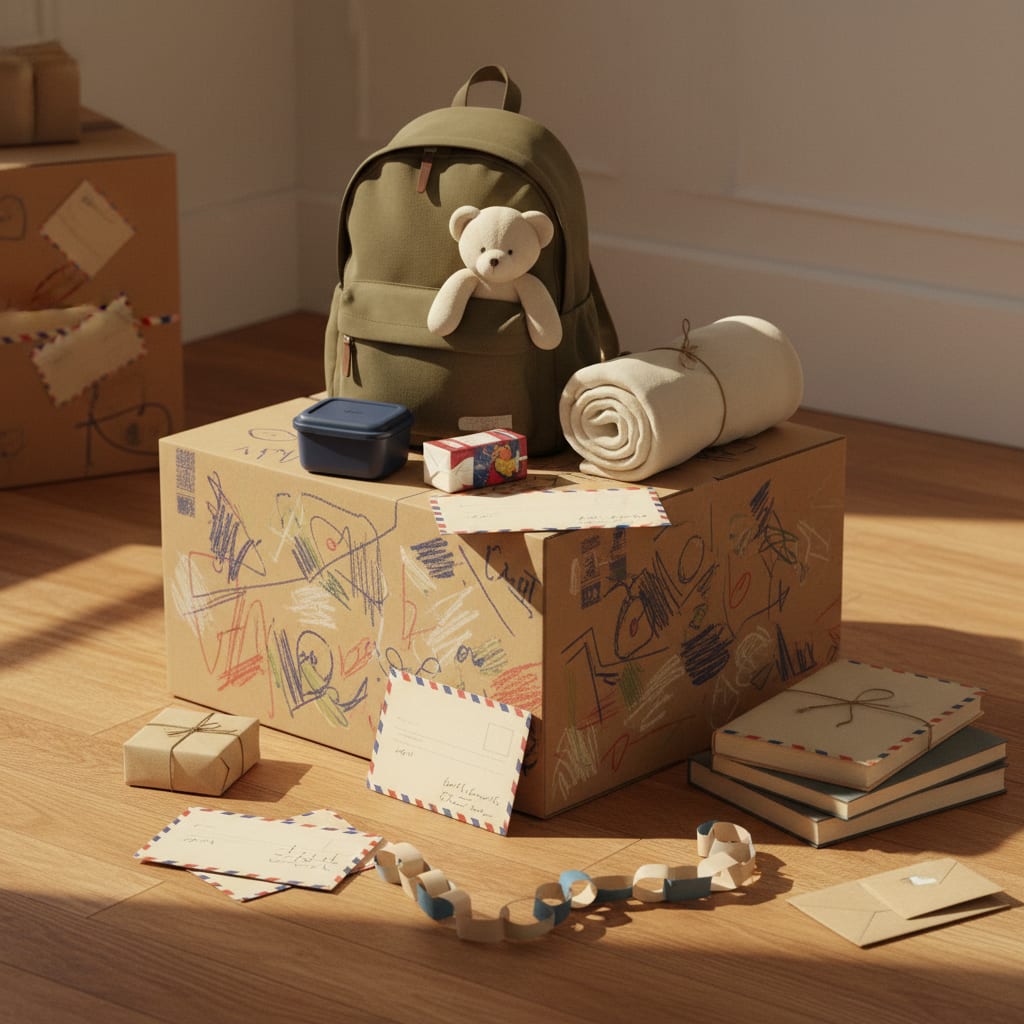
Something with a job rather than something to keep. A shared journal that gets mailed back and forth, a camera, a set of stamped and addressed envelopes so they can write without asking, or a piece of the parent’s clothing. Older kids want participation, not a present.
How many gifts should a deploying parent leave behind?
Two or three that get used daily beats a stack. Long absences are won on routine, not on occasions. If you want something for milestones, leave sealed letters with the remaining parent — cheaper, lighter and far more affecting than another toy.
Should you give a gift to be opened later in the deployment?
One, maybe two, and don’t tie them to a date the deployment might not respect. Tie them to events that will definitely happen — a birthday, the first day of school — and hand them to the parent staying home rather than trying to schedule them from the road.
What can kids send back to a deployed parent?
Photographs they took themselves, drawings, hand tracings, a recorded voice memo, and anything flat enough to survive the post. Build it into the care package rhythm so the sending is routine rather than an event that has to be organised each time.