Solo Parent Bedtime During Deployment: A Dad's Run-Book
Solo bedtime during a deployment works when it’s a fixed sequence, not a nightly performance: same order, same words, same lights-out, run like a checklist even when — especially when — the kids are melting down about the parent who isn’t there. Start the wind-down thirty minutes early (solo means no relief pitcher), keep the deployed parent present in the routine (recorded story, photo, one goodnight ritual in their name), and expect a sleep regression in week one no matter how well you fly it. I’ve held this watch from both sides — as the parent away and the parent home — and this is the run-book that survived contact.
Why bedtime is the deployment’s daily front line
Whatever your kids are holding about the deployment, they hand it to you at 7:45 p.m. The dark is when missing a parent surfaces — which is why bedtime during deployment isn’t a chore to survive but the most important parenting shift of the day. The good news: bedtime rewards exactly what military households are good at. It’s a sequence. Sequences can be drilled. You cannot make the sadness disappear, but you can make the container around it so predictable that the sadness has somewhere safe to happen. That’s the whole strategy. Everything below is implementation.
The run-book: one hour, same order, every night
Ours, for a two-and-a-four-year-old — adjust timings to your crew:
- T-minus 60 — the warning order. “After this show, bath.” Transitions ambush small kids; broadcasting them cuts the fight in half.
- T-minus 45 — bath, unhurried. Warm water genuinely downshifts them. This is also where the day’s debris (sand, yogurt, mysterious marker) gets audited.
- T-minus 25 — pajamas, teeth, water cup. Same order every night. The four-year-old runs this as a checklist and corrects deviations like a tiny inspector general, which I choose to find charming.
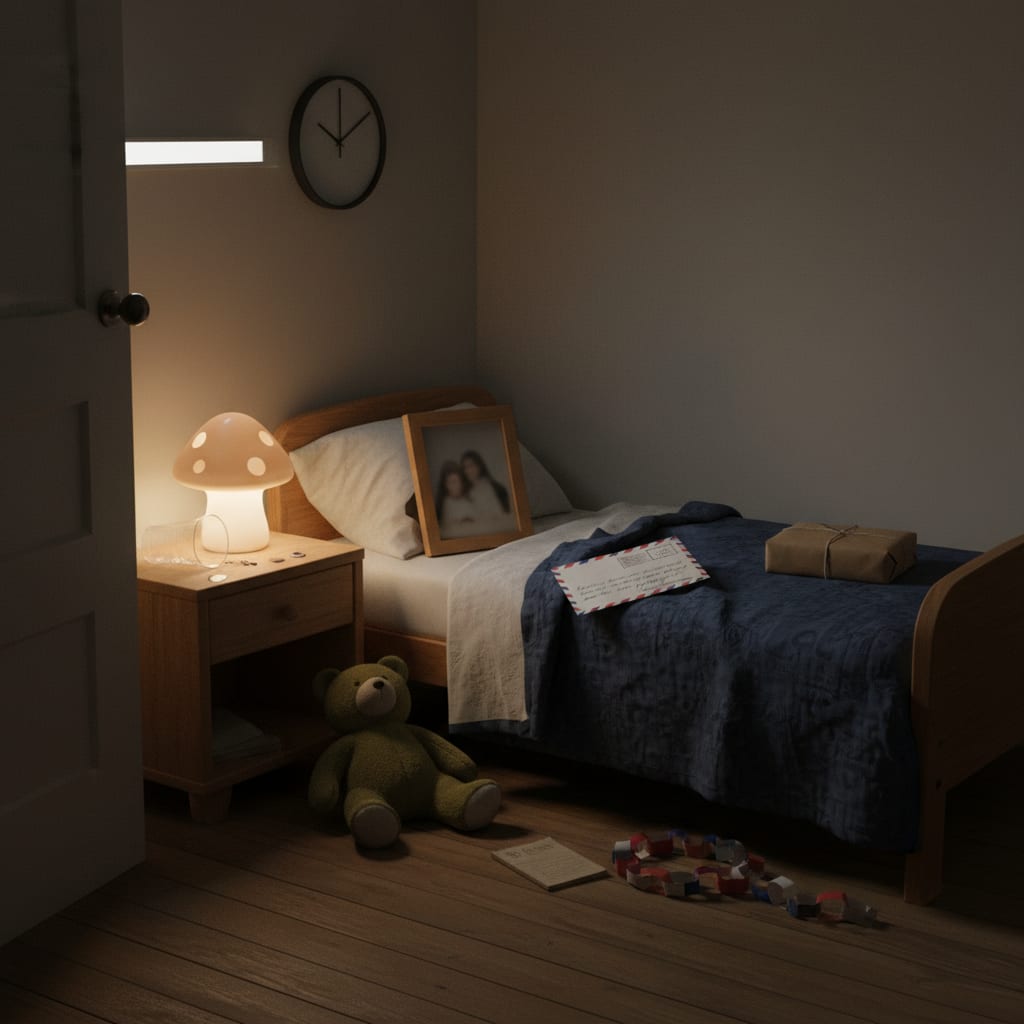
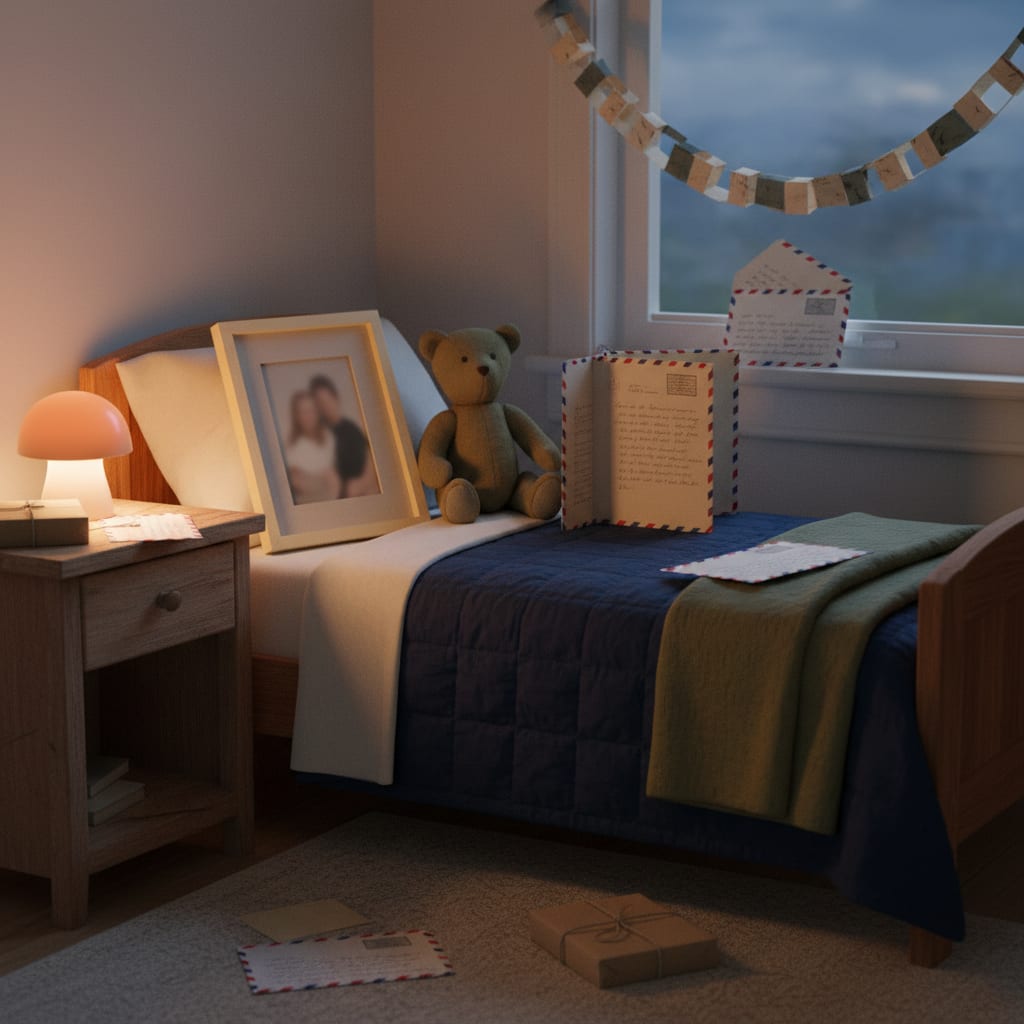
- T-minus 20 — the deployed parent’s slot. This is the keystone: Mom or Dad gets a fixed, owned moment in the routine. For us it’s a recorded story (more below) plus goodnight to the photo by the bed. Same slot, every night — it can’t depend on whether a call got through.
- T-minus 10 — one book, live, in the chair. Whoever’s home reads one. Keep a separation-savvy title in rotation; my short list is in books for military kids.
- T-minus 3 — the script. Same final words nightly. Ours: “Mom loves you, Dad loves you, everybody’s safe, see you at breakfast.” Boring is the feature. Boring is what safety sounds like.
- Lights out — and you actually leave. Lingering teaches negotiation. The routine ends the same way it ran: on rails.
Keeping the deployed parent in the bedtime
- Recorded stories are the heavyweight tool. Recordable storybooks (Hallmark’s Wherever You Are My Love Will Find You is one), or plain videos on a tablet, of the deployed parent reading the favorites. Rotate a few; a two-year-old can wear out a single recording like a favorite sock.
- A photo at pillow height. Cheap frame, kid-owned. Saying goodnight to it sounds sentimental until you watch a toddler do it with total seriousness.
- One object with a story. A daddy doll, a t-shirt pillow, a “kiss button” — one designated thing that means them. One, not five; totems dilute. For a baby under 12 months, keep it out of the crib: the AAP’s safe-sleep advice is a bare sleep space, so the comfort object belongs to the feed and the cuddle before bed, not the cot.
- Never promise the call. Connectivity depends on the mission — check what’s realistic with your service member’s command and then promise only the ritual, not the phone. A missed goodnight call a kid was promised costs a week of trust; the recorded story never misses.
When sleep falls apart anyway
It will, at least once — usually the first week and again mid-deployment, with a bonus round before homecoming. Regression triage, in order: hold the routine harder (the answer to a wobbling sequence is the sequence); expect the 2 a.m. visits and decide your policy before you’re deciding it unconscious; name the feeling without interrogating it (“You miss Mom. Missing is allowed here”); and add daytime connection (more of the missing parent at 3 p.m. often means less crisis at 3 a.m.).
And if you’re improvising the schedule itself — wake windows, nap math, whether the four-month-old’s chaos is a regression or a schedule problem — that’s the one part I’d hand to a tool instead of guessing. Betteroo is a personalized baby-sleep app: parents answer questions about the kid and their parenting style, and it builds the day’s nap-and-bedtime plan and adapts it as things change. For a suddenly-solo parent it’s the closest thing to having the co-pilot’s opinion on tap at midnight. Balanced report from this house: it plans the schedule, not the feelings — it won’t do the 2 a.m. hallway shift for you, and babies retain veto power. What it removes is the figuring-out, which during a deployment is exactly the cargo worth offloading.

Protect the pilot, too
Solo bedtime ends and the house goes quiet, and the quiet is its own thing nobody briefs you on. Two orders for the adult: put something small and yours after lights-out (twenty minutes that belong to you, not the dishes), and lower every standard that isn’t kids-fed-slept-loved — the full doctrine on that is in the temporary stay-at-home dad lessons. The routine above also holds for the goodbye day itself: the first solo bedtime of a deployment is the tone-setter, so fly it exactly by the book.
FAQ: solo parent bedtime during deployment
How long before bedtime settles into the new normal?
For most little kids, one to three weeks after the goodbye, if the routine holds steady. Wobbles recur around mid-deployment and again before homecoming — annoyingly, excitement disrupts sleep exactly like worry does.
Should the deployed parent call at bedtime every night?
Only if the schedule truly, reliably allows — and for most missions it won’t. A recorded story in a fixed slot beats a live call that misses half the time. When live calls do land, many families aim them at dinner or morning instead, where a dropped connection stings less.
My toddler only wants the deployed parent at bedtime. What do I do?
Don’t argue with the preference — route it. “You want Mom. Mom’s at work far away. Here’s Mom reading your book, and I’m doing the tucking tonight.” Then run the sequence, kindly and boringly. The protest phase typically burns out within a week or two when the routine refuses to flinch.
Is it worth using a sleep app during deployment, or is it one more thing?
If bedtime is already smooth, skip it — don’t fix what flies. It earns its place when you’re solo and the schedule itself is a mess: nap transitions, regressions, a baby whose windows shift weekly. That’s when Betteroo-style planning pays for its screen time, because guessing is the expensive part.