Daddy Dolls: A Buyer's Guide for Deployment Families
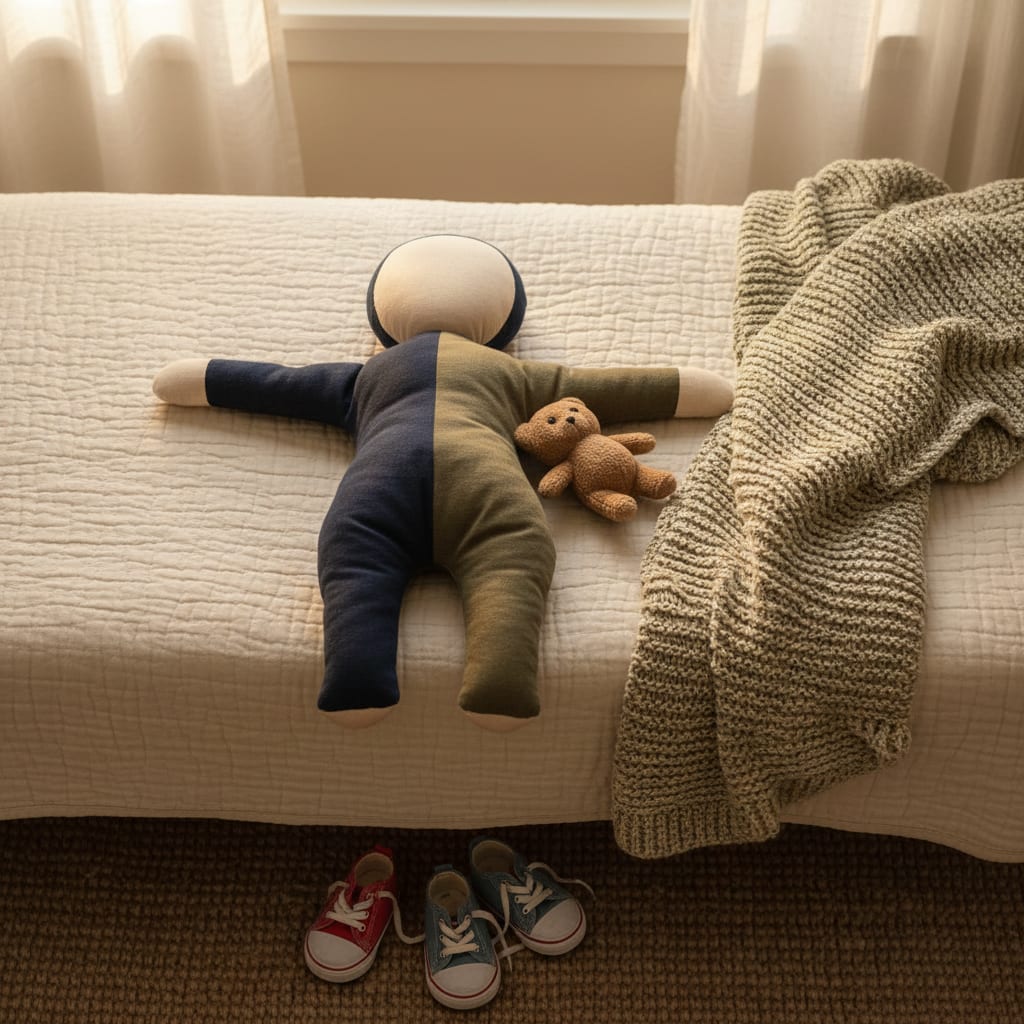
A daddy doll is a soft, huggable doll or pillow printed with a head-to-toe photograph of a parent who is away. Kids carry it, sleep with it, drag it through the house and eventually wear the face off it, which is the point. You have four realistic ways to get one: Hug-a-Hero, the company that started the category; a print-on-demand photo pillow from Amazon; a maker on Etsy; or a version you make yourself. They differ mostly in shape, lead time and how much they cost — and lead time is the one that catches families out.
What a daddy doll actually is
Strip away the branding and it’s a photograph turned into an object a small child can hold. The front is a full-length picture of the absent parent — usually standing, arms slightly out, taken against a plain wall — printed on fabric and stuffed. The back is either plain fabric or a second image.
Why it works is not complicated. A toddler cannot hold a video call, cannot hold a framed photo without breaking it, and cannot hold the idea that a person exists somewhere they’ve never been. A doll solves all three at once. Younger kids treat it as the parent. Older ones know exactly what it is and still take it to bed.
Two practical notes before you order anything. Take the photo before the goodbye — the week of departure is when nobody has time, and a rushed photo in the wrong light is the thing you’re stuck with for a year. And take more than one: a spare image costs nothing now and is worth a great deal when a doll goes missing at a grocery store in month four.
Hug-a-Hero: the original, and still the most doll-like
Hug-a-Hero has been making these for military families since the mid-2000s and is where the category came from. Their dolls are body-shaped rather than pillow-shaped — cut to the outline of the person, so a kid holds something with arms and legs instead of a rectangle. They offer several sizes, from small enough to fit in a backpack to nearly toddler-height, plus fabric choices for the back.
The trade-off is time and money. A custom-cut, custom-printed doll is not a same-week item, and it costs more than a rectangular pillow does. Check their current sizes, pricing and production times directly — they change, and a doll that arrives after the goodbye is a very expensive comfort object.
Amazon photo pillows: the fastest and cheapest route
If the goodbye is close, print-on-demand is the honest answer. A custom photo pillow doll takes an uploaded image and returns a stuffed, roughly person-shaped cushion in a fraction of the lead time and at a fraction of the price of a bespoke doll.
What you give up is fidelity. Print quality on cheap sublimated fabric is softer than the premium versions, the cut is closer to a rounded rectangle than a body, and the seams are the first thing to go after a hundred wash cycles. For a two-year-old who will destroy it either way, that’s an acceptable trade. For a keepsake you intend to still have at a high school graduation, it isn’t.
Etsy makers and Budsies: for something specific
Etsy is full of independent sewists — often military spouses — making these one at a time, and it’s the right place to go when you want something the big sellers don’t do: a particular size, a matching pair for two siblings, a doll made from a shirt the deployed parent actually wore. Search “military daddy doll” on Etsy and read the shipping windows before you fall in love with a shop.
Budsies sits between custom and mass-market: they turn a photo into a genuinely plush, three-dimensional toy rather than a printed panel. It’s a different object — more stuffed animal than portrait — and some kids bond with it far more readily.
The version you make yourself
You do not need a company. A plain pillowcase, iron-on photo transfer paper and an afternoon produce something a four-year-old will love exactly as much, and a shirt the deployed parent wore, folded around a small pillow, needs no printing at all.
The upgrade worth knowing about: a 30-second voice recorder module — the kind sold for building your own stuffed animals — sews into a seam and gives the doll the parent’s actual voice on a button. Record one short line, not a speech. “Goodnight, I love you, I’ll see you soon” is what gets pressed four hundred times. Anything longer gets interrupted.
Which age gets which doll
- Under two. Small, soft, washable, and no hard components. Skip the voice module — at this age a button that talks is a toy, not a comfort.
- Two to four. The sweet spot for the full-size, body-shaped doll. This is the age that takes it everywhere and needs it at bedtime, which is also where deployment sleep problems tend to show up.
- Five to seven. Still wants one, may be quietly embarrassed about it. Order the backpack-sized version they can keep private, and don’t make a ceremony of it.
- Eight and up. Usually past dolls, but not past objects. A framed photo, a dog tag, or a shared journal lands better. Books and letters do more work at this age.
Ordering timeline: the part people get wrong
Custom production plus shipping is the whole problem. Work backwards from the goodbye date, not forwards from today, and give yourself a buffer for the photo being wrong.
A workable sequence: take the photos a month out, order within a few days, and plan to have the doll in the house at least two weeks before departure. That gap matters — you want the deployed parent to hand it over in person, and you want to find out whether your kid actually bonds with it while there’s still time to fix the answer.
If the timeline has already collapsed, order the fast option now and the good one later. A pillow in hand on goodbye day beats a beautiful doll that arrives in week three. Fold it into the rest of the goodbye-day plan and the countdown rituals rather than treating it as the whole strategy — the doll is a tool, not the plan.
FAQ: daddy dolls
What is a daddy doll?
A soft doll or pillow printed with a full-length photo of a parent who is away, made so a young child can hold, carry and sleep with the image. They’re most common in military families during deployment, but they’re also used for long training absences, hospital stays and long-haul work rotations.
What age is a daddy doll for?
Roughly one to seven, with two to four being the age that gets the most out of it. Under one it’s just a pillow; past about eight most kids prefer a photo, a keepsake or letters. Buy for the age the child will be in the middle of the absence, not the age they are on goodbye day.
How long does a custom daddy doll take to arrive?
It varies by maker, from a few days for print-on-demand to several weeks for a fully custom doll. Order at least a month before the departure date and confirm the current production window with the seller — a doll that arrives after the goodbye misses the moment it was bought for.
Can you wash a daddy doll?
Usually yes on a gentle cycle in a mesh bag, air-dried — but printed fabric fades, so check the maker’s instructions and wash it as rarely as you can stand. This is the strongest argument for ordering two, or for keeping a spare image file ready to reprint.
Do daddy dolls actually help?
For a lot of little kids, visibly so — they give an abstract absence a physical form a child can manage. They are not a substitute for routine, contact and honest age-appropriate explanations, and a doll won’t fix a bedtime that has come apart. Treat it as one piece of the deployment plan.