PCS Purge Checklist: Cut Weight Before the Movers Come
The PCS purge is the highest-return hour of the whole move: every pound you don’t own can’t be weighed, packed, lost, damaged, unpacked or stored. Start eight weeks out, run it room by room instead of “whole house on Saturday,” take the garage and the closets first, and let each kid purge their own gear with parent veto over treasures. Weight allowances and reimbursement rules vary by rank, dependents and situation and they change — confirm yours with your transportation office rather than any number you read online, including here. The purge itself is worth doing regardless of where your line sits.
Start eight weeks out, room by room
A purge fails when it’s scheduled as an event. Two hours on a Saturday with the whole family and a garage full of unlabeled bins ends in three arguments and one small pile of donations.
Instead, put it on a calendar as a series: one zone per session, 45 to 90 minutes, one bag or box each for donate, sell, trash, and keep-but-verify. The last one matters — it’s where the “I think this is the crib hardware” bag goes, and it forces a second pass instead of a shrug.
Order the zones by return on effort:
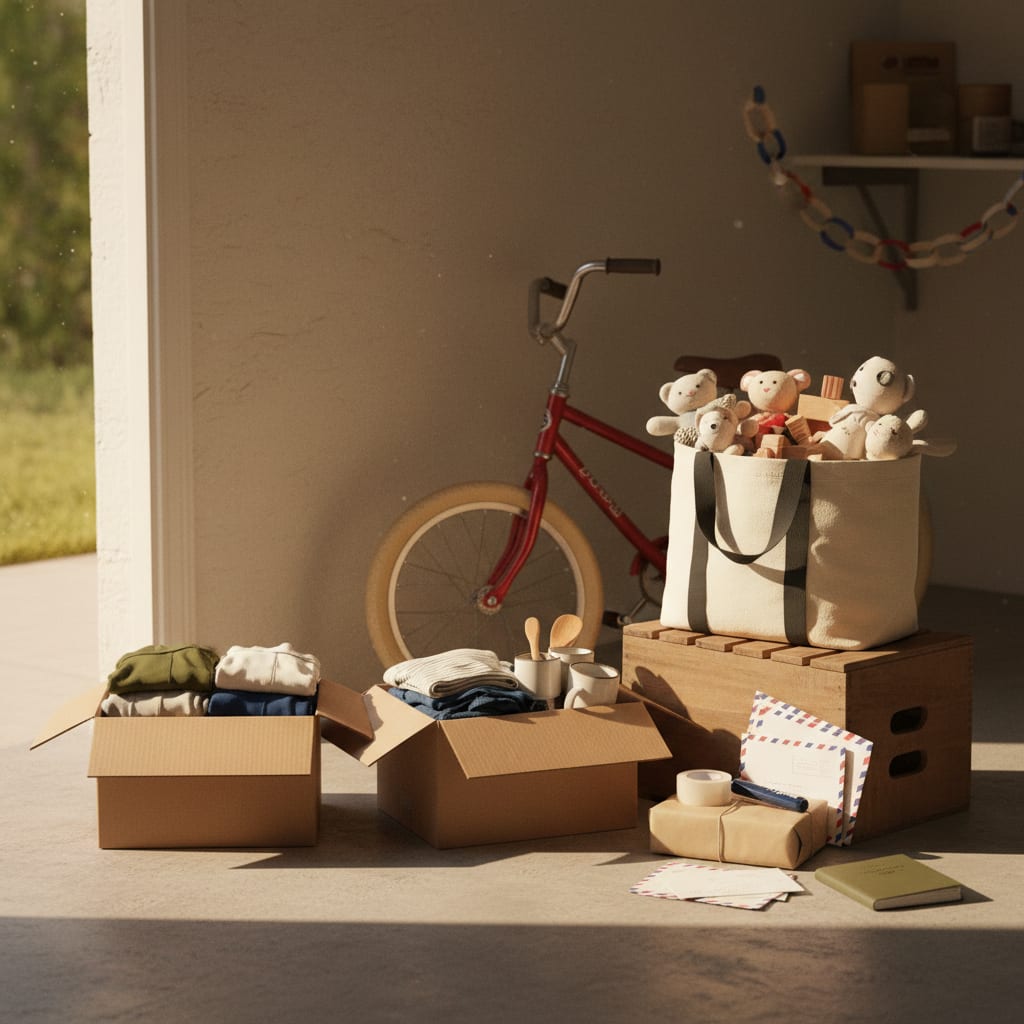
- Garage and storage — highest weight, lowest sentiment. Old paint, dead electronics, half-used chemicals movers won’t take anyway, the exercise equipment that has been a coat rack since the last duty station.
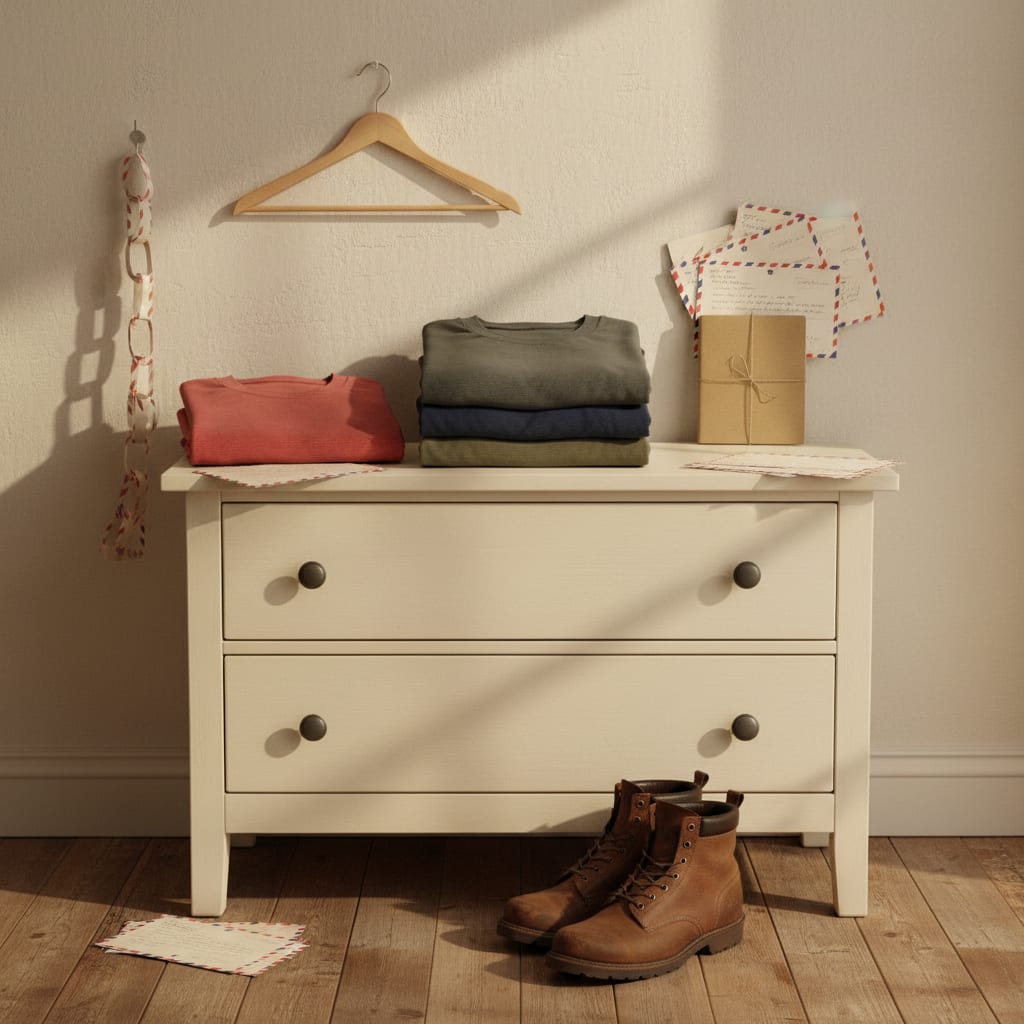
- Closets and dressers — bulk without bulk value. Anything not worn in a year, anything that doesn’t fit the next climate, the uniform-adjacent civilian clothes you’ve been keeping “for painting” in quantities exceeding all conceivable painting.
- Kitchen — small appliances used once, the mug shelf, the plastic-container drawer whose lids emigrated years ago.
- Kids’ rooms — see below; this one runs on different rules.
- Paper and files — scan, shred, and reduce to the binder that travels with you.
- Books, media, hobby gear — heavy, easily replaced, and the category most families over-keep.
The questions that actually decide things
“Do I love it?” is a bad question for a household in motion. Better ones:
- Would I pay to move it? Not abstractly — would you hand over cash to put this specific object on a truck?
- Would I buy it again at the new place? If no, you’re storing a decision you’ve already made.
- Can it be replaced for under a tank of gas? Then it’s a consumable, not an heirloom.
- Does it work in the next climate? Snowblowers and southern tours, beach gear and northern ones. Be honest about the forecast rather than the fantasy.
- Is this the fourth one? Nobody needs four spatulas, three sleeping bags or two identical toolboxes, and the duplicate discovery usually happens at the third house in a row.
One category deserves special contempt: items being kept for a hypothetical future house. The garage-shelf rack for a garage you don’t have yet, the curtains for windows of unknown size, the dining set for the dining room you might get. Those are heavy bets on floor plans you haven’t seen.
Purging with kids without a mutiny
Kids’ rooms run on ownership. A parent who quietly disappears toys during nap time buys short-term efficiency and long-term suspicion — and, in at least one house I know well, a full-scale investigation two months later into the whereabouts of one particular plastic dinosaur.
Do it with them instead:
- They sort, you veto. Each kid gets keep, donate and trash piles; parents hold veto power over genuine treasures headed for the trash and over the “keep” pile’s obvious junk.
- Give the donations a destination. “These go to kids who don’t have toys” is abstract to a four-year-old; driving to the drop-off together is not.
- Set a container limit, not a count. One bin for stuffed animals, one shelf for cars. The container decides, so you’re not the villain — physics is.
- Sell the big stuff with them and let them keep the money. The outgrown bike funds something at the new house, which converts loss into a transaction they chose.
- Never touch the loveys, the blankets, the weird specific rock. Comfort objects are exempt from all logic and every allowance. They ride in the car anyway — see PCS with a toddler for the go-bag that carries them.
Time-box the sessions to twenty minutes for little kids. Decision fatigue hits a six-year-old fast, and everything after the fatigue point gets kept by default.
Where the stuff goes
Sell what’s worth the hassle — furniture, bikes, tools, baby gear in good shape. Base yard-sale groups and installation buy/sell pages move things fast in PCS season precisely because everyone else is arriving as you leave. Set a deadline: anything unsold two weeks before pack-out gets donated, no renegotiation, because a sale that hasn’t happened by then is a story you’re telling yourself.
Donate through the thrift shop on or near your installation, a local charity, or the family-support center’s loan closet, and get a receipt on the way out.
Give away the things you can’t sell or donate: opened pantry goods, cleaning supplies, plants, half-bags of charcoal. Neighbors and incoming families will take them, and the movers won’t touch most of it anyway. Hazardous items — propane, paint, fuel, chemicals — need proper disposal and are a standard non-shippable category; ask your transportation office what your move program excludes before you assume anything.
Trash and shred the rest without ceremony. The paper pile especially: scan what matters, shred what identifies you, and reduce the physical residue to the binder that never rides with the movers, per the PCS checklist.
What not to purge
The purge has a failure mode in the other direction — the family that gets efficient and dumps things that cost real money to replace:
- Hardware. Crib bolts, bed-frame brackets, TV mount screws, the hex key for the bunk beds. Bag it, label it, tape it to the item or put it in the binder box. This is the single most-repeated PCS regret in existence.
- Curtains and rods you own, unless the next place is a known quantity.
- Winter gear in the middle of a July move to a warm place. The next set of orders is not required to be considerate.
- Documents. Records, warranties, manuals for anything still under warranty, tax paperwork, the kids’ school and medical files.
- Kid comfort objects and photo/keepsake boxes. Not negotiable, not weighed by anyone who matters.
- Anything you’d immediately rebuy. The purge is about weight, not martyrdom.
The kid-facing half of the whole operation — telling them, giving them jobs, and the settling that follows — is covered in PCS with kids.
FAQ: the PCS purge
When should you start purging before a PCS?
About eight weeks out, in short room-by-room sessions rather than one marathon. Early starts leave time to actually sell things, get donations dropped off, and handle the non-shippable disposal that always takes an extra trip.
What should you get rid of before a PCS move?
Garage and storage overflow first, then clothes nobody wears, single-use kitchen gadgets, duplicates, heavy easily-replaced items like books and hobby gear, expired pantry goods, and anything being kept for a hypothetical future house. Non-shippable items like paint, fuel and chemicals have to go regardless.
How do you get kids to purge their toys before a move?
Let them sort with parent veto, give the donations a real destination they can see, and use container limits instead of counts so the bin makes the call. Sell big outgrown items and let them keep the money. Comfort objects stay, always.
Does purging actually help with the PCS weight allowance?
Less weight means less risk of exceeding whatever your authorization is, plus less to lose, damage, unpack and store. Allowances and any overage costs vary by rank, dependents and situation and they change — get your specific numbers from your transportation office or Military OneSource, not from an online chart.