Military Care Package Ideas That Are Worth the Postage
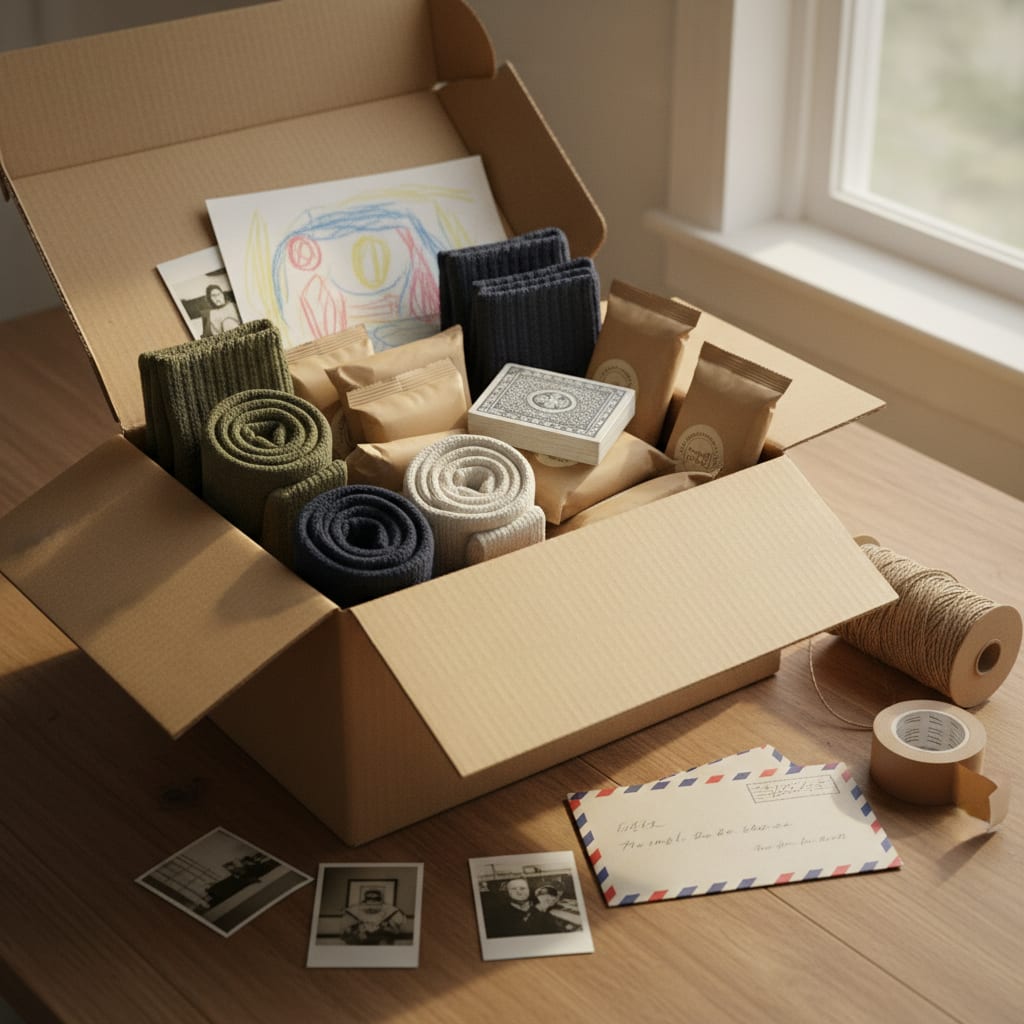
The military care package ideas that actually land fall into four categories: consumables (snacks, coffee, drink mixes — the currency of any deployment), comfort upgrades (good socks, wipes, sunscreen, a decent pillowcase), morale cargo (photos, kids’ drawings, letters, small games), and the occasionally-requested oddball (hot sauce, specific candy, that one brand of jerky). Ask what they want before every box, pack heavy on shareables, and remember the box is really a message: somebody at home is thinking about you on a Tuesday. Here’s the full playbook — what to send, what to skip, and how to pack it so it arrives intact.
The four-category packing method
Build every box from the same four bins and you’ll never freeze in the shipping aisle.
- Consumables. Shelf-stable snacks, coffee or drink mixes, gum, candy that won’t melt into modern art (chocolate is a cold-month gamble — ask before sending). Individually wrapped beats family-size, because most of a care package gets shared within an hour of opening, and that’s exactly as it should be.
- Comfort. Quality socks are the perennial number one for a reason. Add unscented wipes, lip balm, sunscreen or lotion depending on the climate, a pillowcase that smells like home, batteries if requested. Small physical upgrades punch far above their weight when everything around you is standard-issue.
- Morale. Recent photos printed at kid height of quality, drawings, letters, a paperback, a deck of cards or small game, a comic from the Sunday paper. This is the freight the box exists to carry; the snacks are the packaging.
- The requested oddball. Every deployed person develops one weirdly specific craving. Honor it every box, no questions asked. The asking itself — “what do you want in the next one?” — is half the connection.
What the kids put in
The kid contribution is non-negotiable in our system, because the package is how little kids DO something about missing someone. Drawings, obviously — but also traced hands (“a high-five for later”), a joke they dictate and you transcribe, a candy they picked personally at the store, a photo they staged themselves (quality irrelevant, sincerity total). Tie it to your countdown ritual — box-packing day pairs beautifully with the weekly rhythm in deployment countdown ideas — and let the kids tape the box shut. Crooked tape is a feature. For the deeper letter-writing side, including open-when letters that travel in these boxes, see deployment letters to kids — the same formats work in both directions.
What to skip
Aerosols, alcohol, and anything perishable are the obvious ones, but mailing restrictions for APO/FPO addresses are real and specific — check the current USPS guidance and any destination restrictions before you seal the box, because rules vary by location and change. Beyond the rules: skip glass (it loses to the mail every time), skip anything that leaks (double-bag all liquids you do send; one shampoo bottle can ruin forty dollars of snacks), and skip the aspirational cargo — the giant book you think they should read. Send what they asked for, not who you think they should become. The box is a hug, not a syllabus.
Packing and shipping without heartbreak
Flat-rate boxes are the standard move — if it fits, it ships, and weight stops mattering. Fill every void (crumpled kid-art doubles as packing material, which is efficient sentiment), bag anything that could leak, put a card with the address INSIDE the box in case the label is destroyed, and fill out customs forms honestly. Transit takes longer than domestic mail and varies wildly by destination, so mail earlier than feels necessary, especially before holidays — ask anyone who’s mailed a December box in December exactly once. A steady rhythm beats sporadic magnificence: a modest box monthly outperforms a legendary box quarterly, which is the same boring-consistency principle that runs the whole deployment cycle.
The receiving end
Two notes from the other seat. First, the shared box is the beloved box — pack quantities that make generosity easy. Second, the deployed parent should say thank you SPECIFICALLY (“the monster drawing is taped over my rack”) because specific thanks teaches the kids their contribution landed, and next box-packing day they’ll bring reinforcements.
FAQ: military care packages
What should you not put in a military care package?
Aerosols, alcohol, perishables, and anything prohibited for the destination — restrictions vary by location, so check current USPS guidance for APO/FPO mail before packing. Practically speaking, also skip glass, meltable chocolate in warm months, and undouble-bagged liquids.
How often should you send care packages during deployment?
A steady monthly-ish rhythm works better than occasional epic boxes — the reliability is most of the message. Adjust to your budget and their storage situation (space is often tight), and prioritize a box before holidays, mailed well ahead.
What do soldiers and sailors actually want in care packages?
Whatever they asked for — so ask before every box. The evergreen hits across every branch: good socks, snacks to share, coffee, wipes, photos, and letters. The kid-made cargo is consistently the part that gets kept.
How long does mail take to reach a deployed service member?
It varies too much by destination and mission to promise — anywhere from a couple of weeks to considerably longer. Mail earlier than feels necessary, and don’t read delivery lag as anything but logistics.