PCS Gear That Earns Its Weight Allowance
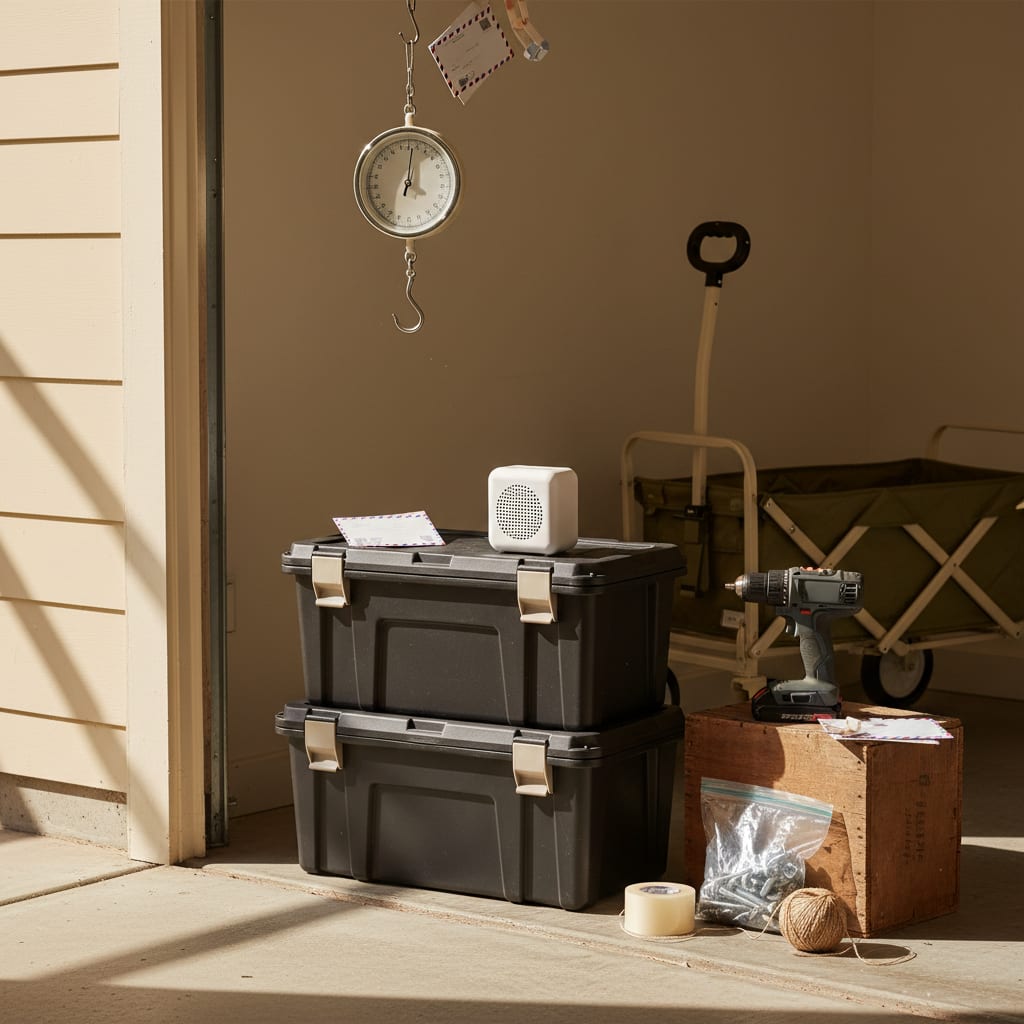
PCS gear earns its weight when it does a job the movers won’t do for you: weighing what you’re about to ship, taking a crib apart, keeping the pieces you can’t replace inside your own vehicle, and reproducing your kid’s bedroom in a hotel. That’s the whole test. A hanging scale, a cordless drill with a hardware system, a few latching totes, real tape, a couple of trackers and a portable sleep kit cover it. Everything else is optional, and your actual weight allowance is set by grade and dependent status — look yours up on the official tables rather than guessing.
The test: does it do a job the movers won’t?
The filter that works: buy it only if it does a job that either (a) the transportation office and the moving crew are not going to do for you, or (b) has to happen in the gap — the days between the truck leaving and the truck arriving, when you own only what’s in your car.
That gap is where military moves differ from civilian ones. You may be a week or a month in lodging with two kids, four suitcases and whatever you were smart enough to keep out of the shipment.
Two things worth doing before you buy anything: run the PCS purge so you’re not buying totes to move things you don’t want, and work down the PCS checklist so the shopping happens against a plan instead of against panic.
The gear that earns its weight
A hanging luggage scale. The single highest-leverage $15 item in a military move. It weighs suitcases before an airline weighs them, weighs boxes you’re shipping yourself, and gives you a real number on whether the “we’ll just take it in the car” pile has quietly become a second household. An Etekcity hanging scale reads to around 110 pounds, runs on a coin battery, and lives in a glovebox between moves. Buy it now, not the night before a flight.
A cordless drill you own. Cribs, bunk beds, bookcases and TV mounts all come apart with a drill, and a packing crew’s willingness to disassemble furniture varies enormously. Owning the tool means you control the timeline — you can break down the crib the morning of pack-out instead of watching a crew wrap it whole and eat forty pounds of your allowance in air. A basic two-battery kit like the DEWALT DCD771C2 is more than enough; this is not the moment for the impact-driver upgrade you’ve been eyeing. Every set of hardware goes in a zip bag, and the bag gets taped to the underside of the furniture it came from. Hardware in a “safe place” is hardware you will buy again at a hardware store in a new state.
Latching totes for the car pile. Cardboard boxes get crushed, get wet, and get loaded onto the truck by accident because they look exactly like the four hundred other boxes in the house. A stack of latching plastic totes solves both problems: they stack in a trunk, they survive rain in a driveway, and their sheer visual difference from cardboard is the cheapest anti-theft device for the stuff you cannot lose. One tote is medical and dental records, orders, birth certificates and passports. One is the first-night kit — sheets, towels, a shower curtain, a roll of paper towels, coffee, and a can opener. One is the kids’ gap kit. They stay in the car, always.
Trackers in anything you can’t replace. A four-pack of AirTags is cheap peace of mind: one in each checked bag, one in the tote that holds documents, one in the car if you’re shipping it. It doesn’t stop a bag going missing. It turns “the airline has lost the car seats” from a mystery into a location, which is the difference between a phone call and a week of your life. That matters more on an OCONUS move with connections than on a two-state drive.
Real tape and a real marker. Crews bring their own supplies, but every family packs some boxes themselves, and decent heavy-duty packing tape is what separates a box that survives a truck from one that opens in a stairwell. Label the side, not the top, because boxes get stacked.
The kids’ portable sleep kit. This is the one that decides how bad your gap week is. A travel sound machine like the Yogasleep Hushh runs on a charge and clips to a travel crib, so the audio half of your kid’s bedroom follows them into lodging. Add the actual crib sheet from home, the lovey, and two familiar books. If you’re sharing one hotel room and your toddler treats seeing you as an open invitation to negotiate, a blackout tent like the SlumberPod buys back the rest of the room — it’s bulky and it isn’t cheap, and if a sheet over a curtain rod works for your kid, skip it. The full version of this argument is in PCS with a toddler.
A folding wagon. Underrated for lodging life: hauling groceries, laundry and two kids’ worth of gear from a parking lot to a third-floor temporary unit, repeatedly, for weeks. A collapsible utility wagon folds flat into a trunk and keeps earning its keep at every soccer field afterward. If you own a decent stroller with a basket, you can probably wait.
What doesn’t earn its weight
- Specialty moving boxes. Wardrobe boxes, dish barrels, mattress bags — a government-funded crew brings these. Buying them ahead is money spent on inventory you’ll leave in a garage.
- A dolly or hand truck. The crew has better ones. Renting for the DITY portion beats owning for the once-every-three-years use.
- Furniture sliders and pads. Same reasoning. If you’re doing a personally procured move, the truck rental counter sells or rents them at the moment you need them.
- New luggage bought for the move. Buy luggage because your luggage is broken. A PCS is a bad time to be breaking in an unknown suitcase.
- A second sound machine “for the new house.” Move the one the kid already knows. Familiar noise is the point; a new machine is just a fan.
Look up your own numbers before you buy anything
Household goods weight allowances are set by grade and dependency status and published in the Joint Travel Regulations — they change, and they are not something to take from a forum post or from me. Check the current tables through the Defense Travel Management Office, start your paperwork at move.mil, and use Military OneSource for the entitlement questions that come with kids, pets and unaccompanied baggage. Your installation transportation office will give you the version that applies to your orders, which is the only version that counts.
The practical reason to know your number: it changes what you buy. Comfortably under, and the calculus is about convenience. Close to the line, and every purchase is a trade against something already in the house — at which point the scale stops being a nice-to-have.
FAQ: PCS packing gear
What should I buy before a PCS with kids?
A hanging luggage scale, a cordless drill with zip bags for hardware, three or four latching totes for the car, quality packing tape, a couple of item trackers, and a portable sleep kit for each kid. Skip specialty boxes and dollies — a government-funded crew brings those.
Do movers take furniture apart for a military move?
Sometimes, and it varies by crew and by item. Owning a drill means you’re not dependent on the answer, and it lets you break down cribs and bunk beds on your own schedule. Bag and tape the hardware to the furniture itself.
What should never go on the moving truck?
Documents (orders, medical and dental records, birth certificates, passports), medication, valuables and small electronics, and the kids’ sleep kit. Keep them in latching totes in your own vehicle. If it would ruin a month to lose it, it doesn’t go on the truck.
Is a blackout sleep tent worth it for temporary lodging?
Only if you’ll be sharing a single room with a toddler who won’t settle while they can see you. In that situation it’s transformative. In a two-room unit, or with a kid who sleeps through anything, it’s a large bag of nylon you carried across the country for nothing.