OCONUS PCS With Kids: Passports, Pets and Flights
An OCONUS PCS with kids is a normal move with three long-lead items bolted on: passports and visas for every family member, overseas screening or clearance for dependents, and pet import paperwork that can take months. Start all three the week orders look real, because none of them can be rushed with charm. Everything else — shipments, flights, temporary lodging — is scheduling. Requirements are country-specific and change constantly, so let your transportation office, your installation’s overseas-screening clinic and the official country guidance be the authority; treat this as a sequencing guide, not a rulebook.
The three things that can’t wait
Passports. Overseas orders generally require the no-fee official passports for dependents, and many destinations also want tourist passports for personal travel — which are separate applications with separate processing. Kids’ passports require both parents present or documented consent, which is its own scheduling problem when one parent is already gone. Processing times swing wildly by season. Start at week one and ask your personnel or passport office which types your specific destination requires.
Overseas screening / command sponsorship. Family members typically need medical and dental screening before they’re cleared to accompany, and a child with ongoing medical or educational needs may need an additional review of whether those needs can be met at the destination. This is the step that surprises families, because a “no” or a “conditional” changes the entire shape of the tour. If anyone in the family is enrolled in the Exceptional Family Member Program, engage that office immediately rather than after the appointments.
Pets. Country import rules can involve rabies titer blood tests with mandatory waiting periods measured in months, microchip standards, specific vaccination windows, and government-endorsed health certificates issued inside a narrow window before travel. Some destinations quarantine. Some airlines and some seasons restrict animal travel outright. Start the day you learn where you’re going, work from official country and USDA guidance, and confirm the airline’s live-animal rules for your actual routing. Pets are the number-one reason an otherwise organized OCONUS move goes sideways.
The general timeline discipline these bolt onto is in the PCS checklist.
Shipments: what flies, what sails, what stays
An overseas move usually splits your household into three or four streams, and the whole art is putting the right things in each:
- Unaccompanied baggage / express shipment — the small fast one that arrives first. This is where kid survival goes: crib sheets, a few weeks of clothes, kitchen basics, bath stuff, a modest toy allocation, and anything that makes a bare apartment habitable for a family.
- Household goods — the slow boat. Weeks to months. Assume you will not see it for a long time and pack your life accordingly.
- Non-temporary storage — what stays stateside. Oversized furniture that won’t fit overseas housing, seasonal gear irrelevant to the destination, the second car’s worth of stuff.
- Checked bags and carry-ons — the only things you truly control.
Two overseas-specific traps. Voltage and plugs: most small appliances won’t work on a different electrical standard, and transformers are heavy and finicky. Ask what the destination’s housing office loans out before shipping or buying anything with a motor or a heating element. Housing size: overseas quarters are frequently smaller, with different closet and appliance realities. Get floor-plan intel before deciding what sails, or you’ll ship a sectional to a living room that can’t take it.
Weight allowances differ for OCONUS moves and for the individual streams, and they vary by situation — get your specific figures from the transportation office. Whatever they are, the PCS purge pays double on an overseas move, because everything you keep is either crossing an ocean or sitting in storage you’ll deal with in three years.
The long flight with kids
Assume the travel day is 20-plus hours door to door and plan for the whole envelope, not the flight time.
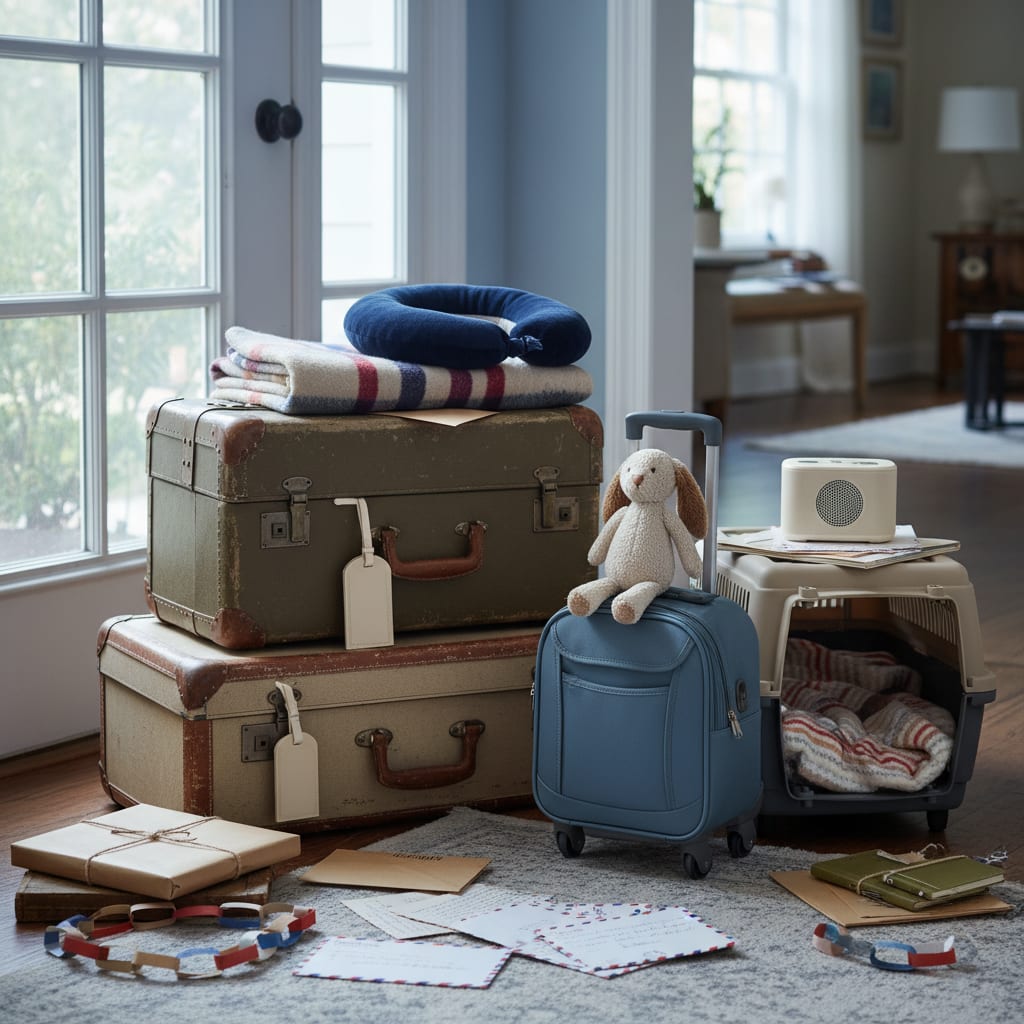
Carry-ons per kid: two full changes of clothes (and one spare shirt for the adult, which sounds excessive right up until the moment it isn’t), diapers or pull-ups at roughly double the math, wipes, medications in original packaging, snacks that aren’t confiscatable, headphones, and the entertainment loaded offline before you leave the house. Every document — passports, orders, pet paperwork, medical records, the school records packet — lives in one bag on one parent’s body, not in the overhead bin.
Comfort objects fly in the cabin. All of them. The lovey does not go in a checked bag, ever, under any circumstance, and this rule has produced more transoceanic parental panic than any other single item. Sleep gear rides too — a travel sound machine and a familiar blanket are what let a jet-lagged kid go down in a strange room on night one; the sleep-protection logic is the same one laid out in PCS with a toddler.
Bag tracking is worth the small investment on a routing with multiple connections and a shipment you can’t replace locally. A tracker like an Apple AirTag in each checked bag turns “the airline has lost the car seats” from a mystery into a location, which is the difference between a phone call and a week.
Then jet lag: get onto local time immediately, use daylight aggressively on the first two days, and expect roughly a day of adjustment per hour of time difference for kids. The first three nights will be bad. Hold bedtime anyway.
The first weeks overseas
Command sponsorship, the ration or logistics card where applicable, the base ID and access setup, the SOFA-status driver’s license and vehicle registration process, a local bank arrangement and a phone plan — most of this is a queue at a welcome center, and most installations run a newcomer orientation that compresses the whole thing into a day. Go to it. It’s the cheapest information you’ll ever get.
School is its own decision. Depending on location, kids may attend a Department of Defense school on the installation, a local national school, or an international school, and eligibility and enrollment rules vary by country and installation. Contact the school liaison at the gaining installation before you fly — the records and IEP handoff runs on the same principles as stateside but with longer lead times and more variables, per the military school transfer checklist.
Then there’s the part that isn’t logistics: everyone is far away now. Time zones make calls to grandparents a scheduling exercise, the express shipment is late, the grocery store is confusing, and somewhere in week three a kid will cry about a cereal brand and mean something else entirely. Set a recurring family video call before you go so it exists as a habit rather than a good intention, and lean on the newcomer network hard — overseas communities absorb new families faster than any stateside base, because everyone there remembers week three.
FAQ: OCONUS PCS with kids
How early should you start an OCONUS PCS with kids?
The week orders look real. Passports, overseas medical screening for dependents, and pet import paperwork are the three long-lead items, and pet requirements alone can involve waiting periods measured in months. Everything else can be compressed; those three can’t.
Do kids need passports for an OCONUS PCS?
Generally yes — dependents typically need no-fee official passports for the move, and many families also get tourist passports for personal travel. Requirements are destination-specific, and children’s applications have their own consent rules, so confirm with your personnel or passport office early.
What should go in the express shipment for a family?
The things that make a bare apartment livable while the slow shipment crosses an ocean: crib sheets and bedding, a few weeks of clothes, kitchen basics, bath supplies, a limited toy allocation, and anything the kids will visibly miss. Assume household goods take weeks to months.
How do you handle jet lag with kids after an overseas PCS?
Switch to local time on arrival, get outside in daylight the first two mornings, and hold the normal bedtime sequence even when the first three nights are rough. Kids commonly need around a day of adjustment per hour of time difference — plan the first week around that rather than fighting it.
Can pets come on an OCONUS PCS?
Usually, with planning — but import rules vary hugely by country and can involve titer tests, waiting periods, endorsed health certificates and sometimes quarantine, plus airline and seasonal restrictions on live animals. Work from official country and USDA guidance from day one and confirm your specific routing with the airline.