Homefront Dad · Entry
Jet Noise and Baby Naps: Living Under the Flight Path
Jet noise on base and a baby who won't nap? Pick the quietest room, time naps around the flying you can predict and use a sound machine safely.
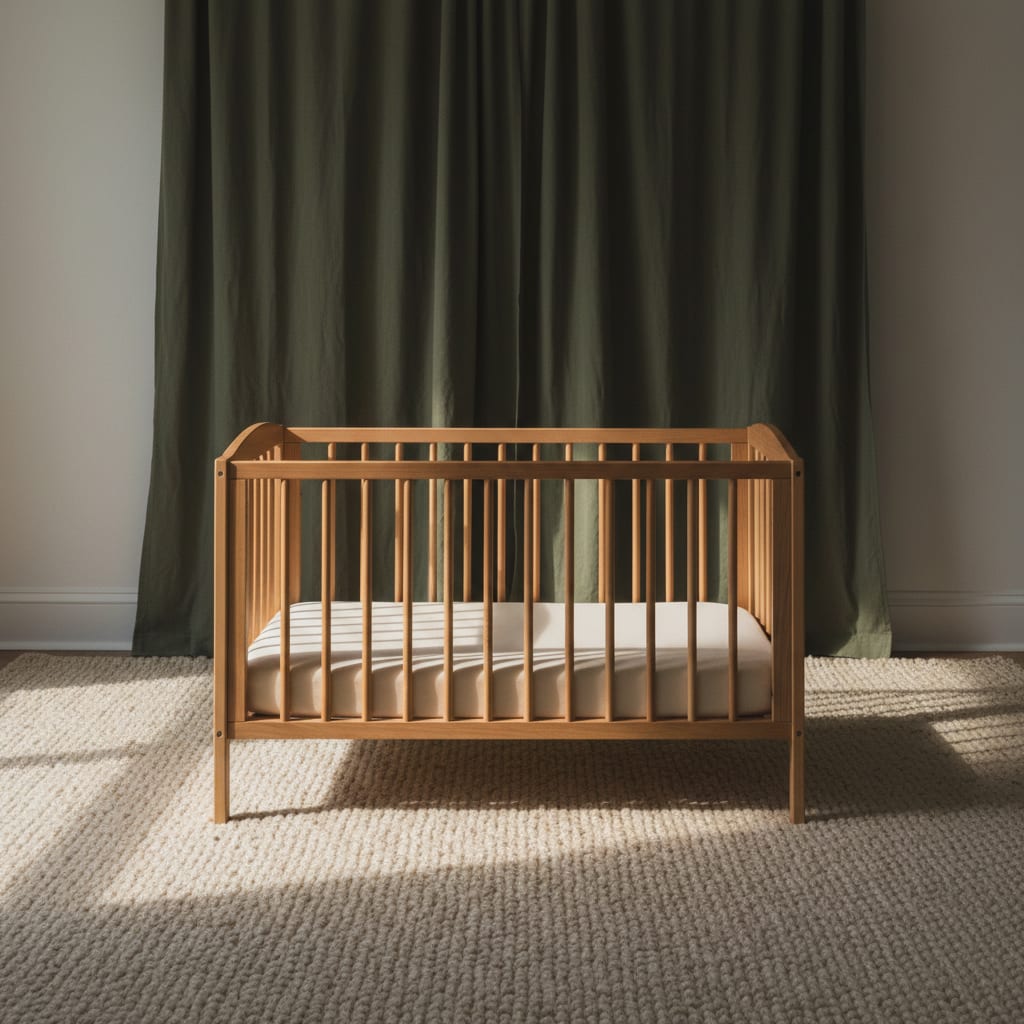
Can a baby nap under a military flight path? Usually yes, with some planning. Put the crib in the room farthest from the runway side of the house, close it up for every nap, and learn when the flying actually happens so you can protect the nap it hits hardest. Run a sound machine quietly and well away from the crib to cover the smaller noises. Save ear protection for awake time outdoors near the flight line. The American Academy of Pediatrics treats aircraft noise mainly as a sleep problem, and any worry about your child’s hearing goes to the pediatrician.
Hearing and sleep are two different questions
On hearing, the AAP’s parent page on noise lists “airplanes and airports” as environmental noise and says that kind of noise “is less likely to cause hearing problems than loud noise from personal devices and activities such as concerts, sports games, dances and celebrations” (HealthyChildren.org, How Noise Affects Children, last updated 10/20/2023). The National Institute on Deafness and Other Communication Disorders explains why distance and time matter: “A good rule of thumb is to avoid noises that are too loud, too close, or last too long” (NIDCD, Noise-Induced Hearing Loss).
Neither page gives a figure for the inside of a nursery near an airfield, so you won’t find one here. If you have to raise your voice indoors every time something takes off, tell your pediatrician and the housing office.
On sleep, the same AAP page is blunter. It says environmental noise “can have harmful effects on children’s learning, behavior and sleep,” and that research “done mainly in adults shows that even low levels of nighttime environmental noise cause more body movements, awakenings and other sleep disturbances.” The nap problem is real, and it is the one you can do the most about.
Find the quietest room before you set up the crib
- Stand in each bedroom during flying. Do it with the windows shut and the door closed. One side of the house is often quieter, usually the side facing away from the runway or the approach.
- Close the room up for every nap. Window latched, door closed.
- Soften the room. Heavy lined curtains, a thick rug and a full bookcase on the loud wall take the edge off the sharper sounds. They will not stop the low rumble.
- Report what’s broken. A window that won’t seal or a door with a gap under it is a maintenance request, not something to live with.
If you’re in installation housing, ask before you change anything fixed to the building. Military OneSource puts it plainly: “Installation housing is stricter than civilian rentals” (Military OneSource, living on an installation for the first time). What you may alter differs from one installation to the next, so the housing office is the place to ask. Tension-rod curtains and a rug need nobody’s signature.
Learn the flying, then protect one nap
Keep a three-day log on the fridge: when aircraft went over, and when each nap started and ended. Then ask around. The housing office, the neighbors and the installation’s official page will tell you whether there are regular flying windows, quiet hours or planned night flying. How much gets posted varies by installation, so check your own.
Then pick the one nap the flying hits hardest and defend that one:
- Shift it by 15 to 30 minutes if that gets the baby asleep before the first launch of the block, or after the last.
- Don’t shift everything. Moving the whole day to dodge noise usually costs more sleep than the jets do.
Why a flyover ends a nap at the half-hour mark
A baby doesn’t sleep at one depth. Betteroo’s guide to short naps puts a single infant sleep cycle at roughly 30 to 50 minutes and explains that a young baby surfaces into light sleep at the end of each one, which is why so many naps stop after one cycle. The same guide notes that “even a little light or noise can wake a baby at that fragile between cycles moment.”
That is what a flyover does. A jet ten minutes into a nap may get no reaction. The same jet at minute thirty-five catches the baby at the surface, and the nap is over.
Two things from that guide help:
- Pause before you go in. If the baby wakes calm, give it a few minutes. Some babies drift into the next cycle once the noise has passed. Go in straight away for hard crying or a baby who seems unwell.
- Move bedtime earlier after a bad nap day. An early night repairs a day of chopped-up naps. Betteroo’s explainer on what happens between one cycle and the next adds that short naps and frequent stirring are usually normal cycle behavior, so don’t blame every one on the airfield.
Use a sound machine, but not as a jet-blocker
A steady low sound covers the smaller noises that finish off a disturbed nap: a door, a dog, a sibling. A fan-based machine like the Yogasleep Dohm Classic does that job.
It cannot cover a jet, and turning it up to try is the mistake to avoid. The AAP says of infant sleep machines: “Some machines can produce hazardous noise levels. If you use a sleep machine, place it as far away from the baby’s head as possible and use it for a short time only.” In practice:
- Put it across the room from the crib, never on the rail or the shelf above it.
- Set it to the lowest volume that smooths the household sounds, then leave the dial alone.
- Run it for sleep times, not all day.
Our post on coming to bed without waking the baby covers the door-and-light half of the same problem.
Outside is where ear protection belongs
The hearing risk is outdoors and close: the flight-line fence, an air show, a homecoming on the ramp.
The AAP’s 2023 policy announcement gives a test that needs no equipment. If a place sounds too loud for an adult, it is probably too loud for a child, and “too loud” can mean “having to raise your voice to speak with someone just an arm’s length away” (HealthyChildren.org, AAP on excessive noise). The same page says children at noisy events should use “protective earmuffs, including on young infants,” and warns that earplugs “can pose a choking hazard to young children.”
Keep infant earmuffs in the diaper bag, such as the Alpine Muffy Baby, and put them on before the noise starts. NIDCD’s advice for everything else is simple: “If you can’t reduce the noise or protect yourself from it, move away from it.” Earmuffs are for awake, supervised time, never the crib. Older kids need a bigger size, which our Space-A travel guide covers.
If you haven’t picked the house yet
The AAP’s advice to any family moving is to “look into nearby airport flight paths” when deciding where to live. For a PCS, ask the housing office which neighborhoods sit under the pattern, and visit during flying hours, not on a quiet Sunday. Weigh it with everything else in our on base versus off base comparison, and add a noise check to your first 30 days at a new duty station.
 A nap plan for a loud address
Betteroo builds nap and bedtime timing for your child's age, so you know which nap to protect when the flying starts and how early bedtime should be after a rough day.
Take the 3-minute sleep quiz →
FAQ: jet noise and baby sleep on base
Will jet noise damage my baby’s hearing indoors?
The AAP says environmental noise such as aircraft is less likely to cause hearing problems than loud devices and events. No source we loaded gives a level for inside a home near an airfield, so take any concern to your pediatrician. The AAP notes pediatricians can consider a formal hearing evaluation for a child with a history of excessive noise exposure.
Can my baby wear earmuffs to nap?
No. Earmuffs are for awake, supervised time in loud places. A baby’s sleep space stays bare, with the baby on their back on a firm, flat surface.
Should I turn the white noise up when the jets fly?
No. A sound machine can’t cover an aircraft, and the AAP warns that some machines reach hazardous levels. Keep it low, across the room, and on for sleep times only.