PCS With a Toddler: Moving Without Losing Bedtime
A PCS with a toddler runs on three defenses: protect sleep, protect the lovey, and give the kid a job. Toddlers can’t process a move as logistics — they read it as their whole world being carried out the door in boxes — so the mission is keeping the shape of the day recognizable while the walls change. Sleep gear packs last and sets up first, comfort objects ride in the car with a parent, and you narrate the plan out loud until you’re sick of your own voice. Expect two rough weeks on either side of the truck. Here’s the run-book.
The toddler go-bag: what never touches a moving box
Build one bag per kid that lives with a parent from pack-out through the first night in the new house. It holds the lovey (and, if you have one, the identical backup lovey — the smartest twenty dollars a toddler parent ever spends), two changes of clothes, pajamas, the specific cup, the specific spoon, three books they’d notice missing, diapers or pull-ups, snacks that survive a car, and the sound machine.
The sound machine matters more than the packing list suggests: it’s the one piece of the bedroom you can physically carry into a hotel, a temporary-lodging unit, and an empty new house. A rechargeable travel unit like the Yogasleep Hushh clips to a pack-n-play and runs on a charge, which means the audio half of your kid’s bedroom never actually leaves. If your household white-noise machine is a plug-in — the classic being the Yogasleep Dohm — take it out of the nursery yourself on pack day and put it in the car. Movers are efficient and indiscriminate, and a sound machine looks exactly like a small appliance to a man with a tape gun.
Telling a two-year-old about a move
You can’t brief a toddler; you can only rehearse them. Skip the explanation and run the story, on repeat, in the same words every time: “New house. Mommy comes. Daddy comes. Your bed comes. Bear comes.” Concrete nouns, no abstractions, no timelines longer than “tomorrow” and “after nap.”
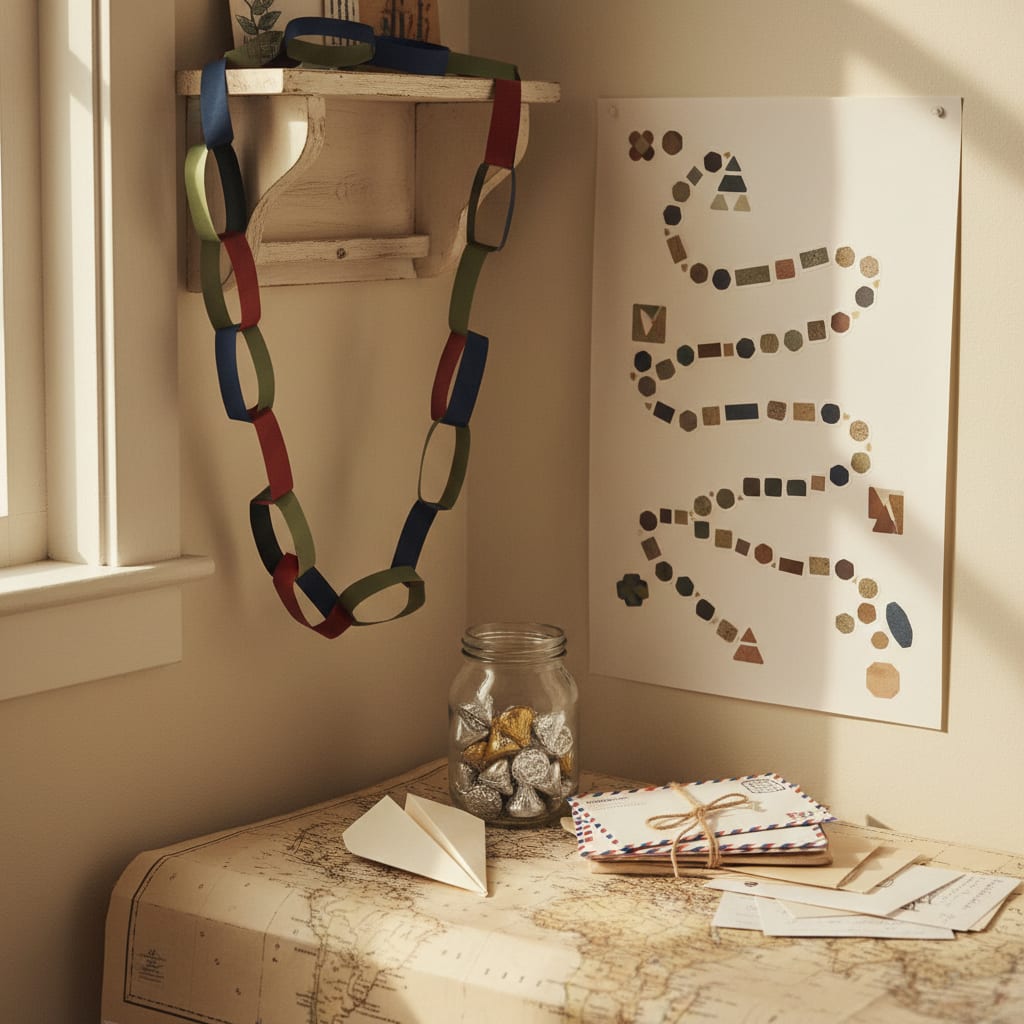
Add props, because this age believes objects more than sentences. A paper chain they tear a link off daily. A picture of the new house taped at their eye height. A cardboard box in the living room a week early that they’re allowed to climb in, so boxes register as furniture instead of threat. And accept that the whole campaign will produce exactly one measurable outcome: your toddler will announce “new house!” to a stranger in the commissary and then refuse to say it again for a month. The broader age-by-age approach, including the siblings who can be reasoned with, is in PCS with kids.
Pack-out day with a toddler underfoot
Get them off-site. A sitter, a neighbor, the base childcare drop-in if you can book it — anything. A toddler on pack day means one adult is fully assigned to the toddler, and you do not have a spare adult.
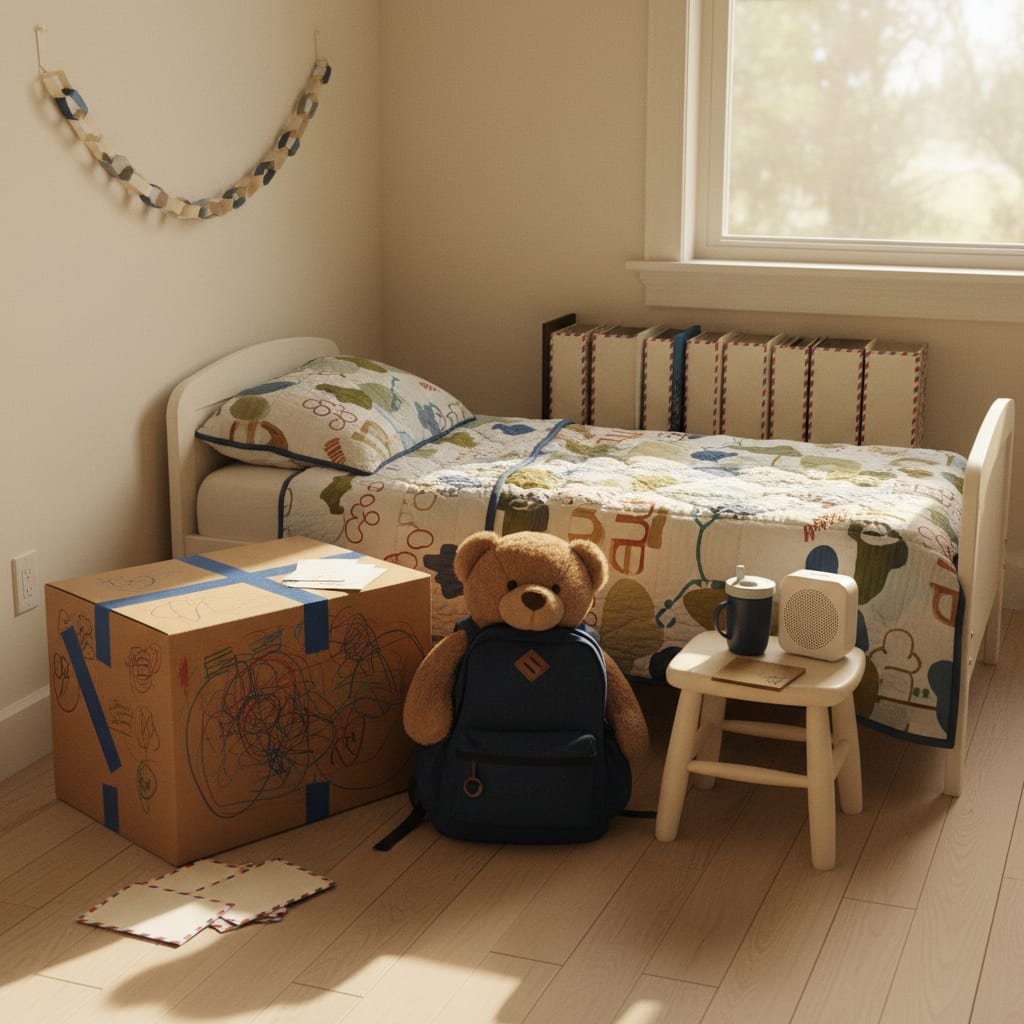
If off-site isn’t happening, run it as a contained operation. Pick one room, ideally the last one scheduled, and make it the kid zone: snacks, tablet, the go-bag, a gate across the door. Tape off the don’t-pack zone in a closet or the car trunk and physically walk the crew lead past it — twice — because a taped-off pile is a suggestion and a conversation is a rule. Assign your toddler an official job with visible authority: a roll of painter’s tape and permission to decorate boxes. It costs you a roll of tape and buys forty minutes, which is a better exchange rate than anything else available that day. The full moving-week sequence lives in the PCS checklist.
Hotel nights, temporary lodging and the drive
Travel is where toddler sleep goes to die, and the fix is boring consistency plus darkness. Run the identical bedtime sequence in every room you sleep in — same order, same words, same book, same lights-out — even when it feels absurd in a highway hotel at 9:40 p.m. The sequence is the signal; the room is just scenery.
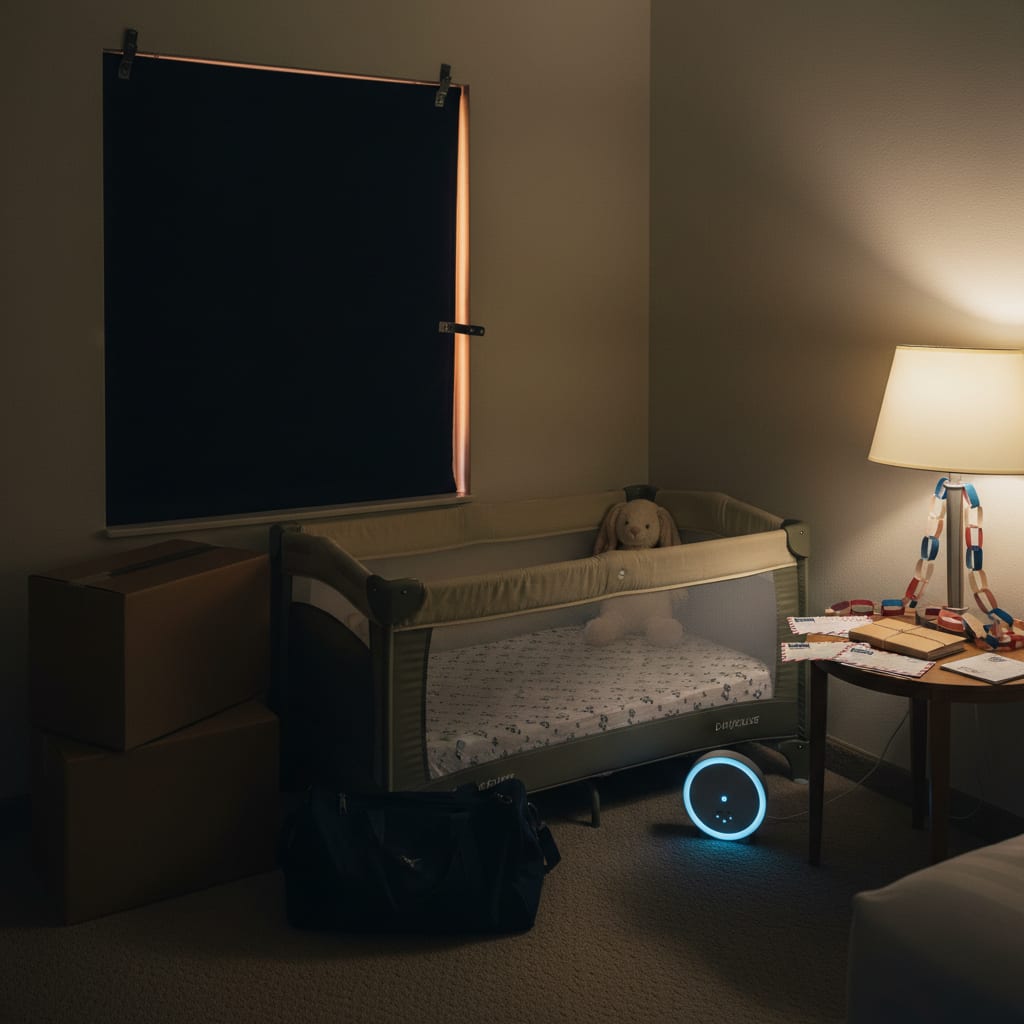
Darkness is the other lever. Hotel rooms leak light from parking lots, hallway strips and that one indestructible smoke-detector LED. Binder clips on the curtain gap solve most of it. If you’re sharing a single room and your toddler treats seeing you as an invitation to negotiate, a blackout sleep tent over the pack-n-play — the SlumberPod is the one most travel-heavy families land on — gives them a dark box and gives you the rest of the room back. It’s bulky and it isn’t cheap, and if your kid sleeps fine with a sheet over a curtain rod, skip it.
On drive days, protect the nap — drive through it if the car works for that kid, or stop early enough for a real nap in a real bed if it doesn’t. Don’t “make up time” through a toddler’s nap window twice in a row. The bill comes due at 5 p.m. in a parking lot in Kansas.
The first 72 hours in the new house
Beds before boxes, always. Before the movers leave, before you find the coffee maker: the toddler’s bed assembled, familiar sheets on it, sound machine plugged in, lovey placed, a nightlight in. If the crib is a rental or a loaner, it still gets the same sheets and the same objects around it. If a baby’s in the mix too, the sleep-protection playbook scales down in PCS move with a baby.
Then restart the rhythm at full strength on night one. Same wake-up, same meals in roughly the same order, same bath-book-bed. Toddlers reboot fast when the sequence holds and slowly when it doesn’t, and the temptation after a fourteen-hour unload day is to let bedtime slide “just tonight,” which is how a one-week wobble becomes a six-week one. Unpack their room first and completely — toys visible, books on a shelf, everything else can stay cardboard for a fortnight. The rest of the settling-in campaign is laid out in your first 30 days at a new duty station.
The regression that arrives two weeks later
Toddlers often hold it together through the move and fall apart once things are calm — which reads as bafflingly ungrateful and is actually just processing. Expect some combination of night wakings, bedtime protest, potty backsliding, new separation anxiety and a fresh fear of the dark. None of it means you broke your kid.
Hold routines steady, add a little more presence at bedtime without inventing a new habit you’ll have to fire later, name the feeling plainly (“this room is new, and new is weird — I’m right here”), and give it a few weeks. If sleep, mood and eating are all still off after a month or two, or if anxiety is spilling into the whole day, that’s a call to the pediatrician — and Military OneSource and your installation’s family-support center exist for exactly this kind of stretch. Asking for backup is a logistics skill.
FAQ: PCS with a toddler
How do you keep a toddler’s sleep on track during a PCS?
Carry the bedroom’s sensory signature with you: sound machine, lovey, same sheets, same books, same sequence in the same words. Pack sleep gear last and set it up first at the new house, and hold the routine on night one even when the day was long.
Should a toddler be present on pack-out day?
Ideally not. A toddler on pack day occupies one adult full-time and adds risk around open boxes and propped doors. If off-site care isn’t possible, gate them into one room with the go-bag, and give them a roll of painter’s tape and a box to decorate.
How long does it take a toddler to adjust after a move?
Most settle within a few weeks once routines are running in the new house, and many wobble after the move rather than during it. Judge adjustment at the six-to-eight-week mark, not week one, and loop in your pediatrician if sleep and mood are both still off after a month or two.
What should you unpack first with a toddler?
Their bed, their sound machine, their lovey, then the rest of their room — toys out, books shelved — before you touch the kitchen or the garage. A finished kid’s room inside a house full of boxes does more for everyone’s night than a finished anything else.