Homecoming Signs and Outfits: What to Buy, What to Make
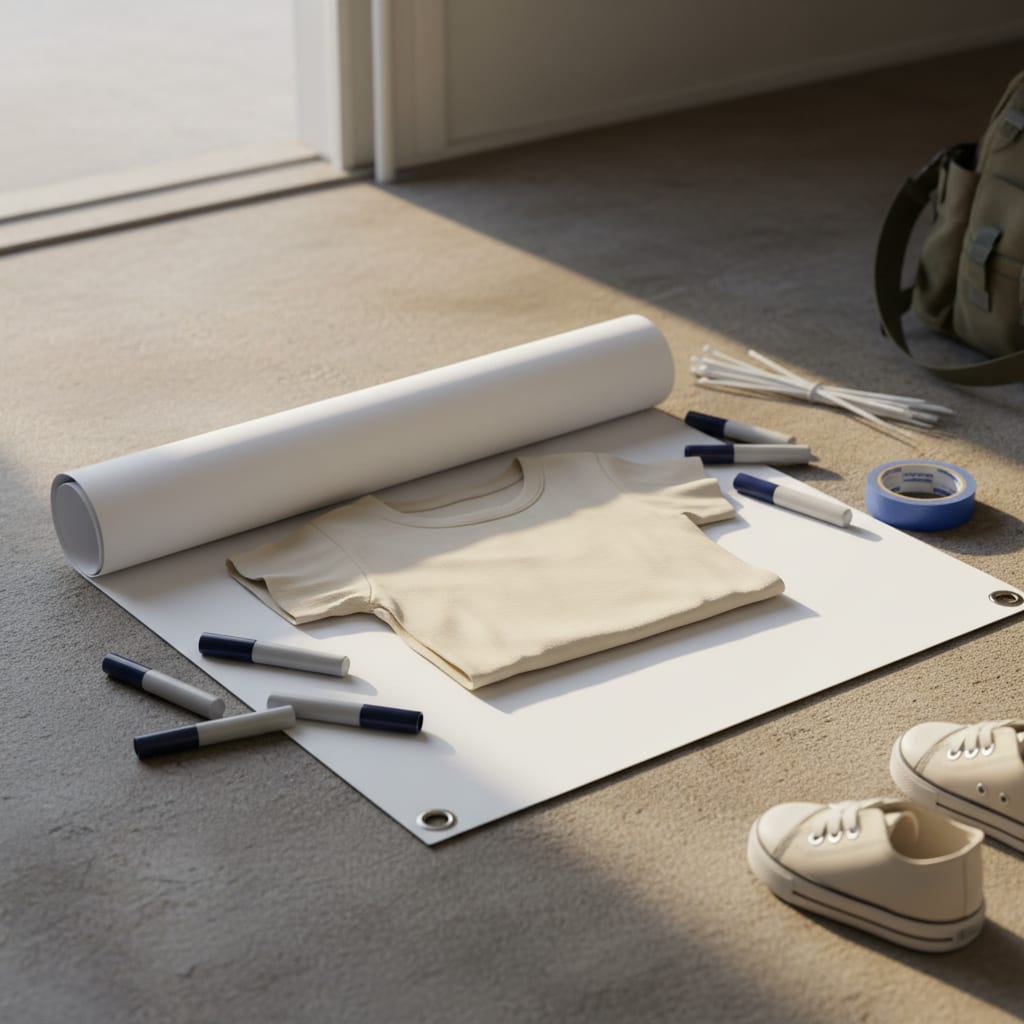
For a sign, buy a blank vinyl banner or a tri-fold foam board and letter it yourself with oil-based paint markers — short message, huge letters, high contrast. For outfits, one shirt per kid, ordered at least three weeks out, in a fabric they already tolerate. Custom and personalized work goes to Etsy makers, and it goes early. Everything else is optional. The two things that actually decide how the day feels are legibility from thirty feet and a kid who isn’t itching.
The sign is the photo, so build it for the camera
Whatever else it does, the sign ends up in every picture from that day, on the wall of a kid’s bedroom, and in a frame at somebody’s grandmother’s house. That’s the brief it should be designed against.
Three rules cover most of it. Keep the message to four or five words — long sentences shrink the letters and nothing reads at distance. Use dark ink on a light background rather than the reverse, because hangars, terminals and gyms are lit badly and camera phones handle contrast better than they handle color. And write it as the kid’s line, not the adult’s. “Daddy, you’re home” beats anything clever, and it’s what the child will actually shout.
Let the kids do the decorating and keep the lettering for yourself. Handprints, stickers, a crayon border, a stripe of glitter that will be in your car until the next PCS — those are the parts that make it theirs. Wobbly hand-drawn letters look charming in the living room and read as a blur in the arrivals photo.
Buying a banner versus making one
There are three realistic routes and they differ mostly in how much time you have.
A blank 3x6 vinyl banner with grommets is the sturdiest option: it survives weather, it hangs from a fence or a garage with zip ties, and it can be rolled up and used again for the next milestone. Grommets matter more than they sound like they do — taped corners fail outdoors and in any breeze.
A tri-fold foam display board with faint printed gridlines is the indoor choice, and the gridlines are the reason to buy that version rather than a plain one: they keep your lettering level without pencil marks, which is the single most common way a homemade sign goes wrong. It also stands up by itself, so a five-year-old can hold it or lean it against a leg without a second adult on sign duty.
For either, oil-based paint markers in bold point beat poster paint and markers — they don’t bleed on vinyl, they don’t fade under lights, and they go on thick enough to read across a hangar. Draft the words in pencil or with a light chalk line first. There is no undo on a vinyl banner.
Ordering a fully printed custom banner is the fourth route, and it’s fine, but check the production window before you fall in love with a design. Return dates move, and a printed banner ordered against a date that slips is a sad object in a closet.
Homecoming outfits that survive the day
Buy for comfort first, cuteness second, because the day involves a lot of waiting.
Ready-made shirts are widely available. Inktastic makes a welcome-home baby tee and a matching toddler dress, and there are plenty of kids’ welcome-home shirts in the same vein. Order at least three weeks out and order the next size up: kids grow through a deployment, and a shirt bought at the start of one usually doesn’t fit at the end of it.
Two practical notes from families who have done it more than once. Wash the shirt before the day so it isn’t stiff and printed-feeling, and let a sensitive kid wear it once beforehand — a screen-printed panel across the chest is a texture, and the morning of is a bad time to discover the answer. And skip the full coordinated outfit for babies and toddlers unless somebody genuinely enjoys that project. A plain shirt with the message on it, over whatever they were already comfortable in, photographs just as well.
What Etsy is actually good for
Etsy is where the custom end of this lives, and it’s largely military spouses running small shops, which is a reasonable place for the money to go. Search Etsy for welcome-home banners and homecoming shirts and you’ll find hand-lettered signs, personalized tees with a kid’s name, sibling sets, and matching outfits sized for a baby who will be a different size by the time it arrives.
The rule is the same as for a printed banner: read the processing and shipping windows before you order, and if the return window is vague, ask the shop directly rather than hoping. A shop that won’t commit to a timeline is telling you something useful.
If you want something both custom and fast, split the order: a plain shirt now, and the custom thing made for the first weekend home instead of the arrival itself. It removes the deadline problem entirely.
Day-of kit: the small things that save the moment
Signs and shirts are the easy part. The kit that actually saves the day is unglamorous.
- Zip ties, painter’s tape and a small pair of scissors in a bag. You will not know what you’re hanging the sign from until you get there.
- Snacks and water for a longer wait than you were told. Arrival times move by hours, and a hungry four-year-old at hour three is the real threat to the photo.
- A backup adult or a stroller so somebody’s hands are free. Holding a sign, a toddler and a phone is two jobs too many.
- The kid’s comfort object. A homecoming is loud, crowded and emotionally enormous, and the photo doll they’ve been carrying for months does not stop being useful on the last day.
- Check the ground rules first. Installations differ on what can be brought into a hangar or onto a flightline, and the unit’s family readiness contact is the right person to ask — not the internet.
What to skip
Confetti cannons and silly string, which somebody has to clean up and which many venues quietly ban. Balloon arches, unless you enjoy building them at 4 a.m. Anything with a specific date printed on it, for the reason above. And a full staged photo shoot on arrival day — the pictures people keep are the accidental ones, and the first 48 hours land better slow than scheduled.
One more: don’t put more personal detail on a public-facing sign than you’d say out loud to a stranger. First names are plenty.
FAQ: homecoming signs and outfits
What should a military homecoming sign say?
Something short, in the child’s voice, in letters big enough to read from across a room. “Welcome home Daddy”, “We missed you”, or an inside joke your family already has. Four or five words is the ceiling — the more words you add, the smaller they get, and the less any of it reads in a photo.
How far in advance should you order homecoming shirts?
At least three weeks for ready-made, longer for anything custom or personalized, and order a size up. Return dates move in both directions, so treat any date you’re given as an estimate and build in the slack rather than paying for expedited shipping later.
Are homecoming outfits worth buying for a baby?
A single soft shirt, yes. A full coordinated outfit, only if you enjoy that sort of thing — babies are uncomfortable in stiff new clothes and it shows in every picture. Comfort photographs better than coordination, and the message on the shirt is doing all the work anyway.
Can you bring signs and balloons to a military homecoming?
Usually signs, often not balloons, and it varies by installation and venue. Ask the family readiness contact or the unit’s family point of contact what’s allowed at that specific location rather than assuming — the rules differ from base to base and change.
What do you do with the sign afterwards?
Keep it. A vinyl banner rolls up in a closet and comes back out for the next homecoming, a birthday or the end of a training stretch. Kids’ handprints on it make it a keepsake, and the reusable version is a much better buy than a dated one. Once the day is over, the harder work is the routine everyone rebuilds together.