Early Waking on a Duty Schedule: Your Alarm, Not the Sun
If your kid is up at 0430 on the mornings you have an early formation and sleeps until 0630 on leave, the sunrise is not what’s waking them. Your alarm is, along with everything that happens in the ten minutes after it. Small children entrain to household activity as readily as to light. Break the cue chain first — silence the alarm at the source, move getting ready out of earshot, seal the light gap under the door, and make the pre-dawn goodbye short and dull. Only then start adjusting bedtime.
The tell: does the wake-up move when the alarm moves?
Two weeks settles this, and it costs nothing. Note two numbers each morning — when the first alarm went off, and when the kid surfaced — then look hard at the days nobody had to be anywhere.
- The wake-up tracks the alarm. It slides to 0500 the week your report time slides to 0500, and on leave they sleep in. That is a learned cue, and cues can be removed.
- The wake-up holds regardless. 0445 on a Saturday when the house is silent and the room is dark. That is the schedule underneath — bedtime, nap timing, wake windows — and no amount of tiptoeing will touch it.
- Both, which is the usual answer and the reason people conclude nothing works. Fix them in order, cue first, because the cue is the loud one.
A duty schedule makes this easy to diagnose and miserable to live with: you cannot move the independent variable, so everything else gets engineered around it.
Everything downstream of the alarm counts as the alarm
The alarm is usually the smallest part of it. Sit in the kid’s room one morning while somebody else runs your routine, and listen to what crosses the wall:
- A phone buzzing on a wooden nightstand — the wood is the speaker, and it carries further than the ringtone would.
- The bathroom fan, and the pipes when the shower runs.
- The coffee grinder. Twelve seconds, and the loudest thing in the house before noon.
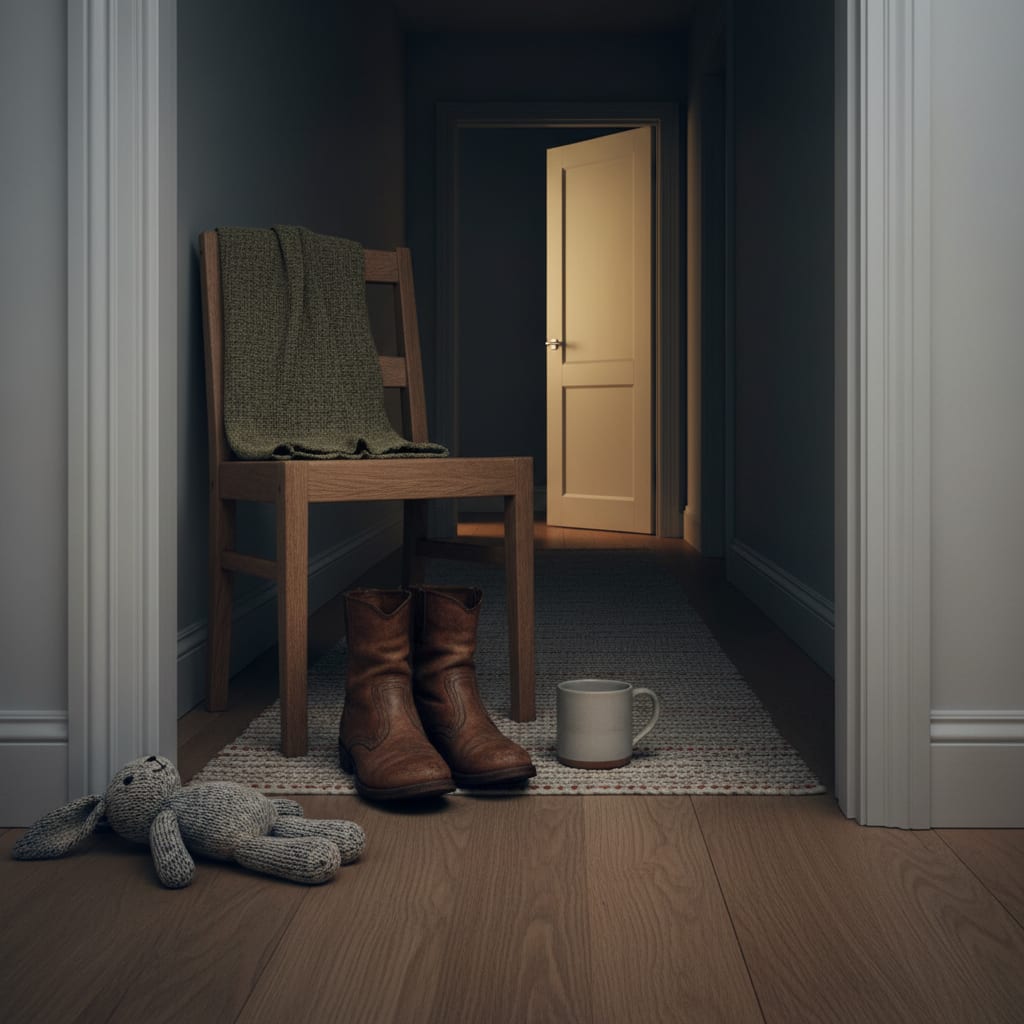
- Keys, the closet door, boots on a hard floor, the storm door, a truck starting outside the kid’s window.
- The hallway light going on. From the far side of a bedroom door, a strip of light at 0430 is a sunrise.
- The dog, who has also decided it is morning and has opinions.
And one people miss because it happens the night before: the kid watched you stage the bag by the door and lay the uniform over the chair. Some of them run the schedule off that, and wake already knowing what today is.
Silence the front of the chain
The goal is not a quiet morning. It is a morning with no step changes in it — nothing that goes from zero to something.
Take the alarm off the nightstand and put it on your wrist. A vibrating band like the Tech Tools Shake N Wake wakes one person and nobody else — the entire job. Phone on silent, face down, across the room, so the 0415 buzz that precedes your real alarm stops being part of the household’s day.
Dress somewhere that doesn’t share a wall with a child. Stage the uniform, boots, bag, keys and the coffee setup there the night before. Getting ready in the kitchen feels ridiculous for a week, then obvious.
Do the loudest thing first, and furthest away. Kids sleep deepest early in the night and lightest near dawn, so grind the coffee at 0415, not 0450.
Raise the floor, then seal the gap
Continuous sound, running all night. Masking works because the noise floor never changes — a machine you switch on at 0400 is itself a cue. A mechanical unit like the Yogasleep Dohm runs the same hiss from bedtime to morning with nothing to loop or lose signal.
Close the light gap under the door. An adhesive under-door seal like the Holikme door draft stopper kills the strip of hallway light and takes a bite out of the noise as a bonus. Use a low path light instead of the overhead, and get the room properly dark for summer, when a 0530 sunrise will happily do your alarm’s job for it.
Make the goodbye boring, or move it to the night before
Here’s the unwelcome part. If waking at 0430 reliably buys a hug, a look at the boots and a carry to the front door, they will not stop waking at 0430. You’ve made it the best-paying five minutes of their day.
So: say the real goodbye at bedtime, same words every duty night, so the morning has nothing left to collect — and if they wake anyway, fifteen seconds in the dark, in their bed, no lifting, no lights, and go. It feels cold the first few times. Same principle as saying goodbye before the bedtime sequence starts rather than in the middle of it: a goodbye at a fixed point is a ritual, and a goodbye wherever the kid catches you is a negotiation.
When the alarm is gone and they still get up
Habit outlives the cue by two or three weeks, sometimes longer — which is why absences confuse people. The alarm-owning parent leaves for a stretch, the house goes quiet at 0430, and the kid keeps popping up at 0430 anyway. Read that as a habit still unwinding plus a missing person, not purely as distress; what actually changes in kids’ sleep when a parent leaves is worth reading before you settle on grief.
Past a month of quiet mornings you’re into the schedule half, where the levers are different: a bedtime that drifted late, a nap running too long or ending too late, wake windows built for a younger kid. Betteroo’s rundown of the schedule levers that move a true early riser has the right order of operations — which is emphatically not “put them to bed later,” the move everyone tries first and the one that makes early rising worse about as often as it helps.
Shift in fifteen-minute steps rather than buying an hour at once, and give the kid a morning signal that isn’t you — the ready-to-rise clock setup is in the solo morning routine post. If the other adult sleeps days, a household on two clocks covers that arithmetic.
Keeping the numbers current is the annoying part
Wake windows and nap timing move as kids grow, so a schedule that fit in March is quietly wrong by August — which is how a fixed early wake-up creeps back months after you thought you’d solved it. That arithmetic is a chore nobody keeps up by hand, and it’s worth letting something else keep it current: Betteroo builds nap timings and a bedtime for the age your child is now and updates them as they grow, for around $20 a month. It won’t move your report time; it will stop you guessing about the half of the problem that isn’t your alarm.
The duty schedule itself — swaps, early-report exceptions, family-care arrangements — goes through your chain and your installation’s family-support office or Military OneSource, not a blog.

FAQ: early waking around an early duty day
My kid wakes the second my alarm goes off. Is that really trainable?
Yes, and usually faster than schedule fixes. A wrist alarm, dressing elsewhere, continuous sound and a sealed door gap will show you something inside a fortnight. If two silent, dark weeks change nothing, it was never a cue.
Should I put my kid to bed later so they sleep past my alarm?
Usually not. Early rising is the one sleep problem where a later bedtime often backfires, because an overtired kid wakes earlier rather than later. Get the morning quiet and dark first, then try bedtime earlier for a week and see which way the wake-up goes.
Is it better to wake them for the goodbye or leave without one?
Leave without one, provided the goodbye already happened at bedtime and they know the pattern. Waking a sleeping child to say goodbye is for the adult, not the kid, and it teaches a light sleeper to listen for you at 0415.
What about weekends, when nobody’s alarm goes off?
Expect a few more weeks of it, then a fade. Don’t fix a Saturday by letting them nap two hours longer — that moves the problem to Sunday night. Hold the same wake-up window all seven days while you unwind the habit.