Deployment Sleep Problems in Kids: Causes and Fixes
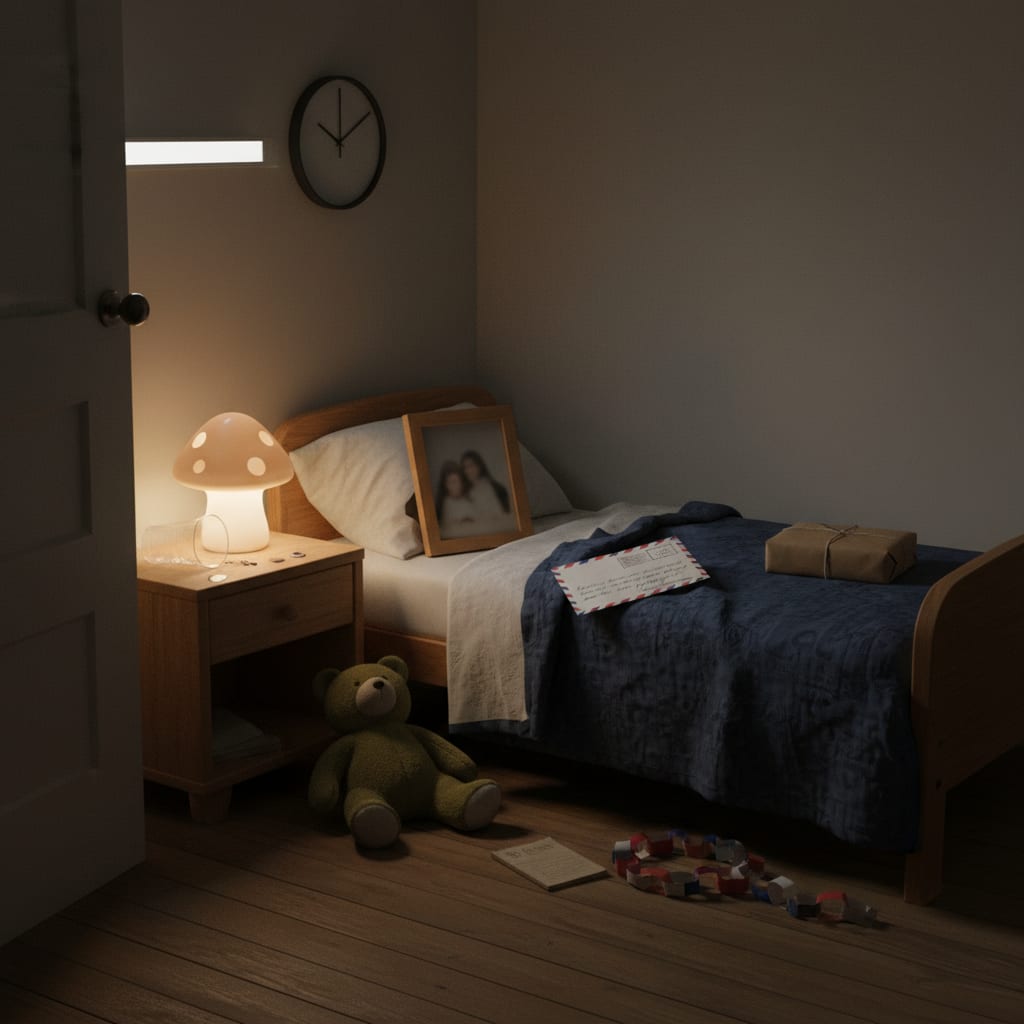
Kids’ sleep almost always wobbles when a parent leaves, and it usually shows up within the first week or two: longer bedtimes, night waking, early rising, a toddler who suddenly won’t be left in the room. The cause is almost never the sleep itself — it’s separation surfacing after dark, when there’s nothing left to distract from it. The fix is boring and it works: hold the routine rigid, give the absent parent a fixed slot inside it, add reassurance at the front of the night rather than at 2 a.m., and wait it out. Most wobbles ease in two to four weeks.
What a deployment sleep wobble looks like
It rarely announces itself as sadness. It arrives as logistics.
Bedtime, which took twenty-five minutes in March, now takes an hour. A three-year-old who has slept through since last summer is in your doorway at 1 a.m., then at 3. A five-year-old announces at lights-out, in a flat voice, that he doesn’t want to talk about it, and then doesn’t sleep.
All of that is the same phenomenon wearing different clothes. At night the room is dark and the missing parent is very large. Whatever they’re carrying, they hand it to you between 7:30 and 8 — which is why bedtime during a deployment is the most important shift of the day. The full nightly sequence is in solo parent bedtime during deployment.
Is it the deployment, or is it the age?
The two have different fixes, and they overlap constantly.
A separation wobble shows up in the days after the goodbye, is heavier at the front of the night, comes with more daytime clinginess, and responds to reassurance and connection rituals. A kid who wants you physically present but calms once you are is telling you something emotional.
An ordinary sleep regression doesn’t care what’s going on in your household. It’s driven by development and by schedule — a nap that needs dropping, wake windows that quietly stretched, a leap in mobility or language. No amount of talking about feelings shifts it, because feelings weren’t the cause. Betteroo’s guide to how sleep regressions work and how long they last is a decent sanity check.
Often it’s both. The tell: if reassurance changes nothing at all, look at the schedule. If the schedule is clean and it’s still bad, look at the separation.
Age by age: what shows up
Babies under a year. They don’t understand the deployment, but they register who is missing from the house and how the remaining adult feels — the disruption tracks your stress more than the calendar. Keep the routine identical and protect your own sleep hard — the baby is reading your nervous system.
One to three. The peak zone. Separation is developmentally live at this age anyway, and a real absence pours fuel on it — bedtime resistance, waking to check you’re there, refusal to be left alone in the room. Betteroo’s write-up on separation anxiety and baby sleep covers the mechanics; add the deployment and you have the same thing with a reason attached.
Three to five. Now they have language, so you get questions at lights-out — the specific, unanswerable kind, at the worst moment. Answer briefly and honestly, close the topic, return to the sequence. Move the real conversation to daylight; scripts by age are in explaining deployment to a child.
Five and up. Watch the quiet ones. Older kids often perform fine and then lie awake, refuse their own bedroom, or get a stomach ache every night at 7:45. A kid who is stoic by day and dysregulated at night isn’t doing well; he’s doing it politely.
The five fixes that do most of the work
- Hold the routine rigid, and start it earlier. Same order, same words, same lights-out. Solo means no relief pitcher, so begin the wind-down about thirty minutes earlier than you did with two adults. Rigidity isn’t coldness here — it’s the container the sadness happens inside.
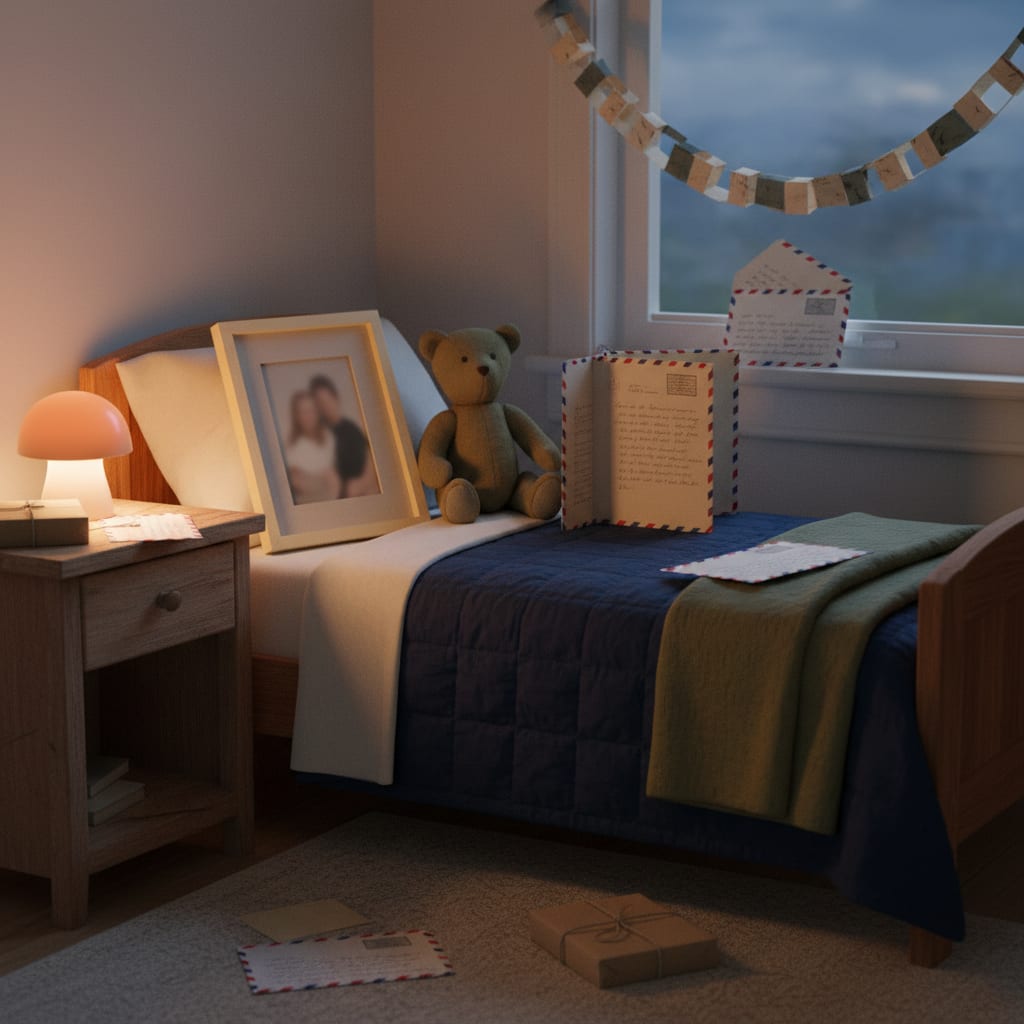
- Give the deployed parent a fixed slot. One owned moment every night: a recorded story, goodnight to their photo, a line said in their name. Crucially, it must not depend on whether a call connects. Rituals that hinge on connectivity fail exactly on the nights the kid needs them, and the failure lands as another absence.
- Front-load the reassurance. Add five minutes of unhurried connection before lights-out — lying on the floor next to the bed, no phone, no agenda. It costs a fraction of an hour of 2 a.m. negotiation, and works on the same need.
- Give night waking a boring, identical response. Walk them back, same sentence, minimal light, minimal talk. Sympathy at 2 a.m. is real but it’s also a reward, and a lonely kid will find that lever fast. Warmth at bedtime, dullness at night.
- Give early risers a signal they can read. A lot of deployment waking lands at 5 a.m., which is a schedule problem dressed as an emotional one. A ready-to-rise clock like the LittleHippo Mella turns “is it morning?” into a colour on a nightstand, and doubles as a nightlight. It won’t fix a genuinely overtired child — for that, move bedtime earlier before you buy anything.
What makes it worse
- Renegotiating the routine nightly. Every concession becomes tomorrow’s opening bid.
- Moving them into your bed as the default. Fine for one hard night; as policy it creates a second, harder transition right when the deployed parent gets home.
- Big changes stacked on top. Dropping a nap, moving to a toddler bed, potty training or changing rooms in the first month is optional load. Postpone.
- Hiding your own state. “I miss him too, and we’re okay” beats a bright, brittle performance — kids aren’t fooled by the performance and are reassured by the honesty.
- Days with no absent-parent contact at all. Even when calls aren’t possible, keep them present in daylight: the photo on the fridge, the countdown, the letters. Daytime versions are in deployment activities for kids.
When it’s more than a wobble
Most of this eases within two to four weeks of steady handling. What isn’t routine: sleep still deteriorating after a couple of months, night terrors several times a week, a child anxious all day rather than mainly at bedtime, eating changes alongside the sleep, or a school-age kid whose functioning has dropped across the board.
That’s a conversation with your pediatrician, and non-medical counseling and child-and-youth support exist for exactly this. Availability varies by branch, component and installation — start with your unit’s family-support contact or Military OneSource. Asking early is cheap. Waiting is not.
FAQ: kids’ sleep during deployment
How long do deployment sleep problems last in kids?
Most settle within two to four weeks once the routine is steady and the absent parent has a fixed place inside it. Expect flare-ups around milestones — a birthday, a holiday, a missed call, the halfway point — and around homecoming, which produces its own wobble.
Should I let my child sleep in my bed while my spouse is deployed?
Occasionally, deliberately, is fine. Permanently, by default, tends to cost more than it gives — it becomes the routine, and then homecoming means undoing it at the exact moment the household is already rearranging. If you want the closeness, a mattress on your floor for a defined stretch is easier to end.
Why does my toddler only fall apart at bedtime?
Because bedtime is when the distractions stop. Daylight has school, snacks, siblings and you; the dark has none of that, and separation shows up whole. It’s not manipulation and it isn’t a routine failure — it’s the day’s feelings arriving at the only quiet hour available.
Is it a regression or is it the deployment?
Check the schedule first. If wake windows, nap timing and bedtime are age-appropriate and it’s still bad, it’s more likely the separation. If reassurance changes nothing and the trouble follows a developmental leap or a nap that needs dropping, it’s a regression — and it would have happened whether or not anyone deployed.
Do video calls help or hurt bedtime?
Both, depending on timing. A call an hour or more before the routine starts usually helps. A call at lights-out winds kids up, or ends in tears when the connection drops, and then you’re re-running bedtime on a raw kid. Keep the absent parent’s bedtime presence to something you control — a recording, a photo, a line.