Military Night Shifts: A Bedtime for a House on Two Clocks
When one parent works nights, the house runs on two clocks — a kid’s clock built around naps and a 1930 lights-out, and an adult’s clock that puts the sleep block in the middle of the afternoon. Don’t merge them. Give each clock protected, non-negotiable hours, decide in advance who owns bedtime on a duty night, and move the departure and the return outside the routine rather than through it. Two clocks, clearly separated, beat one clock nobody can keep.
The problem isn’t absence — it’s overlap
A deployment is a clean absence: everyone knows the other parent is gone and the house reorganizes around one adult. A night rotation is messier, because the other parent is right there, asleep behind a door at 1400 on a Tuesday while a three-year-old does what three-year-olds do at 1400 on a Tuesday.
The house isn’t short an adult — it’s short of hours where both adults are awake. That lands hardest on whoever runs bedtime, doing it solo in a house that visibly contains two parents. It’s a specific kind of tired, and worth naming out loud rather than letting it curdle.
So stop running a two-parent evening. Run a deliberate one-parent evening with a scheduled second parent, and most of the resentment goes with it.
Protect the day sleep like it’s a watch
The day sleeper’s block isn’t a nap. It’s the sleep that makes the next shift safe, and with small kids it erodes by default unless somebody defends it. Treat it as a standing appointment with a start time, an end time and a door that stays shut.
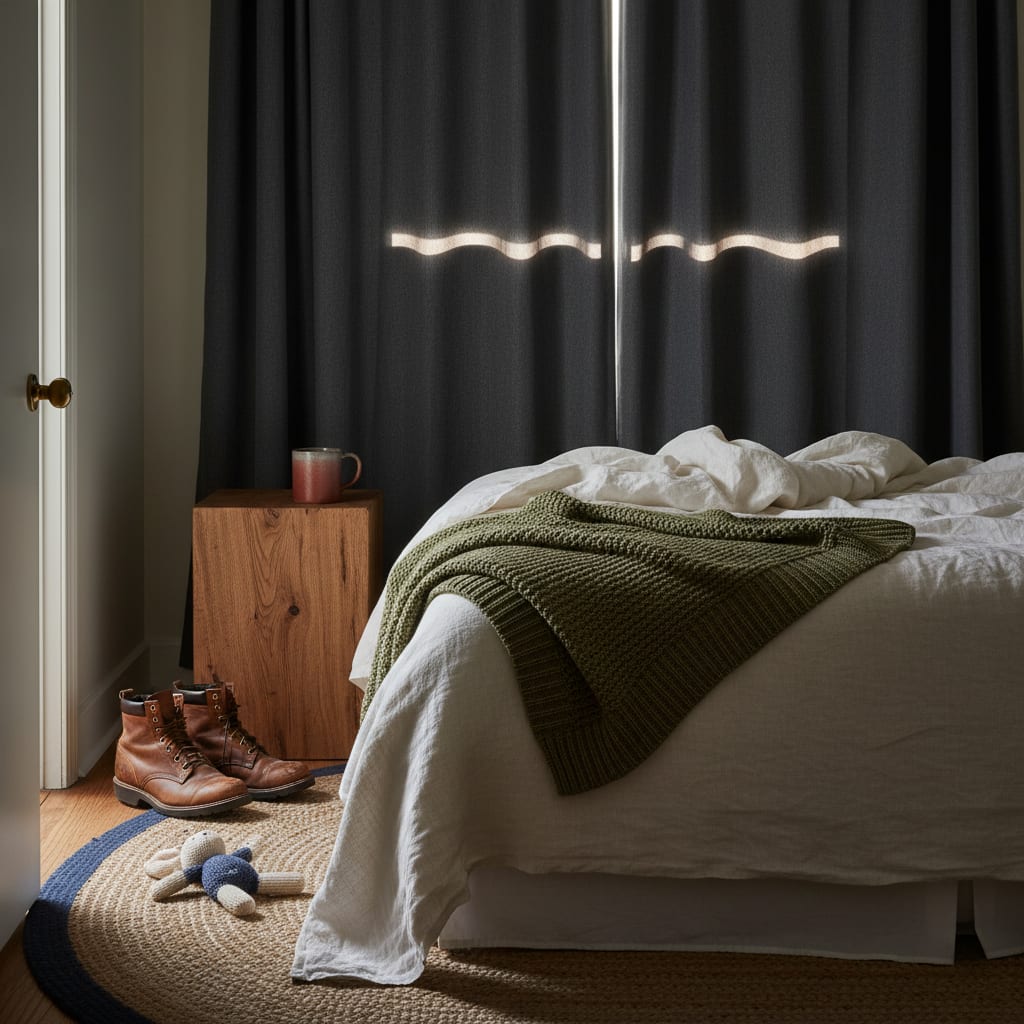
- Make the room actually dark. Afternoon light through a standard curtain is the biggest reason day sleep fails. A lined blackout panel reaching past the frame — the NICETOWN 100% blackout curtains are the workhorse version — works in base housing, a rental, or a room you’ll leave at the next PCS.
- Give up on quiet and buy foam. You are not keeping a toddler silent for six hours. The fifty-pair box of foam earplugs is the honest answer; they get lost and chewed by the dog, so buy in bulk.
- Move the noise, not the kid. Make the rooms furthest from the sleeping adult the loud rooms. Doorbell off, phone silent, deliveries to the porch.
One rule that saves marriages: the day sleeper isn’t woken for anything short of a real emergency, and you both define “emergency” in advance, while everyone is calm.
Move the 2200 departure out of the routine
If the shift starts at 2200, the departing parent is showering and leaving inside the window where the kids are supposed to be settling — a bedtime detonated by a door.
Goodnight happens before the sequence starts — a real one, at a fixed point, unrushed — and then that parent stays out of sight. A goodbye slotted between the second book and lights-out becomes an event, and events reopen everything you just closed. Kids over about three handle “Dad says goodnight at bath time on his work nights” easily; what they can’t handle is a goodnight that moves.
Then stage the departure to be silent by design. Boots, keys, bag and coffee lid live in the same spot, staged before bedtime, so nobody opens a closet in the dark at 2140. If the front door carries to a kid’s room, run a plug-in sound machine all evening — every night, including nights nobody leaves, so the sound of the house never changes.
Running that evening solo is the same job as solo parent bedtime during deployment — just most weeks instead of one long stretch.
Handle the 0700 return with the same care
The return is the underrated one. A parent walking in at 0700 arrives into breakfast, shoes and the school run — the most fragile twenty minutes of the day — carrying twelve hours of fatigue and nine minutes of patience. Pick one of two roles in advance, not at the door:
Pass-through. Good morning, eat, bed. No discipline, no hunting for the other shoe, no briefing on the night. The right default after a hard shift.
On the crew. One defined job — breakfast, or the drive — then bed. Named the night before, never “help out.”
What sinks households is the unspoken third option, where the returning parent hovers, half-participates and everyone starts the day badly. If mornings are your pressure point, the solo morning run-book covers that stretch whether the second adult is deployed or asleep down the hall.
Build three fixed contact points, not a fair split
Don’t chase equal time. A night rotation doesn’t contain enough overlapping waking hours to be equal, and chasing it produces a parent present-but-exhausted at everything and good at nothing. Pick three moments and make them immovable:
- One meal a week the night-shift parent owns completely — usually a late breakfast or weekend lunch that sits inside their awake window rather than fighting it.
- One bedtime a week they run start to finish, on an off night, same sequence the other parent uses. This matters most: a parent who never runs bedtime stops being able to, and the house becomes a single point of failure. Getting checked out on bedtime is a project, not a personality trait.
- One small daily ritual that survives the schedule — two minutes at wake-up, or a voice message recorded before the shift and played at bath time. Small and daily beats big and occasional under six.
Write those three down. Everything else can flex.
When the rotation flips
The two clocks don’t stay put. Rotations change, a swing block turns into mids, and the schedule that worked all spring stops working. The temptation is to re-plan the kid’s whole day every time.
Don’t. The kid’s clock is the stable one — same lights-out, same wake-up, same nap timing — and the adult clock does the moving. Re-check two things at a rotation change: who owns bedtime which nights, and whether the day sleeper’s block has slid into a nap.
Re-check the kid’s timing separately, because that drifts too. Naps shorten, a nap drops, and the 1930 bedtime that fit in March becomes a 45-minute fight in August. In a two-clock house that fight gets blamed on the shift calendar, when an overtired kid just looks like a defiant one and the real problem is an afternoon that ran too long.
Keeping that current across two work calendars and a growing kid is annoying by hand, and it’s where Betteroo actually helps: it builds the nap windows and bedtime for where your kid is now and updates them as they grow, so whichever parent is awake tonight opens the same current plan. Around $20 a month. It won’t buy you overlapping hours; it will stop you spending the ones you have re-litigating bedtime.
If the shift pattern itself is what’s breaking your family — not the bedtime, the pattern — take that to your chain and to Military OneSource or your installation’s family-support office. Don’t take schedule or entitlement details from a blog.

FAQ: night shifts and kids’ sleep
Should kids’ bedtime change to match a night-shift parent’s schedule?
No. Hold the kid’s schedule steady and let the adult schedule move. Lights-out and wake-up should look the same whether tonight is a duty night or an off night — that stability is most of what makes a two-clock house workable.
How do you keep a toddler quiet while a parent sleeps during the day?
You don’t. Aim for a dark, sound-masked room and earplugs rather than a silent house, and relocate loud play to the rooms furthest from the sleeping adult. Enforcing quiet turns the afternoon into discipline and still wakes the sleeper.
When should a night-shift parent say goodnight before leaving?
Before the bedtime sequence starts, at the same point every time — usually bath or dinner. A goodbye inserted mid-routine reopens every step the other parent just closed.
Is one parent working nights harder on kids than a deployment?
They’re different, not ranked. A deployment is a clean absence kids can count down; a rotating night shift is a low-grade inconsistency with no end date, harder to explain and easier to under-resource. If both parents are on shifts, the rotating bedtime roster covers splitting the nights.
What if the shift keeps changing and nothing sticks?
Separate what’s fixed from what rotates. The kid’s sequence and timing are fixed; who runs it gets rostered weekly off the current shift calendar.