New Duty Station: The First 30 Days With Kids
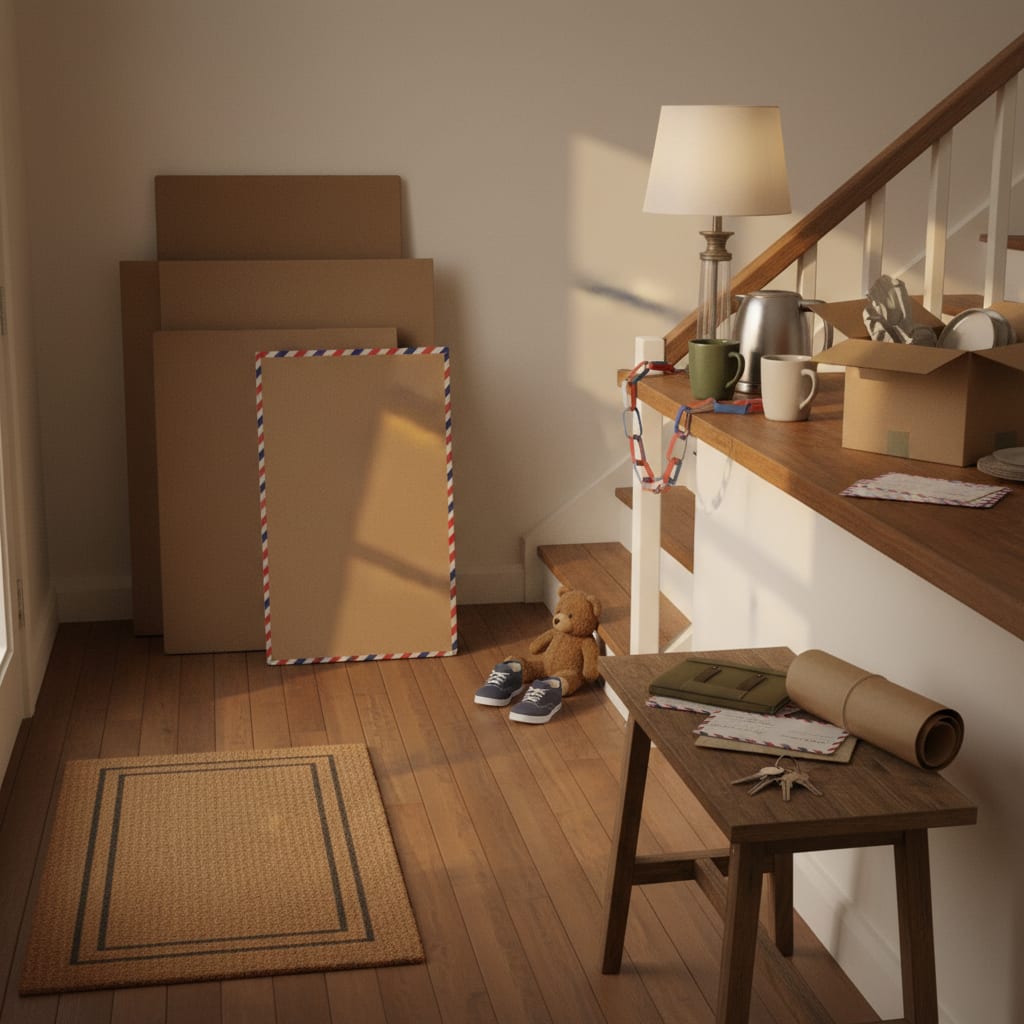
The first 30 days at a new duty station have a natural order: week one is admin and beds, week two is medical and school, week three is routines and recon, week four is people. Do them in that sequence and the house stops feeling like a hotel around the one-month mark. Do them out of order — unpacking the garage before enrolling anyone in anything — and you’ll hit day 45 with a tidy house and no pediatrician, no childcare slot and no friends. Specific requirements vary by installation and branch, so let your check-in packet and the family-support center be the authority.
Week one: check in, then beds before boxes
Knock out the reporting admin the way your orders specify, and while you’re in that building collect the boring infrastructure: base access for family members, vehicle registration if your installation requires it, and updates to DEERS and your address of record. Get the family-support or airman-and-family-readiness center’s number in your phone on the same trip — they’re the switchboard for almost everything in the next four weeks.
At the house, the rule is beds before boxes. Every kid’s bed built and made with familiar sheets, sound machines plugged in, one visible familiar object per kid, on night one. Then bathrooms functional, then the kitchen to the level of “we can cook one meal.” Everything else stays cardboard, cheerfully, for a fortnight. The rest of the arrival sequence, including the claims-and-damage side, is in the PCS checklist.
One task belongs in week one that almost nobody does in week one: document damage and start the claim. Inventory as you unpack, photograph anything broken before it moves, and file within whatever window your move program allows. That window is shorter than the time it takes to feel settled, which is precisely why it gets missed.
Week two: medical, dental, childcare, school
This is the week that decides how the next six months feel, and it’s all phone calls.
- Register with the new clinic and get everyone assigned to a provider. Ask about the referral process for anything ongoing, and confirm current enrollment steps through official TRICARE channels rather than assuming last station’s process carried over — coverage rules and plan options change and vary by location.
- Dental, same drill, and get on a list even if nobody has a toothache. Waits are real.
- Prescriptions transferred to a pharmacy you can actually get to, not the one that’s technically closest to a gate you don’t use.
- Childcare: get onto the official waitlist system immediately if you haven’t already. Waitlists at a Child Development Center are measured in months, not weeks, and your position is usually driven by request date — so a request filed the week you arrive is worth more than a perfect one filed in October. Ask the family-support center about certified family childcare homes and off-base options as the bridge.
- School enrollment finished and services confirmed. If a records packet is still in transit, walk in with your hand-carried copies; the full sequence is in the military school transfer checklist.
Add the unglamorous ones while you’re in the swing: new state driver’s licenses and vehicle registration if required, voter registration, and a bank or credit union that has a branch you’ll actually visit.
Week three: rebuild the routines, then run recon
By now the household has been improvising for a month, and improvisation is expensive. Reinstate the rhythm deliberately: same wake-up, same meal order, same bath-book-bed sequence, same weekend anchor. Kids treat a restored routine as evidence that the family is intact; adults treat it as evidence they’re no longer moving. Both are the point.
Then go find the ground. A playground tour with a shortlist, library cards issued as an official family event, the grocery store you’ll default to, the urgent care you’d drive to at 11 p.m., the park with shade in July. Drive the school route and the work route once at the actual times you’ll drive them, because a fourteen-minute map estimate and a fourteen-minute reality are two different numbers at 0730.
Pick one first tradition this week and repeat it. The donut shop on Saturday, the trail on Sunday, pizza on the night nobody wants to cook. New places become home through repetition, and a tradition you started on purpose in week three will be a thing your kids reference for years, usually while you’re the one who wanted to skip it.
Week four: find your people
The logistics finish themselves. Isolation doesn’t, and it’s the actual risk in a new-duty-station month — especially for the parent doing most of the household run-book while the other one is buried in in-processing.
Work three lanes at once. Unit and workplace: the family-readiness group or spouse network, and whatever welcome event is on the calendar, even the awkward one. Neighborhood: the playground is the fastest adult-friendship venue ever built, because the kids do the introductions. Interest: the gym class, the running group, the church or synagogue or mosque, the hobby night at the community center — proximity plus repetition is the whole formula.
Say yes to the first three invitations you get, on principle, regardless of enthusiasm. Military communities turn over constantly, which means people are unusually good at absorbing newcomers and unusually quick to stop trying if you decline twice. And build the deliberate version of a support bench early — who watches your kids in an emergency, who has your spare key — because a duty night or a short-notice trip will test that answer before you’ve had time to develop one organically. How that bench gets built, including the long-distance half of it, is in the military extended family support network.
Day 30: the honest check-in
Sit down at the one-month mark and take stock without grading yourself. Is everyone enrolled — clinic, school, childcare list? Is the claim filed? Do the routines run without a nightly negotiation? Has each kid had one good day? Does either adult have one person here they could text on a bad Tuesday?
Whatever’s still open goes on a short list with dates. And if a kid is still sleeping badly, refusing school or generally underwater at 30 days, that’s normal-adjacent but worth flagging to the pediatrician and the school counselor rather than waiting it out — Military OneSource and the installation’s family-support center are built for this window specifically. The full emotional arc of a move, including the regression that shows up after everything calms down, is in PCS with kids.
FAQ: your first 30 days at a new duty station
What should you do first when arriving at a new duty station?
Complete the check-in admin your orders specify, get family base access and DEERS/address records updated, then go home and set up every kid’s bed before you open a single non-essential box. Household goods claims start in week one too — that window closes sooner than you’ll feel ready for.
How long does it take to feel settled after a PCS?
Most families report the house feeling like home somewhere between one and three months, with kids often wobbling after the chaos ends rather than during it. Restored routines, one repeated family tradition, and a single local friendship each move that timeline more than unpacking speed does.
When should you sign up for childcare at a new base?
The moment you have orders, and no later than arrival week. Child Development Center waitlists commonly run months and are typically ordered by request date, so an early imperfect request beats a late polished one. Ask the family-support center about certified family childcare homes as a bridge.
How do you make friends at a new duty station?
Three lanes at once: the unit or spouse network, the neighborhood playground, and one interest-based group with a repeating schedule. Accept the first three invitations regardless of enthusiasm — military communities absorb newcomers fast but stop offering after a couple of declines.