PCS Move With a Baby: Protecting Sleep Through the Chaos
The rule for a PCS move with a baby: the household can be chaos, but the sleep routine travels intact. Hand-carry the entire bedtime kit — sound machine, sleep sack, crib sheet, books, lovey — in a “do not pack” bag the movers never touch, run the exact same bedtime sequence every night regardless of what room you’re in, and set up the baby’s sleep space FIRST at the new place, before the kitchen, before your own bed. Boxes forgive improvisation; babies do not. Here’s the run-book, from pack-out through TLF purgatory to the first good night in the new nursery.
Why routine is the one constant you control
A PCS strips away everything a baby uses to feel oriented: the room, the light, the smells, the schedule, and usually one parent’s bandwidth. The bedtime routine is the single thread you can carry through all of it unchanged — same songs, same order, same sound machine hum from the old bedroom to a lodging room to the new nursery. Babies read the sequence, not the address. Protect the sequence and you’ve kept the most important room in the house, even when the house is a duffel. This is the same routine-is-sacred doctrine that runs solo bedtimes during deployment — a PCS just runs the drill with more cardboard.
Pack-out week: the do-not-pack bag
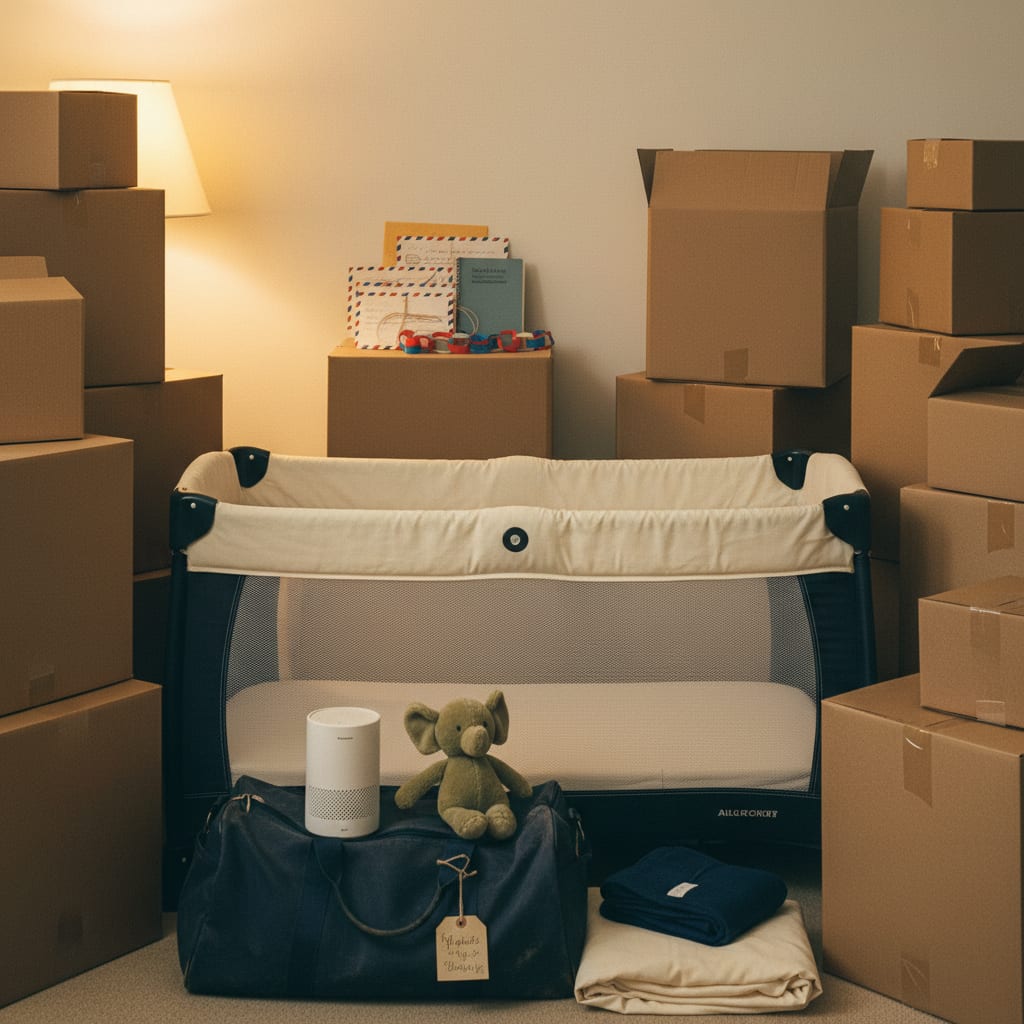
Movers are fast, and fast means the sound machine ends up in a crate you’ll see again in six-to-who-knows weeks. Before pack-out day, stage a clearly separated do-not-pack zone (a closed bathroom with a sign works) holding:
- The full bedtime kit: sound machine, sleep sacks, two crib sheets (one unwashed on purpose — familiar smell is free continuity), the current books, the lovey AND its understudy.
- Travel sleep space (pack-and-play) plus its own sheet, if your baby will sleep in one — practice a few nights in it BEFORE the move, in the old room where everything else is familiar. Move week is a terrible time to debut new sleeping furniture.
- Two weeks of diapers, wipes, formula/food, meds, and the baby monitor.
- Blackout hack of choice: travel blackout blinds or a roll of painter’s tape and trash bags. Lodging curtains are decorative.
During pack-out days themselves, get the baby OUT of the house with the other parent, a friend, or your village — this is exactly the moment the extended-family support network exists for. Naps do not survive a house full of strangers and tape guns.
The TLF stretch: same show, smaller stage
Temporary lodging with a baby is where PCS morale goes to die, mostly because everyone treats it as an exception — “we’ll get back on track at the new house.” Run it as the main event instead: bedtime at the normal hour, full routine, sound machine at its normal volume, blackout rigged the first night. One room for everyone means YOU go quiet at baby’s bedtime for a few days — headphones, dim screens, whispered dinners. Annoying, and cheaper than a week of broken nights. Expect a rough night or two anyway; a baby protesting a new room is not a broken baby, it’s a commuter complaining about the detour. Hold the sequence steady and most babies re-settle within a few nights.
If your baby’s sleep was already wobbly BEFORE the move — split nights, fighting the crib, 5 a.m. reveilles — a PCS will amplify whatever’s there, and it’s worth getting the underlying routine solid rather than white-knuckling through. We’ve had good results starting from a plan tailored to the kid instead of generic advice: Betteroo builds a personalized baby sleep plan from a short questionnaire about your baby’s age, temperament, and current schedule. It’s not military-specific and it won’t unpack your kitchen, but “a plan built for this exact baby” is precisely the kind of constant a PCS can’t take away from you.
Arrival: nursery first, everything else second
At the new house, the baby’s room is mission one — before the internet guy, before your mattress. Same layout logic as the old room where possible (crib away from the window, sound machine in its usual spot), the unwashed crib sheet on night one, blackout up before the first nap. A familiar-smelling, familiar-sounding cave makes a strange house into a bedroom in one night. Then hold the routine boringly steady for two weeks before judging anything: some babies sail, some regress for a stretch, and a temporary wobble after a move is normal. New-house logistics questions — registering at the new installation, childcare waitlists, Tricare updates — go through official channels; Military OneSource and your new installation’s family-support office have the current answers, and their checklists beat any blog’s, including mine.
If the wobble doesn’t settle, or the move scrambled naps so thoroughly you can’t tell what the schedule even is anymore, take ten minutes and take the Betteroo sleep quiz — you’ll get a step-by-step plan matched to your baby, which is a far better use of week two than refereeing 3 a.m. debates about whose sleep-training philosophy was right.
FAQ: PCS with a baby
How do I keep my baby sleeping during a PCS move?
Hand-carry the complete bedtime kit in a do-not-pack bag, run the identical bedtime sequence every night in every location, rig blackout and white noise on night one anywhere you stay, and set up the baby’s room first at the new house. Consistency of sequence matters more than consistency of place.
Will a PCS move cause a sleep regression?
It can — new rooms, time-zone shifts, and disrupted days are classic triggers, and a wobbly week or two after arrival is common and normal. Hold the routine steady rather than inventing new habits mid-move; most babies re-settle once the sequence proves reliable again.
What baby items should movers not pack?
Everything sleep and survival: sound machine, sleep sacks, crib sheets, lovey plus backup, pack-and-play, monitor, two weeks of diapers/wipes/food, meds, and important documents. Stage them in a sealed-off room with a sign before pack-out day.
Should we time the PCS around the baby’s schedule?
You rarely control report dates, but you control the micro-schedule: drive during nap windows, book lodging with a separate sleeping nook when available, and land at the new house with enough daylight to build the nursery before bedtime. Optimize the edges you own and forgive the rest.