Fever at Bedtime When the Other Parent Is Deployed
A feverish child can usually be put to bed and allowed to sleep. Dress them in one light layer, offer fluids, and check on them during the night: the NHS advises parents to “check on your child regularly, including during the night.” Get help straight away if your child is very hard to wake, struggling to breathe, has a stiff neck or a rash that doesn’t fade under a glass, is under 3 months with a temperature of 100.4°F (38°C) or more, or simply looks very ill. When the other parent is deployed, plan your overnight calls and sibling cover before lights-out, not at 0200.
This is a run-book for the solo night, not medical advice; your pediatrician’s instructions come first.
Before lights-out: take a reading and set up the room
Take a real temperature. The AAP says a fever “can’t always be detected by feeling your child’s forehead,” and that for babies, a rectal reading with a digital thermometer is the most accurate. A digital stick thermometer such as the Vicks SpeedRead does the job. The AAP treats 100.4°F (38°C) or higher as a fever. Log the time and number on your phone; at 0300 you won’t remember.
Expect the evening reading to look worse. The AAP’s page on fever in babies notes that body temperature is “highest in the late afternoon and early evening” and lowest around midnight and early morning, so a bedtime spike isn’t necessarily a sign that things are getting worse.
Dress them light. The AAP’s advice is one layer: “A single layer of clothing is good. If your child is shivering or has the chills, give them a blanket.” The NHS says the same in reverse: don’t cover a feverish child “in too many clothes or bedclothes.” For a baby under 12 months, safe-sleep rules don’t pause for a fever: no loose blankets in the crib. The AAP’s safe-sleep guidance says to use layers of clothing or a wearable blanket instead.
Skip the cold sponge. The NHS says “do not undress your child or sponge them down to cool them,” and the AAP says sponging, ice packs and alcohol baths “are no longer recommended.”
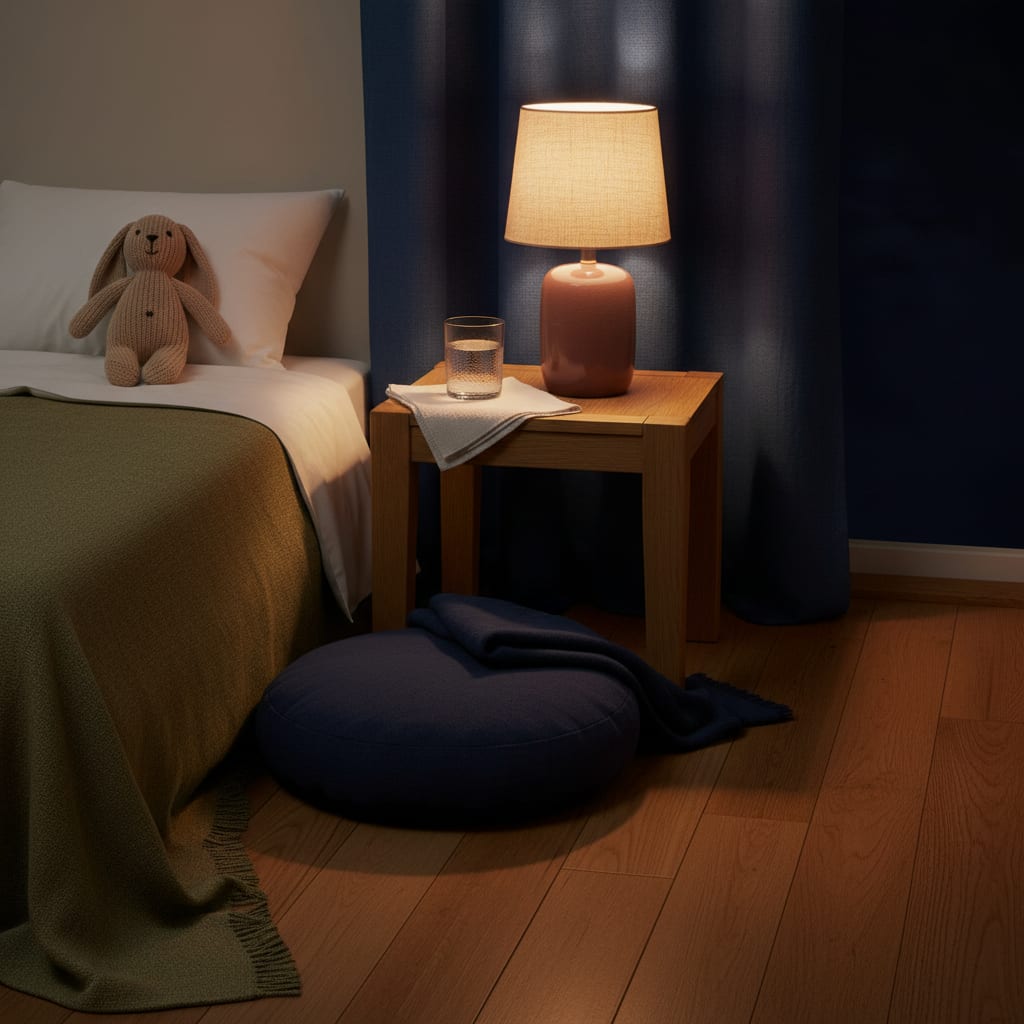
Put fluids within reach. Both pages put fluids first: a cup of water by an older toddler’s bed, and normal feeds for a baby.
Fever medicine: ask before the night, not during it
This post gives no doses. The AAP says that for a child under two you should contact your pediatrician or pharmacist for the correct dose, and that older children should get the dose on the label. The NHS frames fever medicine as something to give if your child is “distressed or uncomfortable,” and says not to give aspirin to under-16s or alternate two medicines unless a doctor or nurse tells you to.
Ask the pediatrician or pharmacist one question in daylight: “If they’re asleep and comfortable when the next dose is due, do you want me to wake them?”
Yes, let them sleep, and plan your checks
Most sick children sleep more than usual. Betteroo’s guide to helping a sick baby sleep makes the same call: in most cases letting them sleep is right, with the exceptions being feeds for young babies and any medicine the doctor has asked you to give on a schedule.
But “let them sleep” doesn’t mean “leave them until morning.” On a two-parent night you split the checks. Tonight they’re yours, so plan them:
- Decide your check times before you go to bed. A check when you turn in and one in the small hours is a reasonable pattern for an ordinary fever; your pediatrician may want more. Set a quiet alarm rather than relying on waking up.
- Sleep within earshot. For a baby, the AAP’s safe-sleep guidance is to share the room but not the bed; for a toddler, a camp mattress on their floor works.
- Know what you’re checking. Breathing (is it easy, or are they working for it?), colour, and whether they rouse a little and settle when you touch them. A hot chest or back is normal with a fever; the NHS lists feeling “hotter than usual when you touch their back or chest” as an ordinary sign.
The signs that change the plan
Have these open on your phone before lights-out. They come from the AAP’s HealthyChildren fever page and fever symptom checker, and the NHS high temperature in children page.
Call 911 if your child, in the AAP checker’s words, “can’t wake up,” has “severe trouble breathing,” is “not moving or too weak to stand,” or has “purple or blood-colored spots or dots on skin,” or if you think it’s a life-threatening emergency. The NHS emergency list adds a rash that doesn’t fade when you press a glass against it, a first febrile seizure, a stiff neck and blue, grey or blotchy skin or lips.
Call the doctor right away, says the AAP, if your child has a fever and:
- looks very ill, is unusually drowsy or is very fussy;
- has a stiff neck, severe headache, severe sore throat, severe ear pain, an unexplained rash, or repeated vomiting or diarrhea;
- shows dehydration: dry mouth, a sunken soft spot, far fewer wet diapers;
- has had a seizure;
- is younger than 3 months with a temperature of 100.4°F (38°C) or higher;
- has a fever that rises above 104°F (40°C) repeatedly.
Also call if your child still “acts sick” once the fever comes down, seems to be getting worse, or the fever lasts more than 24 hours under age 2 or more than 3 days at age 2 or older.
A child who is hard to wake or “out of it” when roused is on the AAP checker’s go-to-the-ER-now list, which is why the night checks matter.
The solo-parent part: line up help before you need it
On a deployment or a duty night there’s no second adult to drive or watch the other kids. Set it up in daylight:
- Save the TRICARE Nurse Advice Line. TRICARE lists it as 800-TRICARE (874-2273), option 1, “available 24/7 by phone, web chat, and video chat,” with registered nurses who can advise and point you to urgent or emergency care. Overseas, TRICARE points families to country-specific numbers through the military hospitals and clinics, so find and save yours now. Details are on TRICARE’s Nurse Advice Line page. In an emergency, call 911, not the advice line.
- Name your 0200 person. If you have to take one child to the ER, who comes to sleep at your house with the others? Ask before the night, and save the number. This is the job your extended family and support network is for.
- Tell the deployed parent in the morning. Unless something is seriously wrong, a calm update with the temperature log beats a 0300 message to someone who can’t act on it.
The routine can bend for a night or two. Once the fever has gone, return to your normal solo bedtime, or the duty-night version if it’s a short absence. The AAP checker’s guide for school or daycare is that a child can go back once the fever has been gone for 24 hours and they feel well enough for normal activities.

FAQ: fever at bedtime
Is it OK to let a child with a fever sleep?
Usually yes. The AAP and NHS focus on comfort, fluids and watching for warning signs, and the NHS adds that you should check on your child regularly, including during the night.
How often should I check on a feverish child at night?
Neither source sets an interval. Plan a check when you go to bed and one in the small hours, and ask your pediatrician whether they want more.
Should I wake my child to give fever medicine?
Ask your pediatrician or pharmacist before bedtime. The NHS describes fever medicine as something to give when a child is distressed or uncomfortable, and the AAP says to check the dose with your pediatrician or pharmacist for under-twos.
When is a fever at night an emergency?
Call 911 if your child can’t be woken, is struggling to breathe, has purple or blood-colored spots or a rash that doesn’t fade under a glass, has a first seizure, or you think it’s life-threatening. Call the doctor right away for a baby under 3 months at 100.4°F or more, or a child who looks very ill.