Deployment Gifts for Dads: What's Worth Packing
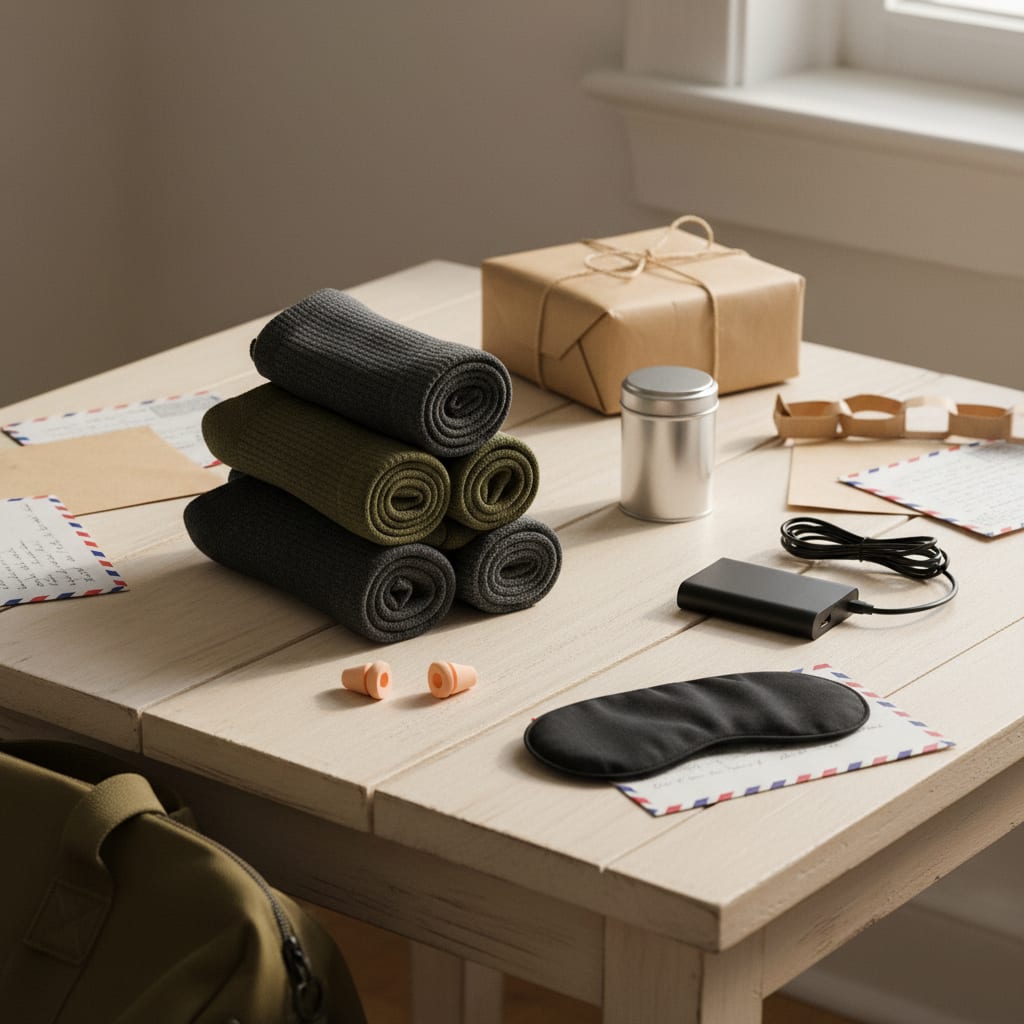
A good gift for a deploying dad is small, durable, and solves a problem he will definitely have: sleeping in a room he doesn’t control, feet that are in boots all day, a device that dies, and long stretches of time with nothing to do. That’s the whole brief. Bag space is finite and mostly spoken for, so anything sentimental has to be flat. And there are really two occasions here, not one — what he takes with him, and what’s waiting when he gets back. They call for opposite kinds of gifts.
Ask one question first
Before buying anything: is there anything you already know you can’t send or he can’t take?
Destinations, storage, mail rules and what’s available on the other end vary enormously, and he may not be able to tell you much. Ask him what he’s short of, accept a vague answer, and default to consumables and small kit. If you’re buying for someone who hasn’t left yet, buying early matters more than buying cleverly — a gift that arrives after he’s packed is a gift you’re storing for a year.
Sleep and quiet come first
The most common complaint from anyone living in shared quarters is noise, and it’s the one a gift can actually fix.
A bulk box of foam earplugs is unglamorous and about the most-used thing on this list — buy the fifty-pair box, because they get lost, shared and thrown away. Add a decent contoured eye mask for anyone whose sleep schedule doesn’t match the room’s lights. Neither of these is a present in the birthday sense. Both get used every single day.
Socks, and why they’re the default gift
Feet in boots for twelve hours are a genuine quality-of-life problem, and cheap socks make it worse. Merino socks are the standing answer: they manage moisture, they don’t hold odour the way synthetics do, and a good pair outlasts several bad ones.
Darn Tough merino hikers are the usual recommendation, and the reason is the lifetime guarantee — worn-through pairs get replaced, which is unusually useful for someone who cannot go shopping. Buy several pairs of one model rather than a variety pack. He is not going to be curating a sock collection.
Two caveats worth respecting: uniform standards can dictate colour, and some environments make wool the wrong call. Ask, or buy plain black.
Power, and the charger that isn’t there
Somewhere with limited outlets and a lot of waiting, a battery pack stops being a gadget and becomes infrastructure. A pocket-sized 10,000mAh power bank covers a phone for a couple of days and fits in a cargo pocket. Add a long charging cable — longer than you think, because the outlet is never near the bunk — and a small multi-port wall charger so one plug serves three devices.
Everything on this list that takes batteries should take the same size as everything else. That sounds like a small thing until you’re the one with a headlamp and no AAAs.
Something to read that isn’t a screen
Downtime is the part civilians underestimate. There is often a great deal of it, and it is often in places with poor connectivity.
A Kindle Paperwhite is the standard answer — weeks of battery per charge, a backlight that doesn’t annoy the person in the next bunk, and hundreds of books loaded before departure without weight. Load it before he leaves; downloading later may not be an option. Physical books are still worth sending later, though, because they get passed around and left behind, which paperbacks are good at and e-readers are not.
The photo package
This is the sentimental half, and the rule is: flat, printed, and not dependent on a signal.
A pocket photo album full of actual printed photographs weighs nothing and doesn’t need charging, which is more than can be said for a phone gallery. A shared journal like Between Dad and Me works differently and better for some families — he answers prompts, mails it home, the kid answers, it comes back. It’s a gift that keeps producing something for the whole absence.
The zero-cost version outperforms both: a stack of letters from the kids, sealed, one to open per week. Write them before the goodbye, not after. That’s the same machinery as deployment letters to kids, pointed the other way.
Homecoming gifts are the opposite
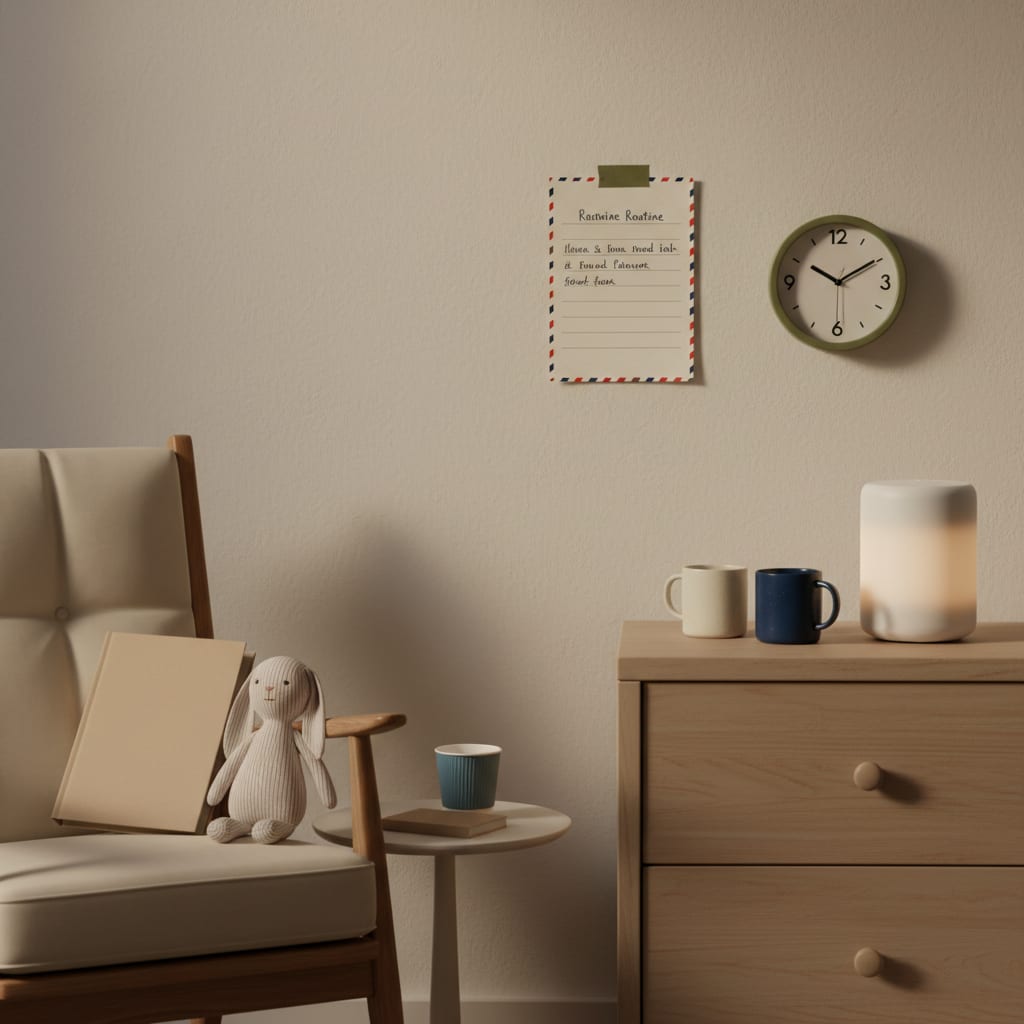
What he wants coming back is the reverse of what he wanted leaving: not small, portable and functional, but comfortable, unstructured and civilian.
Good coffee and the equipment to make it badly at 5 a.m. A pair of shoes that aren’t boots. A restaurant reservation with nobody else at the table. Time alone, which is the gift nobody thinks to give and most people want. Whatever you choose, front-load nothing on day one — the first week back is not the moment for a schedule, as the reintegration guide goes into at length.
And keep the welcome itself simple. Homecoming plans have a way of inflating into productions that serve the people who stayed more than the person arriving; welcome-home ideas covers what actually lands.
What not to send
- Anything perishable, aerosol or liquid. Mail restrictions are real, they vary by destination, and a package refused at the counter helps nobody. Check current rules before you pack rather than after.
- Bulky comfort items. A giant pillow, a heavy blanket, a full-size speaker. Bag space is allocated, and the allocation is not yours.
- Anything he has to look after. A watch he’d be upset to lose, a knife he can’t carry, a gift that becomes a responsibility.
- A dozen small things. One good item beats six adequate ones when everything you own lives in a bag.
FAQ: gifts for a deploying dad
What do you get a dad who is about to deploy?
Small, durable, daily-use kit: earplugs and an eye mask, several pairs of good merino socks, a power bank and long cable, and an e-reader loaded before he leaves. Then one flat sentimental item — a printed photo album or a stack of letters from the kids.
What should you not send in a care package?
Anything perishable, pressurised or liquid, and anything the destination restricts. Rules differ by location and change, so check the current restrictions for the specific address before packing rather than relying on a list from a blog — including this one.
What’s a good gift from kids to a deploying parent?
Drawings, hand tracings, printed photographs the kid took themselves, and a recorded voice message. Flat, light, and made by them. A shared back-and-forth journal works well for school-age kids because it keeps producing new material for the whole absence.
What do you give someone coming home from deployment?
Comfort and space rather than objects: real coffee, clothes that aren’t a uniform, a quiet meal, and an unstructured first week. Save the big celebration for a couple of weeks in, when he actually wants to be at it.
Are gift boxes and subscription boxes worth it?
They’re convenient and they’re fine, but they’re generic by design — you’ll pay for filler alongside two or three genuinely useful items. Assembling your own around what he actually asked for costs less and lands better, and it gives the kids something to do.