PCS Bedtime in Temporary Lodging: Surviving the Gap
The hardest part of a PCS is rarely the new house — it’s the weeks in temporary lodging before it exists. The fix is to stop trying to recreate the old bedroom and instead carry the sequence and four portable variables: darkness, sound, the same sleep surface, and the same closing words. Pack those in one bag that never goes on a truck, put the kid down in the same order every night regardless of the room, and treat the time zone as a separate problem you solve slowly with mornings, not at bedtime.
The room that doesn’t exist yet
Everybody plans the drive and the arrival. Almost nobody plans the middle, which is where sleep actually falls apart.
In temporary lodging, every environmental cue a small child uses to know it’s night is wrong at once. The light comes from a parking lot. The walls are thin and the ice machine is not. The whole family is sharing four hundred square feet with a television and a mini fridge.
What survives all that is order. Kids track the sequence of a bedtime far more reliably than the setting of it, and the sequence is the one thing a move cannot pack into a crate. Bath, pajamas, teeth, two books, one song, same sentence at the door — done identically in a hotel, at a grandparent’s house, and in an empty house with a mattress on the floor — does most of the work by itself. So keep the goal for the gap deliberately low: hold the order, hold the sleep surface, and accept that timing will be a mess until you have an address.
Build a portable sleep box before pack-out
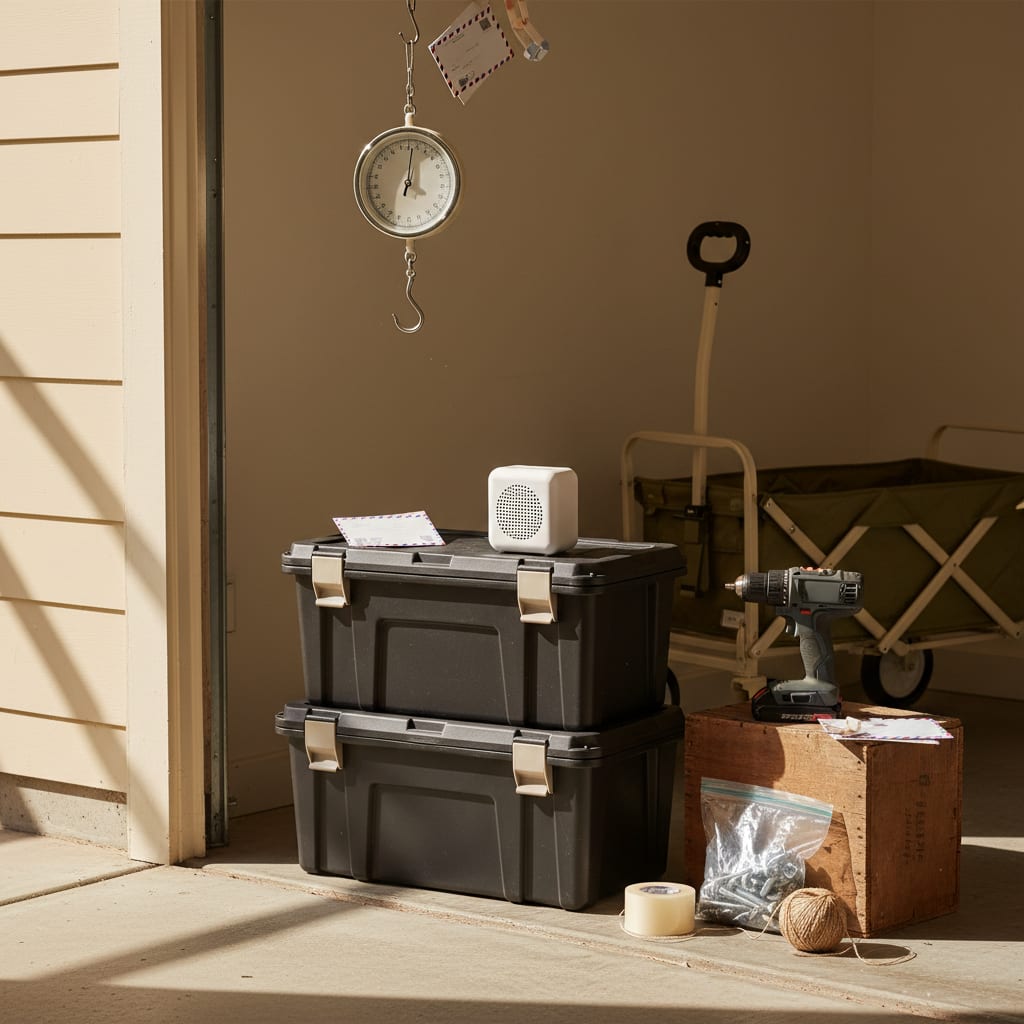
This is the one preparation that pays for itself, and it has to happen before the packers arrive — anything you don’t separate physically ends up in a container you cannot open for six weeks. Into one bag or bin, and into your own vehicle:
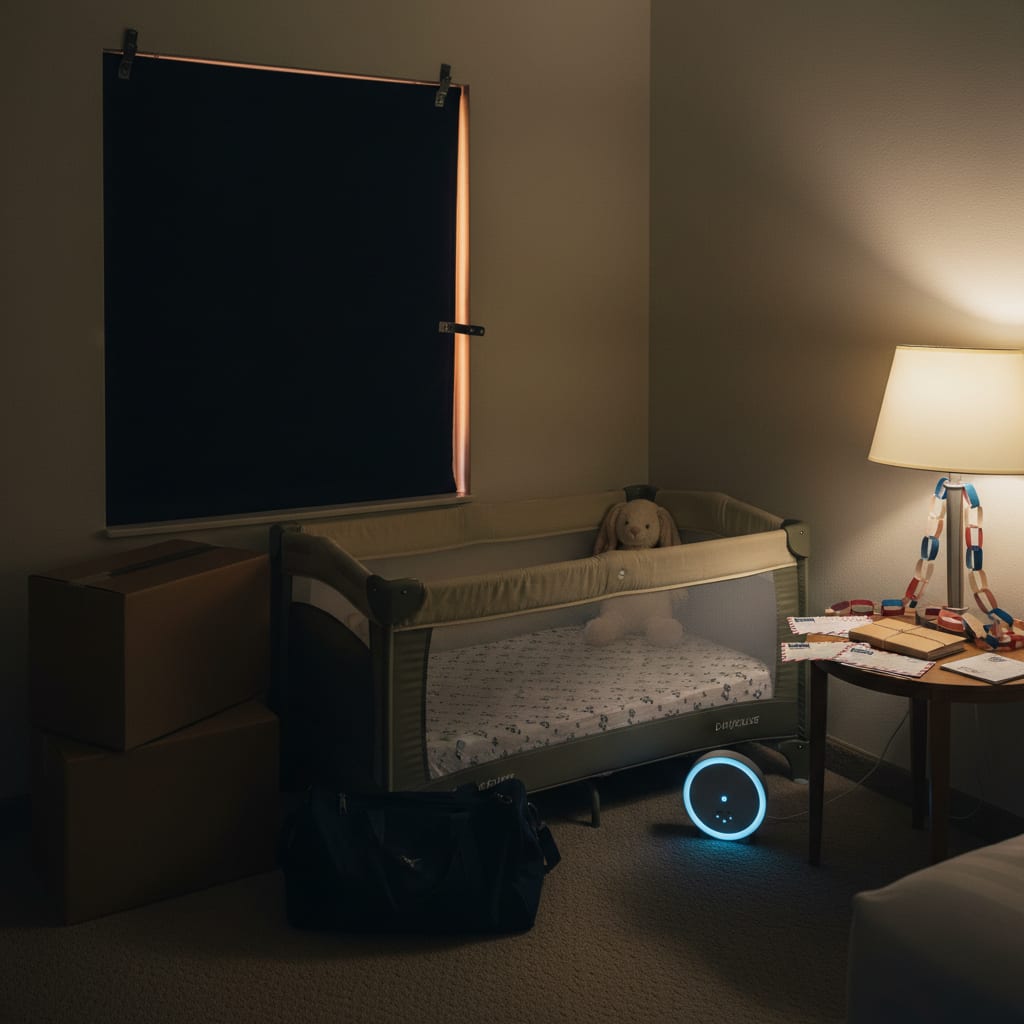
- The sleep surface. A compact-fold travel playard for a baby or younger toddler, so the thing they sleep in is the same object throughout. For a baby, keep it as safe sleep requires anywhere else — flat, firm, empty, no added padding, no loungers or positioners, however tempting the hotel bed looks at 2 a.m.
- Darkness. Lodging curtains are a lottery. A portable blackout panel with suction cups puts up in five minutes and packs down for the next room.
- Sound. A rechargeable travel sound machine covers hallway doors, road noise and adults awake in the same room. Rechargeable, because the outlet is never where the crib ends up.
- The two irreplaceable objects. The lovey and the specific book. Buy a duplicate lovey now — a move is the highest-risk period in the life of a comfort object.
- The same crib sheet, unwashed. It smells like the old house, which is the point.
Label it do-not-pack, tell the packers twice, and put it in the car before they arrive. The rest of the pack-out triage is in the PCS checklist; this box is the part that gets forgotten.
Rules for a one-room lodging suite
Sharing a room is the problem nobody warns you about, and it has a small number of workable answers.
Build a visual barrier. A crib in the corner with the blackout panel or a folded stroller between it and the room’s lamp does more than the layout suggests. Kids who can see you will not stop trying to talk to you — that’s not defiance, it’s information.
Move bedtime for the adults, not the kid. Everybody in the room goes quiet at the same moment. Headphones, a phone at its dimmest and reading in the bathroom are all standard PCS behavior.
Do the last step outside the room if you can. The last book in the hallway, then in and down, keeps the sleep space from being where stimulating things happen.
Expect two bad nights and don’t renegotiate. Rules invented at 11 p.m. in a hotel become permanent and follow you into the new house. If you sleep on the floor beside the playard, say when that ends, then end it.
Crossing time zones without negotiating at bedtime
If the PCS moved you across zones, half of what looks like distress is arithmetic. The internal clock is still running on the old duty station and it will not be argued out of that at 8 p.m. What moves it is morning light and mealtimes: get outside early in the new local time, eat on the new clock, and let bedtime follow rather than forcing it first.
Shift in increments — roughly fifteen to thirty minutes every couple of days — and give a big jump a week or more. The mechanics are the ones parents already know from the twice-yearly clock change, and Betteroo’s guide to moving a small child’s clock in stages is the clearest short explanation of how. For an overseas move, jet lag and the lodging problem arrive together and compound; that scenario is in OCONUS PCS with kids.
Boxes, noise and the 6 a.m. hallway
Two smaller things wreck more nights than they should. The first is early waking: lodging rooms leak light and share walls with people leaving for PT, and a kid who normally sleeps to 6:30 will discover 5:15. Blackout first, sound machine louder than feels natural second, and don’t start the day in the room — take them out, get light, and let the clock reset over several days rather than moving bedtime earlier to compensate.
The second is the boxes, once you’re in the house but not unpacked: a bedroom stacked with cartons isn’t theirs yet. Clear that room before the kitchen — bed against a wall, floor clear, nothing above head height. The week-by-week recovery is in bedtime after a PCS.
When the gap runs longer than expected
Lodging stretches. A two-week booking becomes six because the house fell through or the loaner furniture didn’t arrive, and at some point “we’re camping” stops being a workable frame.
The signal is usually the adults: when nobody can remember what the normal bedtime was, you’ve been in survival mode too long. Stop treating the lodging as temporary and rebuild properly inside it — fixed bedtime, naps at real times, the full sequence. It feels like giving in. It’s what makes the eventual move into the house easy, because you arrive with a routine instead of a deficit.
It’s also the point where it gets hard to tell what you’re looking at: a move, a time zone, a room change and ordinary development all produce the same tired, wired kid. If you’d rather not work that out at week three of unpacking, a schedule built around your kid rather than around the calendar takes their age, temperament and current sleep and returns the day’s nap windows and bedtime, updated as they grow. It runs around $20 a month. Honest limits: it won’t get your household goods delivered or make a hotel quiet, and your toddler retains full veto authority regardless. What it removes is the guessing.

FAQ: sleeping in temporary lodging during a PCS
How do you keep a bedtime routine in temporary lodging?
Carry the sequence, not the setting. Same order, same words, same sleep surface, plus darkness and sound you brought with you. The room will be wrong in every way, and that matters far less than parents expect as long as the order of events is unchanged.
What should you not let the movers pack for a PCS with a baby?
The travel crib, the lovey and its duplicate, the sound machine, a blackout panel, the current crib sheet, a week of clothes and the bedtime book. Separate them physically before packers arrive — the fuller triage is in PCS with a baby.
How long does it take a kid to adjust to a new time zone after a PCS?
Commonly around a day per hour of difference, longer for a big jump. Move it in fifteen-to-thirty-minute steps using morning light and mealtimes on the new local clock, and expect naps to settle after night sleep does.
When should you stop treating lodging as temporary?
When you can’t remember what your kid’s normal bedtime is, or the stay has doubled its original length. Rebuild the full routine where you are — arriving at the new house with a working routine beats arriving with a month of debt.