Homefront Dad · Entry
R&R Leave Over the Holidays: Bedtime and the Second Goodbye
R&R leave home for the holidays? How to share bedtime during the visit, say the second goodbye without a bedtime ambush, and steady sleep once R&R ends.

How do you handle bedtime during R&R leave and the second goodbye? Keep the routine the at-home parent has been running and let the visiting parent join it, not replace it. Plan the departure for daytime if you can, tell even a young child it is coming, and say a short, honest goodbye instead of slipping out after lights-out. Expect a few rough nights afterwards, and hold the same bedtime steps steady until they pass. The second goodbye can be harder than the first, and that is normal.
Why the second goodbye is a different problem
The first goodbye of a deployment comes after weeks of preparation. Our deployment goodbyes guide covers that one: the explanation, the send-off and the first nights after.
The goodbye at the end of R&R works differently. The household has spent months building a routine without the deployed parent, then has a week or two of having them back, and then has to rebuild it. Military OneSource’s family blog describes R&R as something service members on deployments of a year or longer are “often granted”: “a week or two of leave near the middle of deployment” (Military OneSource blog, Making the Most of a R&R Visit). Whether your family gets one, how long it lasts and when it falls are set by the service and the command, not by anything here. Plan around the dates you are actually given.
When those dates land over the holidays, the visit carries extra weight: family, presents, late nights, and a departure days after the tree goes up. For a small child, the hardest part tends to be bedtime, when the day ends and people leave.
ZERO TO THREE’s page on R&R leave says it plainly: “This transition is hard on everyone, including your child” (ZERO TO THREE, The Highs and Lows of Rest and Recuperation Leave).
Before R&R: tell the child what is coming
Tell your child about the visit before it happens, including the part where the parent goes back. Even a toddler who cannot follow dates can follow “Daddy is coming home for a little while, and then he goes back to work far away.” A one-year-old won’t understand it, but the same simple words every time keep you consistent later.
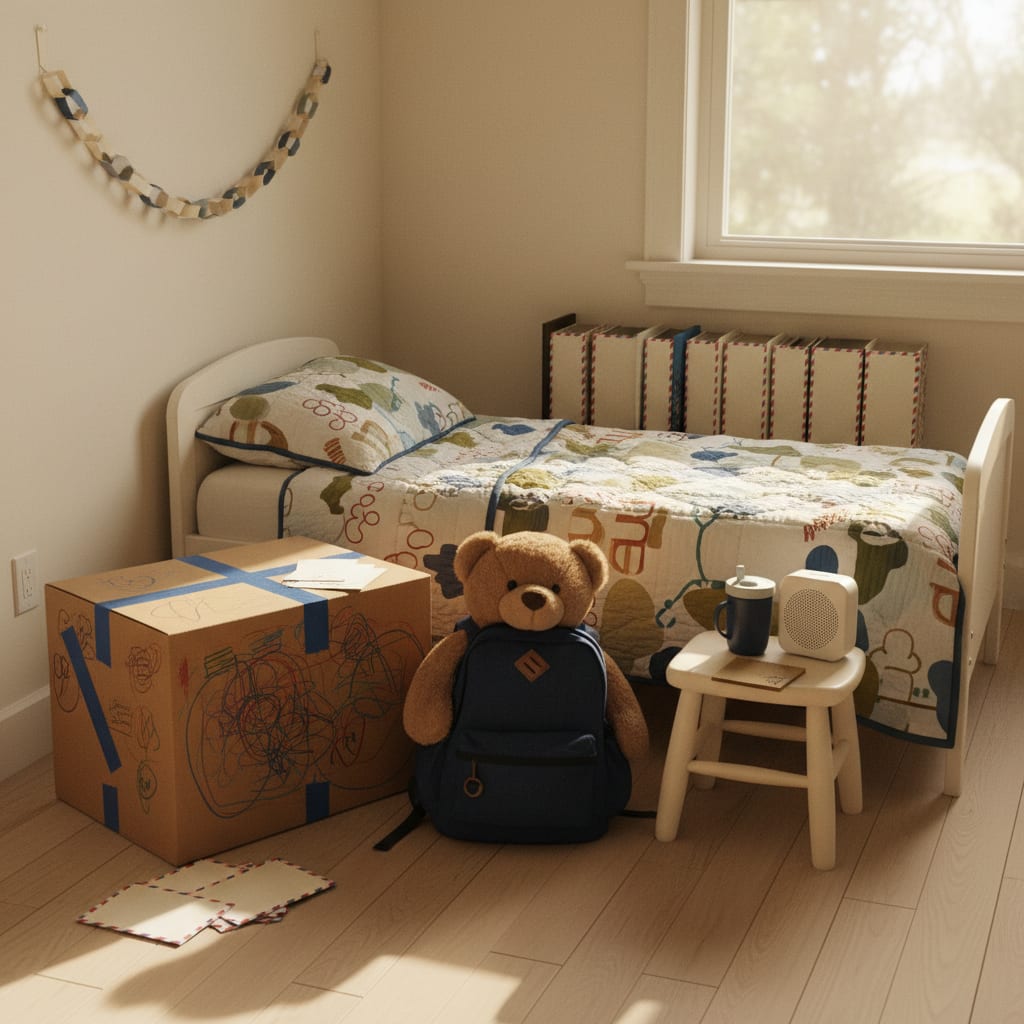
A countdown helps. Remove one item a day: a link from a paper chain, a block from a tower, a sock from a line. Our holidays during deployment post has ways to keep the absent parent part of the season, and some of those traditions can lead straight into the visit.
During the visit: join the routine, don’t take it over
The parent at home has spent months building a bedtime that works. The parent coming home on R&R has usually missed it, and naturally wants to do all of it. Two weeks of a brand-new bedtime person, followed by that person disappearing, is the hardest version for a small child.
Betteroo’s guide to how to hand one bedtime between two sets of hands makes the point that “Consistency across caregivers matters more than which routine or method you choose.” For a dad stepping in, it suggests taking over bedtime one step at a time over about one to two weeks. That is roughly the length of the visit, so on R&R the better goal is to share bedtime, not take it over:
- Keep the order. Bath, pajamas, book, song, lights out, or whatever the house runs. The visiting parent learns the steps as they are done at home.
- Give the visitor one step, then two. Let them read the book on the first night and do the song as well a few nights later. The at-home parent stays in the room for the rest.
- Keep the bedtime hour close to normal. A few late holiday nights won’t break anything. A whole visit of 10 p.m. bedtimes makes the week after much harder.
- Let the child set the pace. ZERO TO THREE notes a child might run to the returning parent, hide, or cling to the parent who stayed, and that this can change over the visit. A toddler who wants only Mom at bedtime on day two is not rejecting Dad.
ZERO TO THREE also points out “it’s just as important to get reacquainted through the everyday moments” as through the big outings. A bath and a story are what the child will remember from the visit.
One practical step: record the visiting parent reading the usual bedtime book before they leave. A recordable book like the Hallmark Under the Same Moon storybook keeps that voice in the routine once they are gone.
The second goodbye: daytime, short and true
The departure date is fixed, but the time is sometimes up to you.
- Say goodbye in daylight if you can. A departure at bath time links the goodbye to bedtime for the nights that follow.
- Never leave after the child is asleep without saying goodbye. It looks kinder, but a child who wakes to find the parent gone learns that falling asleep is when people disappear. Betteroo’s guide on why bedtime is where missing someone shows up says the same thing about everyday separations: say a quick goodbye rather than slipping away, because sneaking out “teaches your baby to stay on high alert.”
- Keep it short and say the same words you used before the visit. “Daddy is going back to work far away. He loves you. Mom is here for bedtime.”
- Run bedtime as usual that night. Same steps, same time, same parent who ran it before R&R. This is not the night for a new routine or a special treat.
The weeks after R&R
Expect some fallout. ZERO TO THREE notes that children “talk” through their behavior, and lists “a return to earlier behaviors (such as thumb sucking)” along with changes in sleep and eating among the signs a child is struggling with a separation. You might see more night waking, a toddler who will not let you leave the room, or a confident sleeper who suddenly wants the light on.
Betteroo’s separation-anxiety guide describes separation anxiety as peaking between about 10 and 18 months and usually easing around age two. It also notes that any big change can set off a fresh wave, and that each wave usually lasts “a couple of weeks rather than months” when your responses stay calm and consistent. So:
- Keep the steps and the bedtime hour the same. A predictable routine is the main thing that helps.
- Answer night waking calmly and boringly. Reassure briefly, keep the light low, and don’t start a new habit you will have to undo in March.
- Keep the visit visible by day. Photos, the recorded book and talk about what you did together, as ZERO TO THREE suggests.
- Watch the calendar. If sleep is still sliding a month later, or the trouble spreads well beyond bedtime, look at our mid-deployment regression guide and talk to your pediatrician. ZERO TO THREE also recommends support for the at-home parent: a counselor, a doctor, clergy or friends.
When the deployment ends, the same principle applies: the homecoming parent joins the routine before changing it. Our homecoming bedtime reset walks through those first weeks.
 A bedtime that survives the visit
Betteroo builds a sleep plan for your child's age, so you can hold the same bedtime through a holiday R&R and steady the nights after the second goodbye.
Take the 3-minute sleep quiz →
FAQ: R&R leave and kids’ sleep
Is the goodbye after R&R harder than the first one?
It can be. The child has just had the parent back, the house has just adjusted, and the second goodbye undoes both. ZERO TO THREE says the transition after R&R is hard on everyone, including children. Keep it short, honest and in daylight if you can.
Should the deployed parent do every bedtime during R&R?
No. Let them join the routine the at-home parent runs, one step at a time. The child keeps a bedtime that will still work the night after the goodbye.
Should we tell a toddler that the parent is leaving again?
Yes, in simple words, before the visit and again before the departure, using the same sentence each time. Leaving after the child falls asleep makes the following bedtimes harder.
How long will sleep be off after R&R ends?
Often a couple of weeks if the routine stays steady. If it is still getting worse after about a month, or the struggles spread beyond bedtime, talk to your pediatrician.