What Military Life Gives Your Kids: The Honest Upsides
Military life gives your kids four things most childhoods can’t: proof of their own resilience, a bigger map of the world, a built-in community that shows up, and family rituals forged strong because they had to be. None of it is free — the goodbyes are real and so are the moves — but the honest ledger isn’t a hardship column with a thin “kids are adaptable” footnote. The original 2012 essay on this blog argued there was at least one great benefit to being a military dad; consider this the restored and expanded case, from a dad currently living it.
Resilience with receipts
Every parenting philosophy promises resilience; military life actually invoices for it. A military kid who has done a deployment has hard evidence: the parent left, the family held, the parent came back. The kid did a brave thing badly, then less badly, then well.
The catch — and this is the part that earns the “honest” in the title — is that resilience isn’t automatic. It gets built when hard things happen inside a stable structure: routines that hold, adults who tell the truth, feelings that are allowed. That’s why this site bangs on about boring, repeatable systems like the goodbye-day run-book — the hard thing plus the steady container is the recipe. The hard thing alone is just hard.
A bigger map
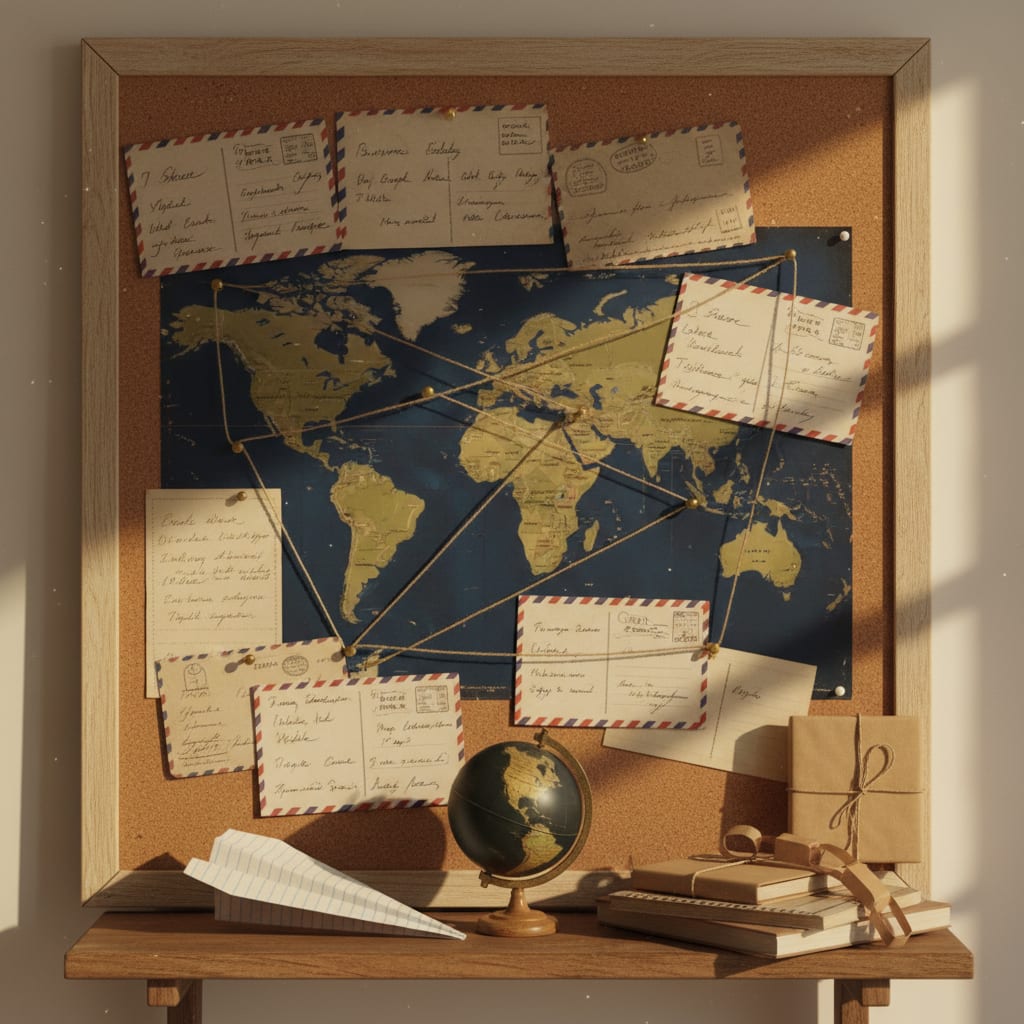
Military kids collect geography the way other kids collect trading cards. New states, sometimes new countries, new foods, friends whose families come from everywhere. A kid who has moved twice by kindergarten owns a piece of knowledge some adults never acquire: there’s more than one way to live, and I can find the library in any of them.
There’s a quieter version that has nothing to do with OCONUS orders. Military kids learn early that the world is big enough for a parent to be on the other side of it — and that love stretches that far without snapping. Our four-year-old can find three time zones on a map because someone she loves has been in all of them. Her civilian cousin can find the ice cream shop. Both are life skills; only one comes with jet lag.
Community that actually shows up
The stereotype of military-family life is isolation. The lived version, more often, is the opposite: an installed base of neighbors, unit families, and semi-strangers who treat “my spouse deploys Tuesday” as tasking rather than small talk. Kids marinate in this. They watch casseroles appear, watch their parents do the same for the family two doors down, and absorb the lesson that community is a verb.
It still has to be built on purpose — rank-agnostic, before you need it — which is why the extended-family support network gets its own field guide here. But the raw material is richer than almost anywhere else American families live.
Rituals with load-bearing walls
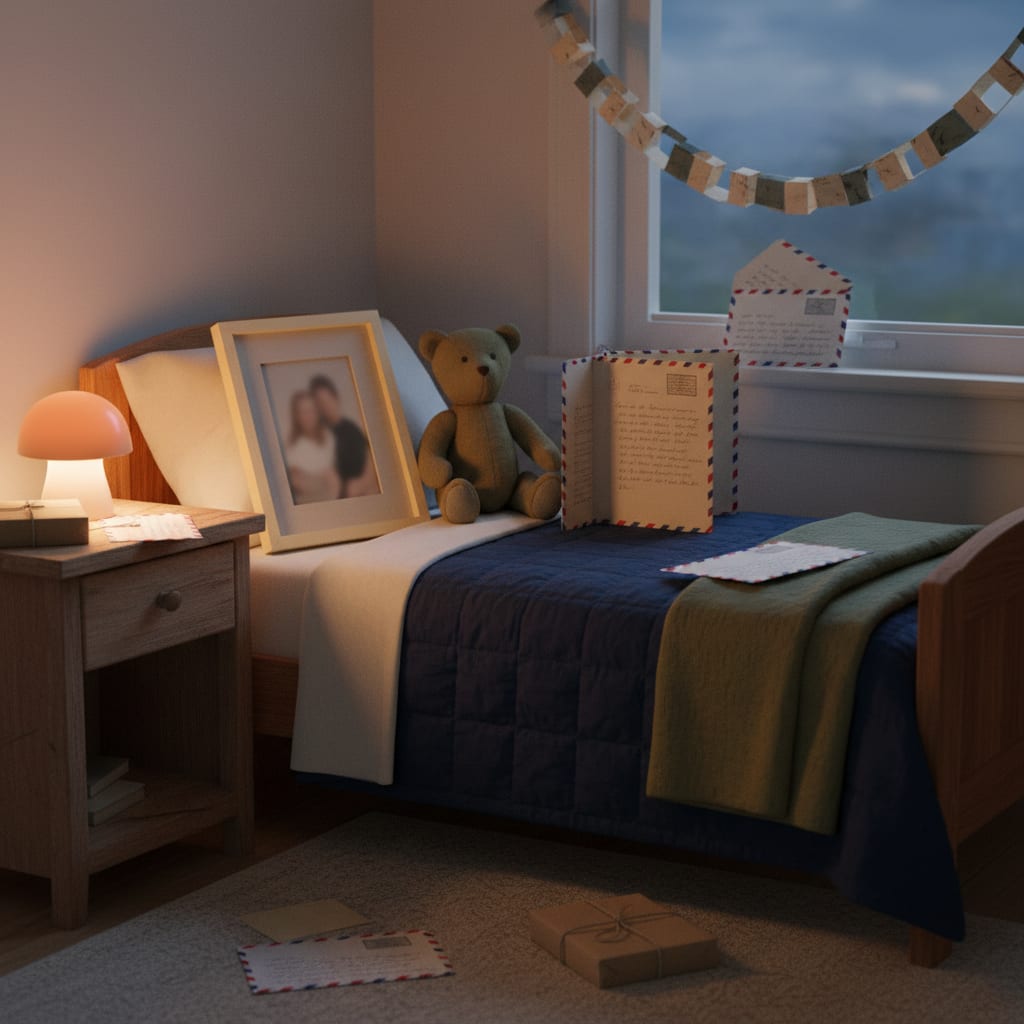
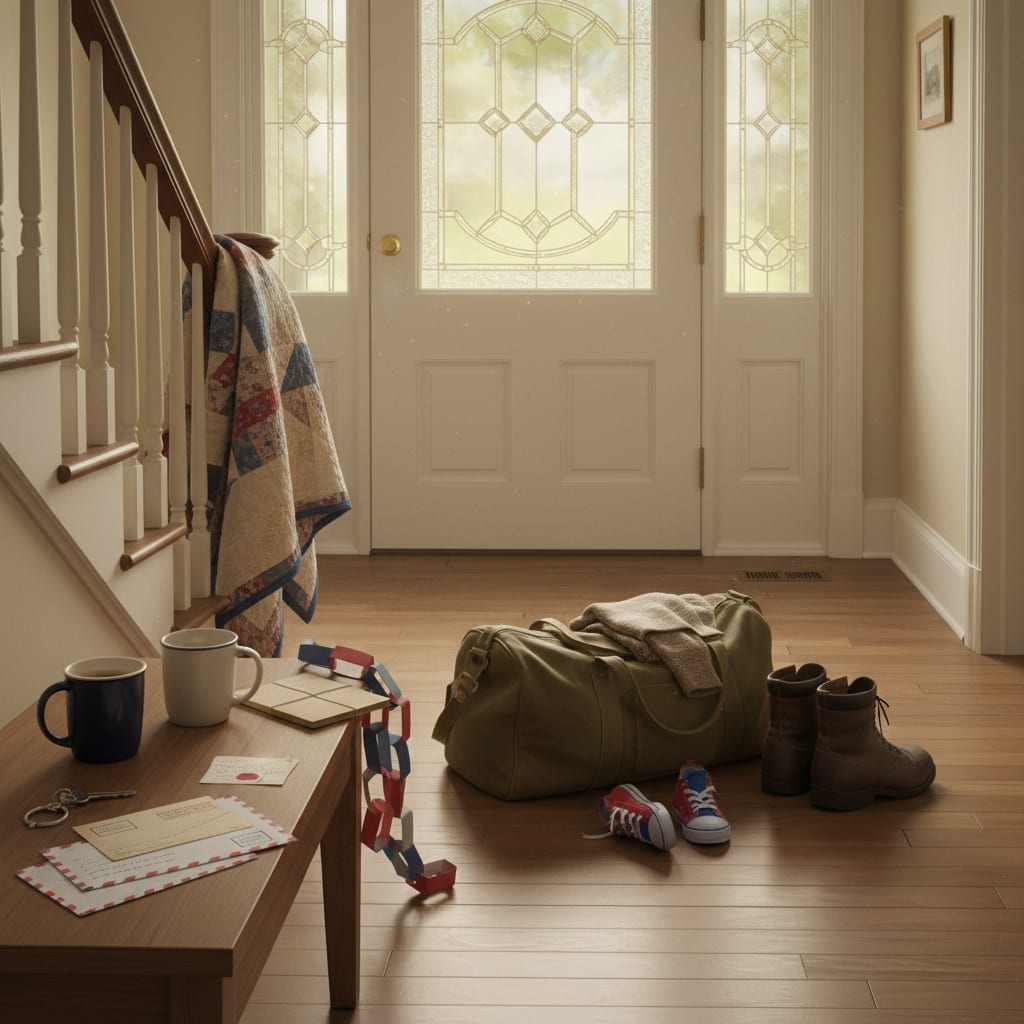
Civilian families have traditions; military families have infrastructure. When a parent misses six months of Tuesdays, the family’s rituals stop being decorative and start holding weight: the movie night that happens no matter what, the recorded bedtime story, the paper-chain countdown, the homecoming-morning donuts. Our load-bearing example is family movie night — invented on this very blog in its first life, restored because it works. Kids raised on rituals like these learn to build them, and they carry that toolkit into every hard season of their adult lives. It’s the most portable inheritance we issue.
A front-row seat to service
Handled with a light touch, a parent in uniform teaches something rare: some jobs are about something bigger than the paycheck, and ordinary people — your actual dad, who burns pancakes — do them anyway. No chest-thumping required; the quiet version lands harder. Kids who grow up around service tend to assume showing up for other people is normal. That assumption is worth more than any lecture on character we could deliver.
What it gives you, the dad
The original version of this post — the one some of you found years ago — was about the benefit to us, not the kids. That part still holds: this life teaches you to appreciate the little things. A regular Tuesday dinner with everyone at the table stops being background noise after you’ve missed twenty of them. The homecoming hug recalibrates what counts as a good day. The kids get their column of gains below, but be honest about yours too — you notice your family harder than most dads ever have to.
The honest column
Now the other side of the ledger. The goodbyes genuinely hurt. Moves cost friendships, and the kid who makes friends easily in three states still cried leaving the first one. Some seasons the away-parent misses things that don’t repeat: first steps, lost teeth, a season of soccer. Pretending otherwise is how military families end up with kids who don’t trust the official story.
Two honest notes for the balance sheet. First, the upsides aren’t automatic — they’re built by steady parenting inside the chaos; the same deployment can strengthen one kid and just bruise another, and the difference is usually the container, not the kid. Second, if your child is struggling beyond the normal wobbles — sleep, school, mood, longer than a few weeks — use the real support systems. Military OneSource and your installation’s family-support programs exist for exactly this, they’re free, and programs change often enough that it’s worth checking current DoD and branch offerings rather than assuming. Asking for backup is a military skill. Model it.
FAQ: what military life gives your kids
Are military kids really more resilient?
Many are, but it’s earned, not issued. Resilience shows up when hard experiences happen inside stable routines with truthful adults. A deployment handled with structure builds it; the same deployment handled with chaos mostly builds anxiety. The variable is the container.
What do people mean by “month of the military child”?
April is recognized as the Month of the Military Child, honoring exactly what this post describes — the kids who serve without enlisting. Schools and installations often mark it (purple is the traditional color). Details vary by year and base, so check your installation’s calendar.
How do I talk about the benefits without dismissing the hard parts?
Both-and, never either-or: “It’s hard that Dad misses your games, AND you’ve gotten brave at new schools.” Kids trust the ledger when both columns are real. Skip “other kids have it worse” — comparison teaches them to stop reporting their feelings, which is the opposite of the goal.
Is military life bad for kids overall?
The research picture is genuinely mixed and depends heavily on family stability, which should sound familiar by now. What the studies and the lived experience agree on: parents who keep routines steady, tell the truth, and use support when they need it tilt the ledger decisively toward the upsides.