Drill Weekend Bedtime: Running It Solo One Weekend a Month
A drill weekend is the one absence in a Guard or Reserve house that arrives on a schedule, lasts two days and comes back every month. So don’t improvise it each time. Write one drill-weekend version of your household’s weekend, with the same wake-up, the same nap, the same short bedtime and the same Saturday shape, and run it unchanged every month. Then plan the two nights that actually go wrong: the goodbye on Friday or before dawn on Saturday, and Sunday night, when a tired parent comes home the night before a school or daycare morning.
What makes a drill weekend different
The Congressional Research Service puts the baseline plainly: members of the Selected Reserve “are generally required to perform one weekend of training each month and two weeks of training each year, although some may train more than this” (CRS, Defense Primer: Reserve Forces, updated June 13, 2025). Each half of that sentence is its own bedtime problem. The two-week block is a single bounded absence, and what to hold and what to drop for a fortnight is a separate plan. This post is about the monthly weekend.
Three things set it apart from other absences:
- It repeats every month. Often enough that a kid can learn it, and seldom enough that everyone forgets what worked last time.
- You usually know the dates well ahead, so the plan is cheap to build.
- It lands on the weekend. No school or daycare carries the day. The parent at home has two full days with the kids, naps included, and bedtime is only the last part of the job.
Write the drill-weekend version once
Before the next drill, write the weekend down: wake-up, breakfast, the morning outing, nap, dinner, bath and lights-out. Keep it boring and repeatable. If one thing becomes the drill-weekend fixture, such as the same Saturday breakfast, a small kid starts to recognize the weekend as a familiar shape rather than as a parent missing.
Then check the bedtime for steps that quietly need two adults, like the song only the drilling parent sings. That audit is laid out in the duty-night bedtime guide; do it once and every drill weekend inherits the fix.
Two decisions belong in the written version, because making them at 2100 goes badly:
- Whether anyone sleeps in the big bed. Plenty of preschoolers try for the empty side of the bed when one parent is away. It’s fine as a standing drill-weekend rule if you choose it in daylight, and a problem when it starts as a 2 a.m. rescue. If you’d rather not, Betteroo’s guide on walking a small visitor back to their own room covers the calm, repetitive return. Babies under 12 months never share an adult bed.
- What “one more” looks like. Some kids test the rules harder when they sense the house is running short-handed. Build the usual requests (water, potty, one hug) into the routine and allow one agreed extra. Betteroo’s write-up on one agreed exception a night explains why a single fixed allowance works better than negotiating each request.
Hold the wake-up and protect the Saturday nap
The temptation on a solo weekend is to let everyone sleep in and catch up. The American Academy of Pediatrics advises the opposite: “The same waking time (both on weekdays and weekends), mealtimes, nap time and play times will help your child feel secure and comfortable, and help with a smooth bedtime” (HealthyChildren.org, Healthy Sleep Habits, last updated 8/7/2026).
A late Saturday wake-up shifts the nap, the nap shifts lights-out, and Sunday arrives with a kid who isn’t tired on the night the house most needs an early bedtime. Keep the weekday wake-up. If your toddler or preschooler comes in at dawn regardless, a time-to-rise light such as the Hatch Routine Builder gives them a color to wait for, which is easier for a solo parent than arguing about the clock.
Treat the nap as fixed: a skipped Saturday nap costs you the whole evening, with no second adult to share it.
The goodbye: Friday night or before dawn
Some drill weekends start on Friday evening; others start with an alarm long before the kids are up. Either way, the rule from every other absence holds: say the goodbye at a fixed point, before the bedtime sequence starts, and then stay out of the way.
- Leaving Friday evening: say goodbye at dinner, not between books, where it reopens every step the other parent has just closed.
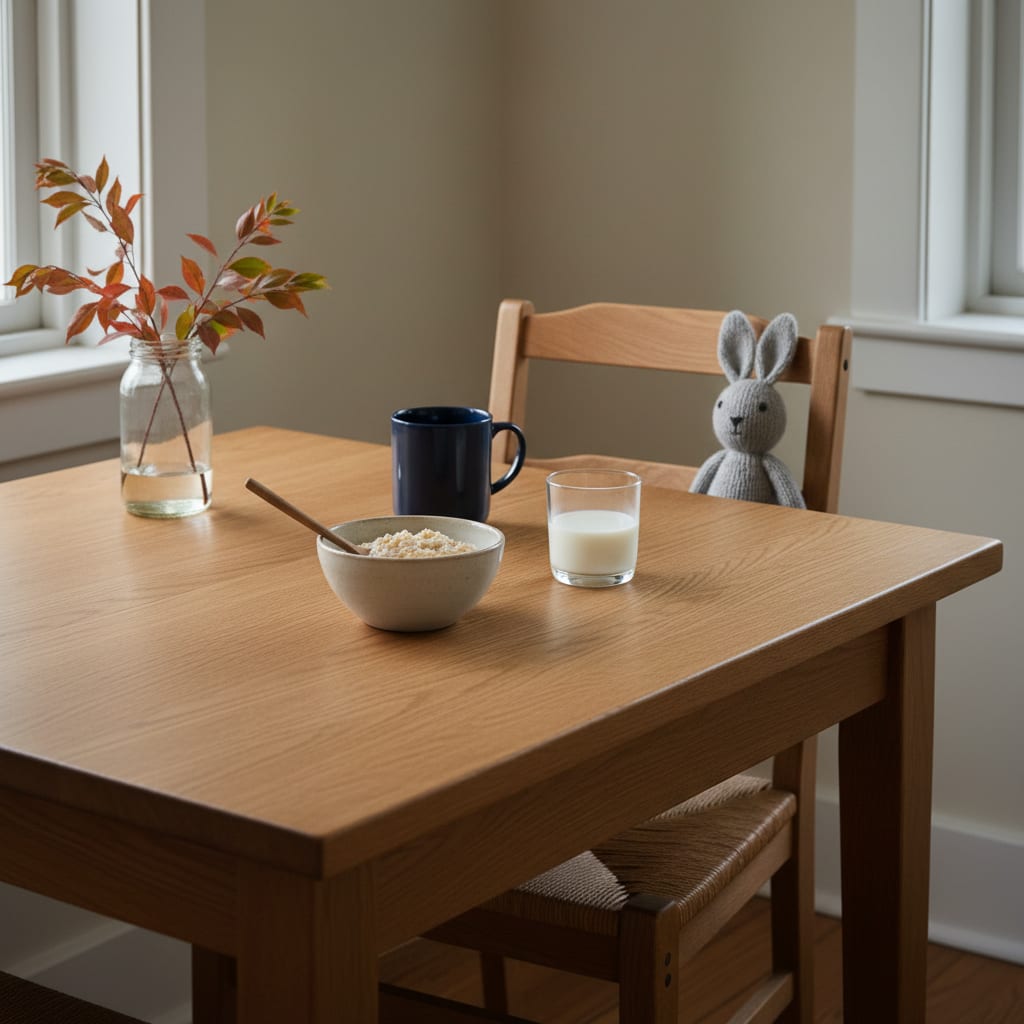
- Leaving before dawn: say goodbye at Friday bedtime, in kid time (“when you wake up I’ll be at drill, and I’m back after two sleeps”). Waking a toddler at 0430 for a hug usually buys you an awake toddler and a tired parent at home. Some families leave a small, ordinary sign behind instead, such as the drilling parent’s mug left out on the breakfast table.
Count in sleeps, not days. Under about three, the explanation matters less than the weekend running the same way each time.
If the drilling parent comes home Saturday night
When drill is close enough to sleep at home, a tired parent may walk in at 1900 with the routine half done. Decide in advance which of two things happens. If they arrive before lights-out, they get one fixed job, the last book or the goodnight, and nothing else. If they arrive after, the kid is not woken up. The trade-offs of keeping a toddler up to see a late parent, and how to work out the latest bedtime that still fits the morning, are in keeping a toddler up to see a parent after duty.
Sunday night is a school night
The return usually lands on Sunday afternoon or evening, with everyone out of slack and Monday starting early.
- Keep Sunday bedtime at its usual time. Don’t add a later “welcome back” night. Celebrate at dinner instead.
- Let the returning parent take one familiar job, not the whole routine. They aren’t back on the full routine yet, and the kids know it.
- Expect one rough night, not a pattern. A kid who stalls on the night a parent comes back is reacting to the change, much like the return night after a half-week away. If bedtime is also worse on ordinary weeknights, the problem is the schedule, not the drill.
- Give the at-home parent the first hour back. Two days solo is real work, and it repeats every month.
When the parent at home also works weekends
If nobody else in the house can cover the weekend, child care is the hard part. The Army National Guard has run a free drill-weekend child care pilot. In July 2024 MOAA, reprinting Stars and Stripes, reported it open to soldiers in 20 states, for children registered as dependents and aged 6 weeks to 12 years. Soldiers had to be “in good standing with their unit and affirm that no other adult within the household is available to provide care” (MOAA, July 9, 2024). Pilots change, so ask your unit’s family readiness office what is available in your state now, and check the other reserve components with their own family programs.
 The same weekend, every drill
Betteroo builds a nap-and-bedtime plan for your child's age, so whichever parent is home on drill weekend runs the same day.
Take the 3-minute sleep quiz →
FAQ: bedtime on drill weekends
How do you explain a drill weekend to a toddler?
In sleeps and in the same words every month: “I go to drill after breakfast, and I’m home after two sleeps.” Say it once that morning or the night before, name who is doing bedtime, and let it drop. Repetition across months does more than any explanation.
Should the drilling parent call at bedtime?
Only if the call can happen at the same time every evening. A call that comes at a different time each night, or not at all, unsettles more kids than it calms. A recorded goodnight played at the same point in the routine is often the more reliable option.
Is it normal for kids to act up after a drill weekend?
Yes, a rough Sunday or Monday is common. It usually settles within a night or two if the routine stays the same. If it doesn’t, look at whether the weekend schedule drifted, especially the Saturday nap and the wake-up time.