Care Package Ideas by Month: 12 Themes for a Year
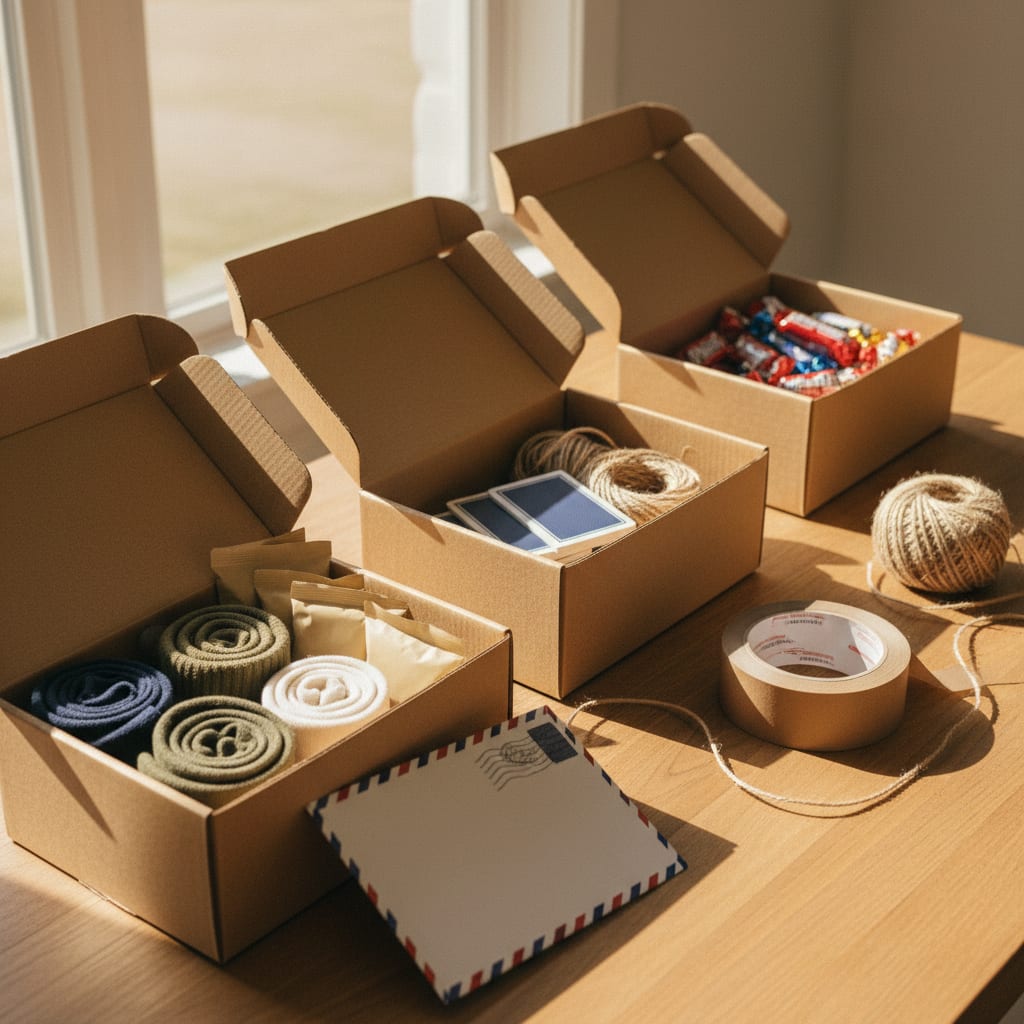
The reason care packages get harder after month three is that you run out of ideas, not out of money. The fix is to decide the themes once, at the start, and then shop against a theme instead of against a blank box. Twelve themes covers a year; six covers a shorter absence if you run them twice. Each box gets one anchor item, two or three consumables that fit the theme, and something from the kids. That structure takes the monthly decision from “what on earth do I send” down to a twenty-minute errand.
Why themes beat a shopping list
A list tells you what to buy. A theme tells you what to buy this month, which is the harder problem — and it stops every box being a slightly worse version of the first one.
Themes also make the boxes a conversation. A package that is obviously about something gets a reaction; a package of assorted snacks gets a thank-you text. And they give kids a job with a shape to it: a four-year-old cannot help you assemble a generic box, but they can absolutely help you assemble the one about summer.
Keep the anchor small. One item per box that isn’t food, isn’t consumable, and is worth keeping. Everything else is fuel.
The twelve themes, one per month
- Comfort. The first box, sent early. Good socks, a decent pillowcase, foam earplugs, the coffee they actually drink. Nothing clever — just the things that make a bad bunk survivable.
- Home flavour. Whatever is regional and travels: a local hot sauce, a jar of something from a shop near you, sweets from the store they always stopped at. The point is provenance, not quality.
- Boredom. A pack of cards, a compact game, a puzzle book, a paperback that gets passed on and never comes back. Shelf-stable entertainment with no batteries.
- Hydration and heat. Electrolyte sticks like Liquid I.V., drink mixes, lip balm, hand cream. Unromantic, heavily used, and cheap to repeat.
- Kid-made. Everything in the box comes from the children: drawings, hand tracings, a photo they took, a recording. Adults contribute packing tape only.
- The birthday box. Theirs or the kids’. Shelf-stable cake mix in a cup, candles, party hats, and a card from every person who’d have been at the table.
- Movie night. Popcorn, sweets, a couple of films on a drive if that works where they are — and the same things sent to the house so both ends run it at once. That’s the trick behind family movie night during deployment.
- Sports season. Whatever season is running at home. A team shirt, a plain cap, snacks associated with a game, a schedule printed out so they know when things are happening back home.
- The reset box. Sent at the midpoint, when it stops being novel. New socks, new razors, new toothbrush, replacements for everything that’s worn out. Practical, and the message is: someone is keeping track.
- Autumn or seasonal. Whatever the calendar is doing at home — a pumpkin-flavoured something, a summer-shaped something. It’s a time signal as much as a snack.
- Holiday. The one box worth over-preparing. Small decorations, a stocking, wrapped items to open on the day. Send it far earlier than feels reasonable.
- The countdown box. The last one. Nothing perishable, nothing bulky — they’re about to pack. Photos of what’s changed at home, and something small for the flight.
What the post office restricts
Two things matter more than the contents: the address format and the restrictions.
Overseas military mail generally goes through APO, FPO or DPO addresses, which are domestic rates rather than international ones — but the package still needs a customs declaration, and destinations have their own prohibited and restricted lists. Aerosols, pressurised containers, alcohol and certain foods are common restrictions, and some destinations restrict more than that.
Look it up on usps.com for the specific ZIP before you pack, not after you’ve taped the box. Prices and box options change, so take those from the source too rather than from any list. It’s also worth knowing that USPS offers a free kit of boxes, tape and customs forms aimed at military mail — you order it and it arrives, which removes the most annoying part of the errand.
Transit times are long and variable. Anything meant to land on a date should leave weeks earlier than you’d think, and holiday deadlines are published well in advance every year.
Packing so it survives the trip
- Assume the box gets crushed and gets hot. Chocolate melts, crisps get powdered, anything glass is a decision you’ll regret.
- Bag every liquid separately, then bag it again. One leaked bottle ruins the whole box, including the drawings.
- Fill the gaps. Empty space is what breaks things. Use popcorn, snack bags or a rolled T-shirt rather than packing peanuts, which turn the unpacking into a chore in a room they may not be able to make a mess in.
- Put the kids’ contributions in a large envelope inside the box so they arrive flat and clean instead of soaked in hot sauce.
- Number the boxes. Mail arrives out of order. Numbering turns “did I miss one” into a fact.
Getting the kids to run it
The theme structure exists partly so children can own the job. Give them the month’s theme a week ahead, let them choose one item within it, and let them do the drawing and the packing. It converts a chore into a monthly ritual with a name, and it’s one of the few parts of a long absence that a small child can genuinely contribute to.
If you want the full version of what goes in a first box and why, the care package hub covers contents in depth, and deployment care package ideas covers the ones that consistently get used.
FAQ: care package themes
How often should you send a care package?
Roughly monthly is sustainable for most families and often enough to matter. More often than that gets expensive and repetitive; less often and the gap starts to feel like a gap. Pick a fixed week of the month so it doesn’t depend on remembering.
What should you not put in a care package?
Anything pressurised, alcoholic, perishable or fragile, plus whatever the destination specifically restricts. Restrictions differ by location and change over time, so check the current list for that address on the postal service’s site before packing.
How long does a care package take to arrive?
Long, and unpredictable — weeks rather than days is the realistic assumption, and it varies by destination and season. Send anything date-sensitive far earlier than seems necessary, and watch the published holiday deadlines.
What’s the best care package for a first box?
Comfort items. Good socks, earplugs, the coffee they like, a pillowcase from home, and letters. The first box is not the moment for novelty — it’s the moment for the small things that make an unfamiliar room tolerable.
How do you keep kids interested in sending packages all year?
Give each month a theme they can help choose within, let them make something for every box, and let them physically pack it. A named monthly ritual survives a long absence far better than an open-ended “do you want to send Daddy something?”