Deployment Goodbyes With Kids: How to Do the Hard Day
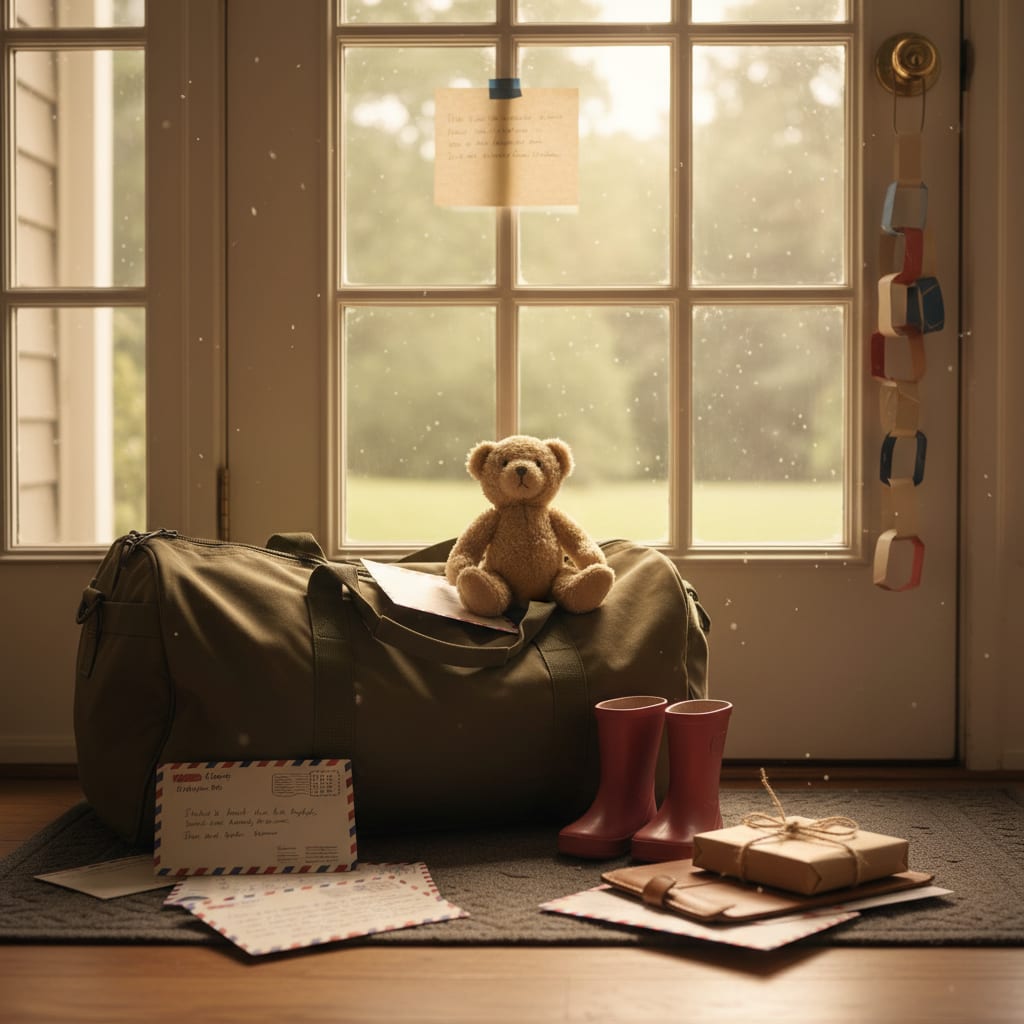
The best deployment goodbye with kids is short, scripted, and boring. Tell them what’s happening in plain words a few days ahead, keep the goodbye itself under a few minutes, hand each kid one concrete ritual to hold (a special handshake, a kiss jar, a photo for the nightstand), and let the at-home parent drive away first if you can. Long airport vigils feel loving; for little kids they mostly stretch the scariest part of the day. This site has covered goodbyes since 2011 — here’s the version I wish someone had handed me before my first one.
Why short beats cinematic
Every instinct says to make the goodbye big, because the feeling is big. Resist. Small children don’t experience a forty-five-minute farewell as forty-five minutes of love; they experience it as forty-five minutes of everyone they trust looking wrecked. The emotion they take to bed that night is the last five minutes, so make the last five minutes calm, warm, and predictable. Save the cinematic stuff for homecoming, where it belongs — nobody ever regretted an over-produced welcome-home sign.
Before the day: say the true thing early
Kids fill information gaps with worse information, so tell them before the duffel appears in the hallway.
- Give it a timeline they can touch. Not “seven months” — little kids can’t hold that. Say “after your birthday, before the pool opens,” then build a countdown they can see. Paper chains are the classic for a reason; we cover ritual-building in family movie night during deployment, which doubles as the anchor tradition for the whole stretch.
- Name who does what. “Mom’s doing bedtime. Grandpa does Tuesdays. Daddy will call when he can.” Little kids worry about logistics more than geopolitics.
- Let them ask the same question nine times. Repetition is how they process it. The ninth answer should sound exactly as patient as the first, which is a discipline I’d rank harder than most qualification boards.
Age-by-age: what the goodbye should look like
- Babies (0–1): the goodbye is really for you — keep the routine identical and take the photos you’ll want later. The baby’s job is to be a baby.
- Toddlers (1–3): concrete and physical. One special handshake or kiss ritual, one object that’s “from Daddy” and stays with them, and the words “Daddy is coming back” said plainly. Toddlers don’t need the why; they need the pattern.
- Preschoolers (3–5): this is peak magical-thinking age, so be careful they don’t conclude they caused it. “This is Daddy’s work. It is not because of anything you did.” Say it even if it seems obvious. It is not obvious to a four-year-old.
- Early school age (5–7): they can handle a map, a calendar, and a job. Giving a six-year-old an official-sounding role — chief dog walker, keeper of the countdown chain — converts helplessness into duty, and kids wear duty surprisingly well.
The goodbye-day run-book
- Do the real goodbye at home. Whatever is going to leak, let it leak in the living room, not the parking lot.
- Keep the public goodbye under five minutes. One hug per kid, the ritual, the phrase you’ve practiced (“See you soon, love you to the moon”), and go.
- One adult owns each kid. Know before you arrive who is holding whose hand when the moment comes.
- Leave first if you’re the at-home parent. Watching a bus or a gate until it’s empty is a long time to ask a small child to be brave. Drive to donuts. This is a donut-mandatory day, per me.
- Keep the rest of the day gentle and normal. Regular nap, regular dinner, regular bedtime — the first solo bedtime sets the tone for the next hundred, and I’ve written a whole solo bedtime run-book for exactly that night.
What to skip
Skip the surprise goodbye (kids grieve harder when they didn’t get to say it), skip promising specific call times you can’t control — communication windows depend on the mission, and you should check current guidance from your service member’s command rather than promise the kids a schedule — and skip narrating your own dread in front of them. They’re excellent listeners with terrible context.
After the car pulls away
The first week is the wobbliest — expect sleep regressions, clinginess, and a few out-of-nowhere meltdowns, all normal. Keep rituals sacred, let the deployed parent stay visible (photos at kid height, recorded stories, letters), and remember the long game: handled well, this hard thing becomes evidence of what your kids can do. That’s the argument I make in what military life gives your kids, and I stand by it even on the bad days.
FAQ: deployment goodbyes with kids
Should kids come to the actual send-off?
If the send-off is short and you can leave right after, it can give kids real closure. If it involves hours of waiting around a gym or a pier, do the real goodbye at home and skip the marathon. Know your kid: some need to see the bus leave; some need to be at donuts when it does.
What do you say to a child when a parent deploys?
Plain words, true words, few words: “Daddy is going away for work. It’s his job to help keep people safe. He is coming back. It’s not because of anything you did.” Then answer the same questions as many times as they’re asked.
How far ahead should you tell kids about a deployment?
A rough rule that has served us: about one day of notice per year of age, then adjust for your actual kid. A toddler needs a couple of days; a six-year-old benefits from a week or two with a calendar. Long enough to process, short enough not to marinate in dread.
What if I cry during the goodbye?
You probably will, and that’s fine — kids need to see that sad and okay can coexist. The line to hold is composure enough that they aren’t comforting you. Aim for “misty and steady.” Save the full version for the car, alone, like the rest of us.